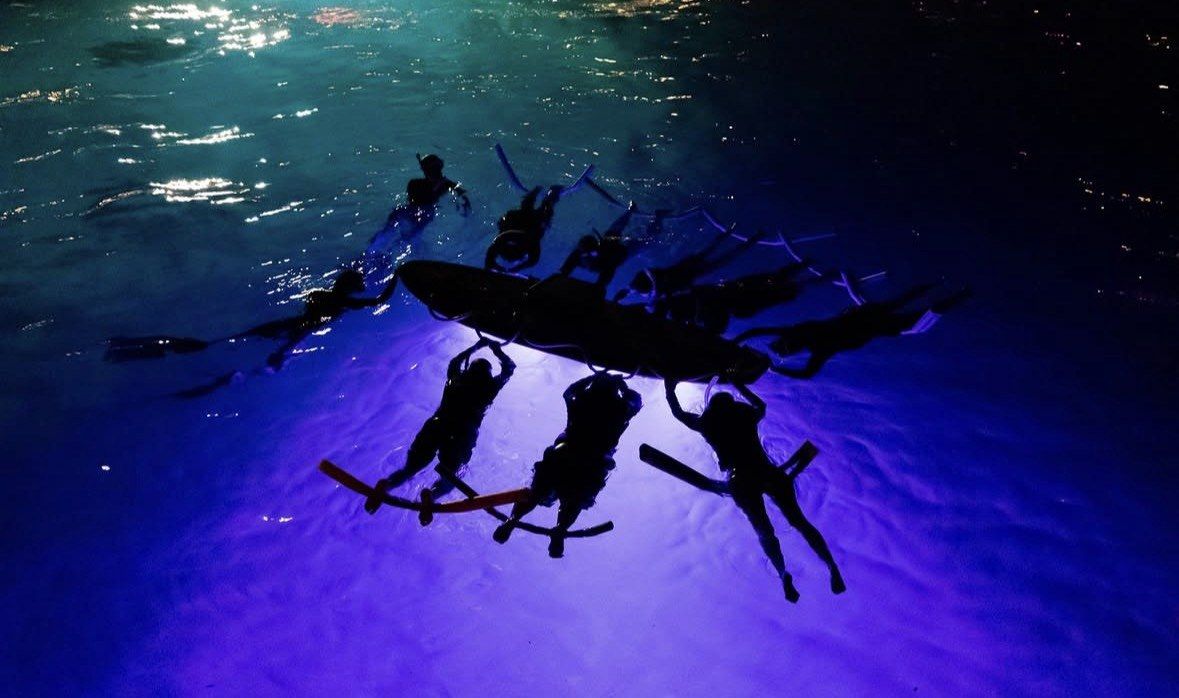
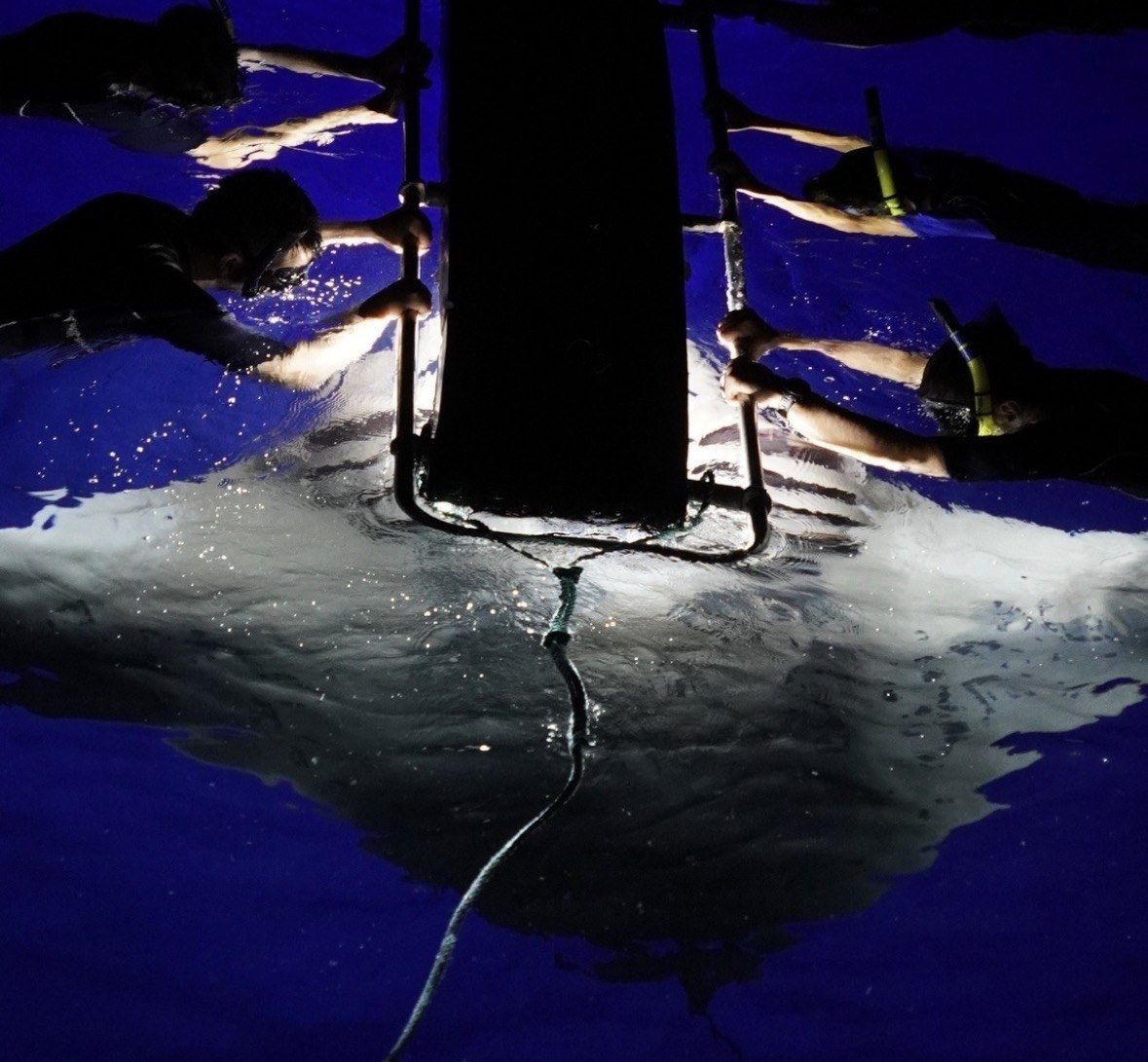
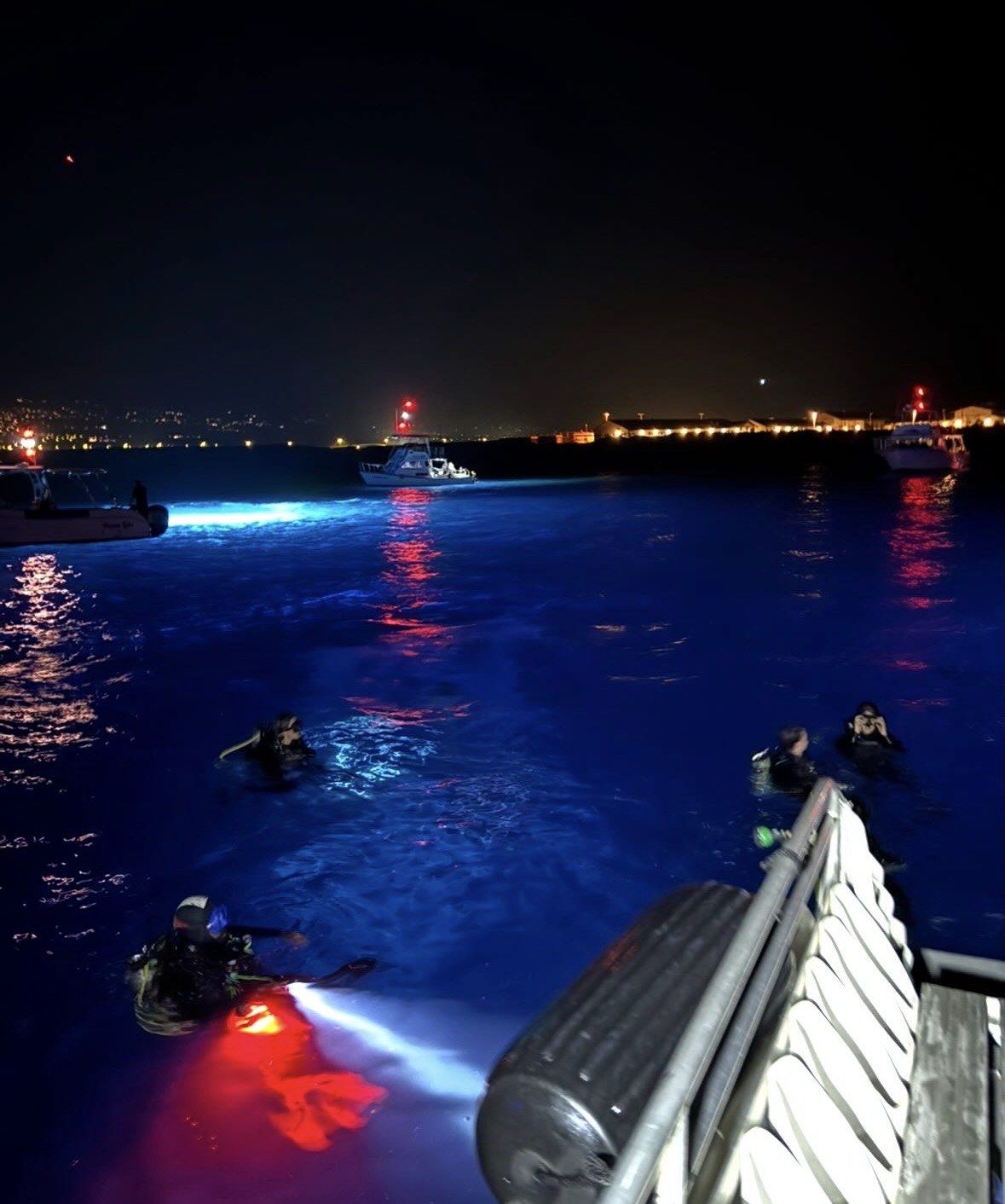
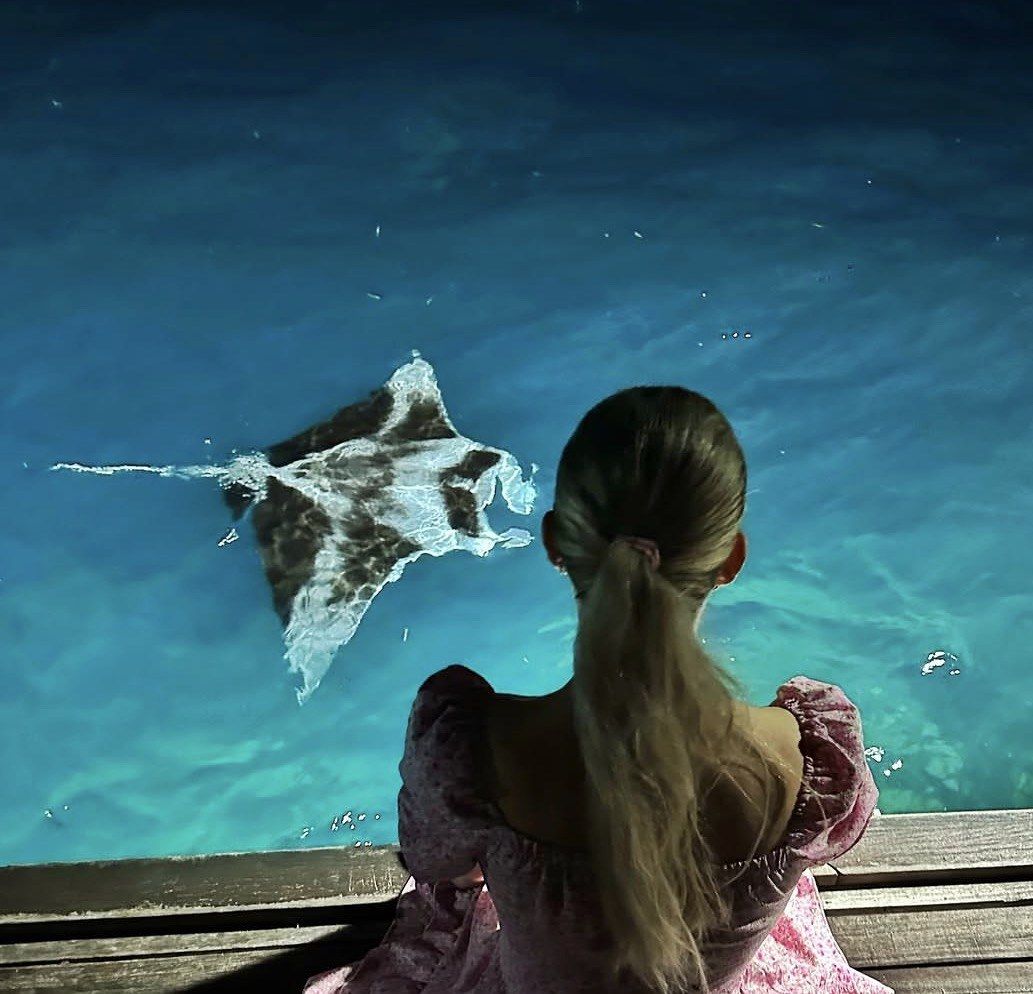
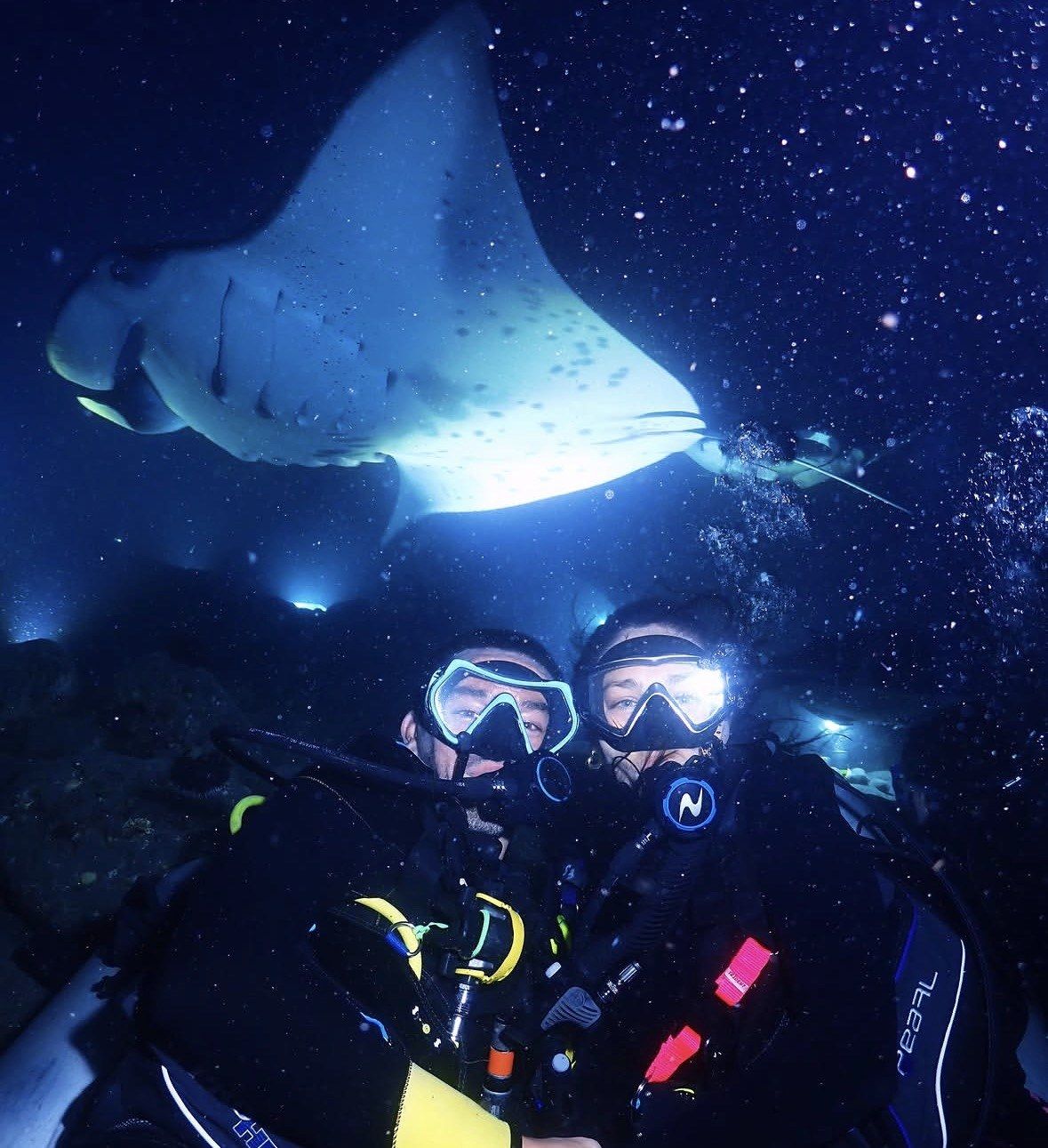
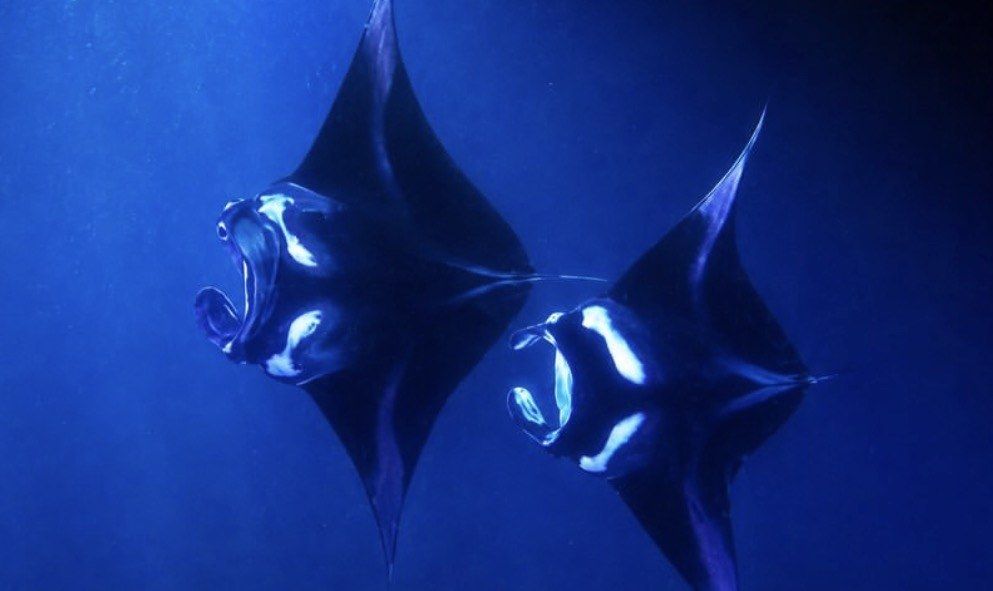
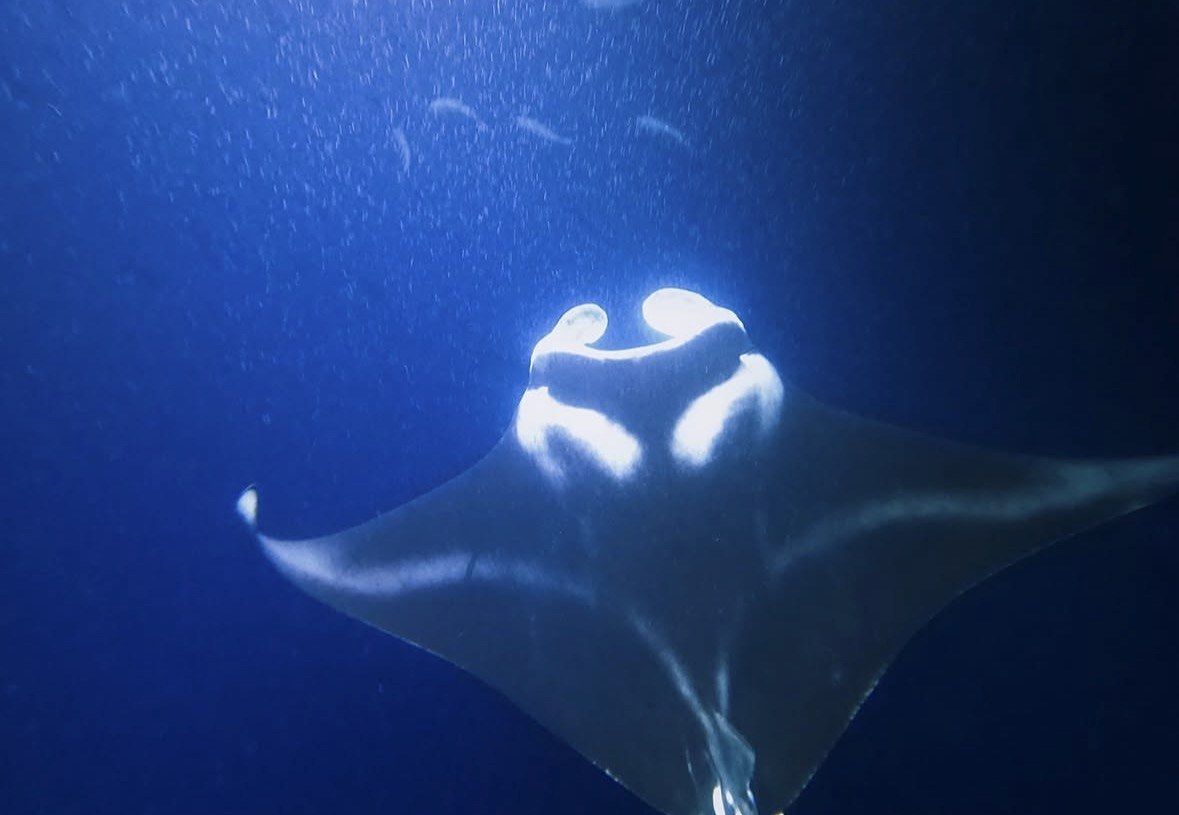
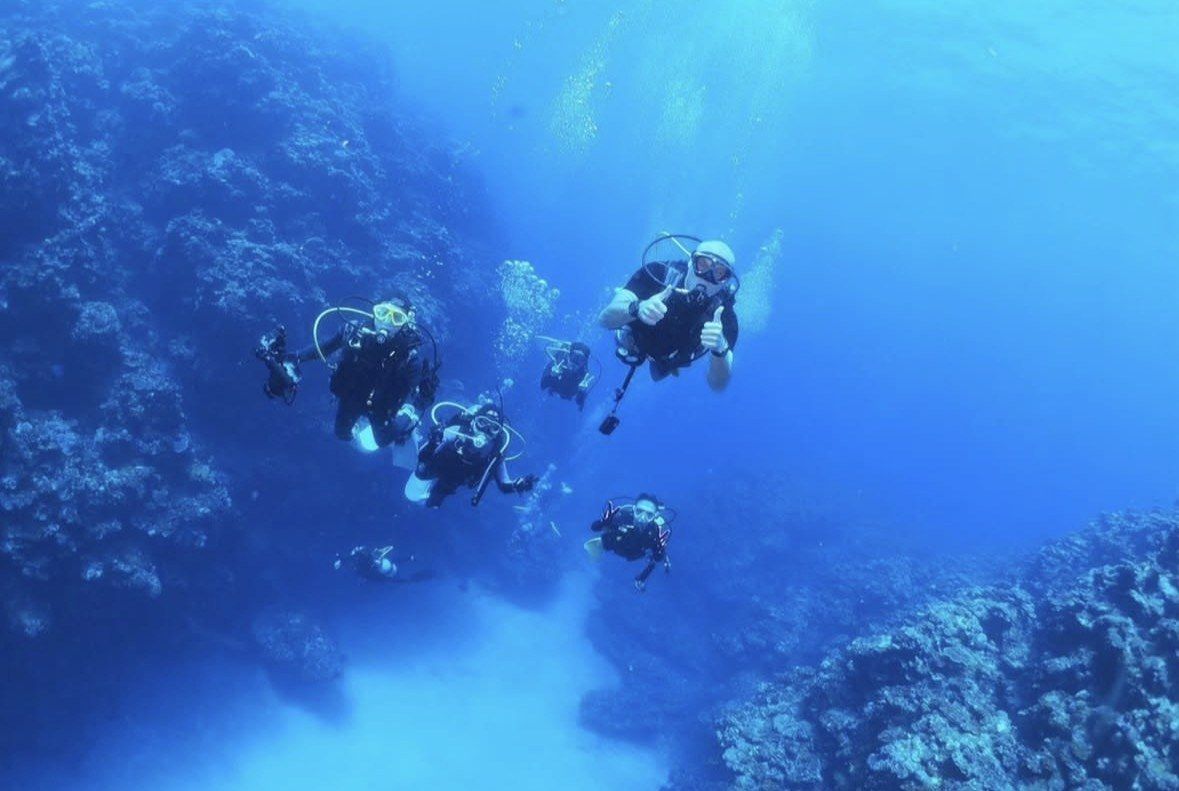
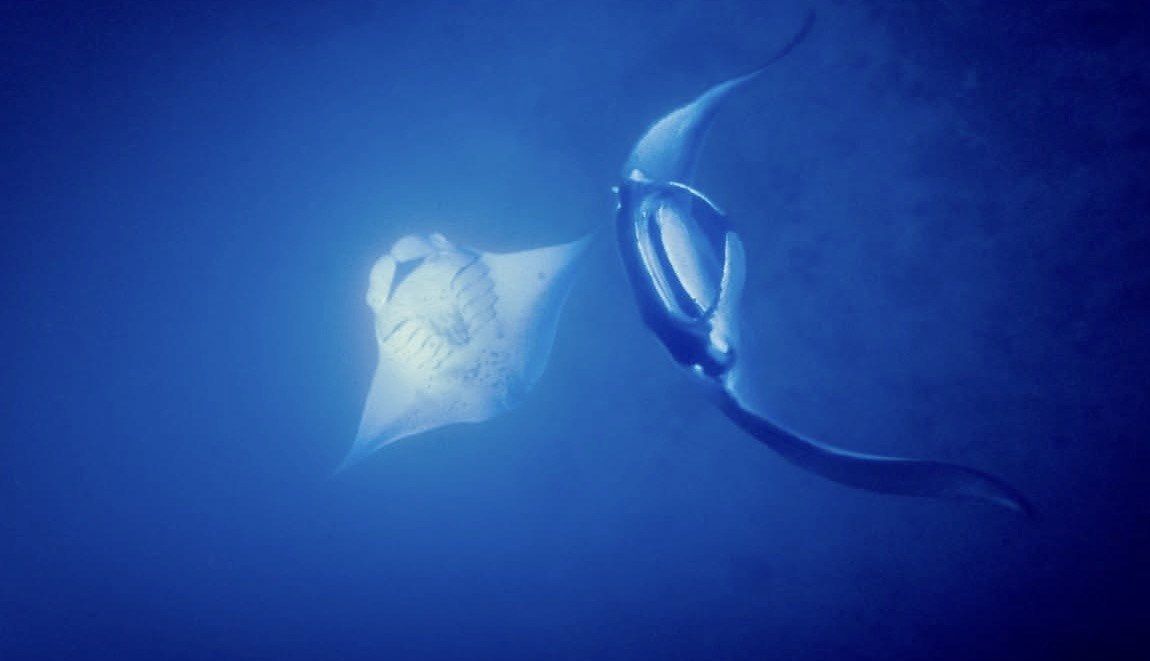
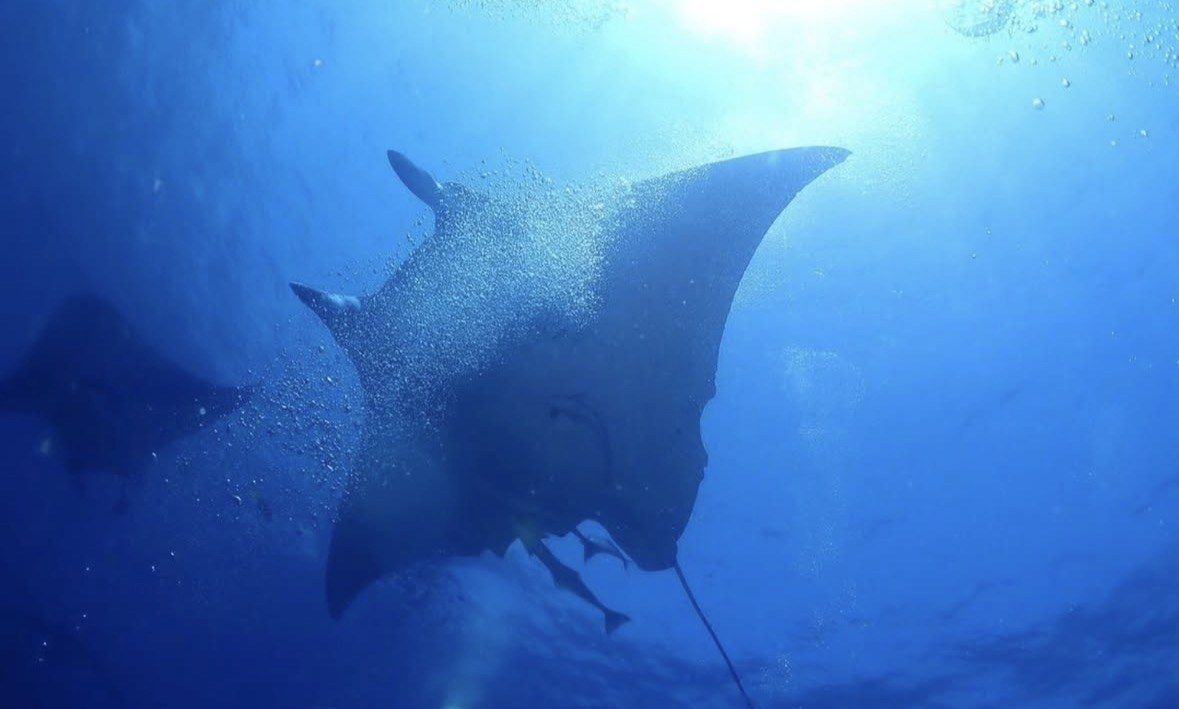
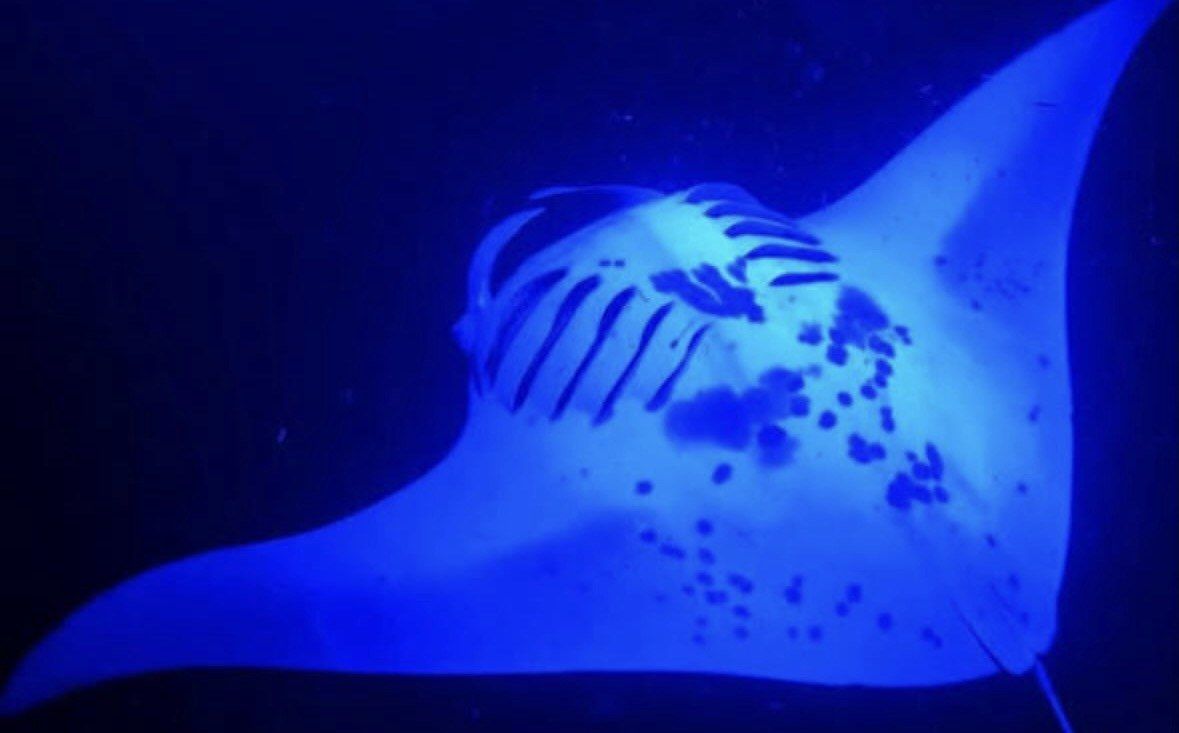
Boats from Keauhou Bay reach the viewing site in about five minutes. It lies just off Kaukalaelae Point beside the OUTRIGGER Kona Resort & Spa, around 7 miles south of Kailua-Kona. Lights draw the plankton, the resident reef mantas come up to feed, and you watch from the surface.
Manta ray tours
Evening snorkel trips from Keauhou Bay and Honokohau Harbor, compared by length, price and rating so you can pick the boat that suits your night.
From Kona · 2.5 h
A 2.5-hour evening boat snorkel out of Keauhou Bay to the lit viewing area off Kaukalaelae Point, with gear, a wetsuit top, a flotation device, water and light snacks on board.
From Kona · 1.5 h
A 1.5-hour outing with a three-minute boat ride to the viewing site and 20 to 40 minutes in the water, staffed by a licensed captain, a swim guide and a certified lifeguard.
From Kona · 1 h
A one-hour snorkel out of Keauhou Harbor capped at 12 passengers, with a five-minute ride to Manta Village and a lightboard to hold at the surface.
From Kona · 2 h 15 min
Two hours fifteen minutes on a 50-foot catamaran, sailing the Kona coast at sunset before the after-dark snorkel with certified guides in the water beside you.
About the Destination
Hawaii's boating division names two Kona viewing areas, and this is the southern one, directly offshore from the bay. Everything leaves from the small boat ramp and the finger pier at the end of Kaleiopapa Street.
Keauhou Bay sits roughly 7 miles south of Kailua-Kona, and the night viewing area lies immediately offshore around Kaukalaelae Point, next to the OUTRIGGER Kona Resort & Spa. Hawaii's Division of Boating and Ocean Recreation names only two viewing areas on this coast: Makako Bay, also called Garden Eel Cove, in the north, and the water fronting Keauhou Bay in the south. The bay itself has parking, restrooms and a small boat ramp. The Hawaii Tourism Authority advises against swimming or snorkelling in the bay because of fishing and tour-boat traffic, so you reach the rays by boat or canoe.
Floodlights built this aggregation. A resort above the bay began lighting the ocean in the early 1970s; the light concentrates plankton, and the mantas learned to come and feed on it, which is why trips go out around sunset or after dark. Island-resident reef mantas are the animals you see, most of those off Kona measuring around 12 feet across. The Kona-based Manta Pacific Research Foundation has named more than 300 individuals from their belly spot patterns, among them Bertha, first identified in 1992 and laser-measured at 11.7 feet wingtip to wingtip.
Evenings follow the sun rather than a timetable, and most departures shift through the year, with the time confirmed when you book; one tour on this site works to a fixed clock, with check-in at 4:15 PM HST and departure at 4:30 PM. Check-in is 15 to 30 minutes before departure depending on the tour, and the meeting points differ: the ticket details, the brown-roofed restrooms and pavilion in the harbour, Keauhou Harbor by the boat dock, the KONASTYLE office on Palani Drive, or slip G-2. In the water you hang on a lit float or manta board, stay horizontal and watch.

Boats from Keauhou Bay reach the viewing site in about five minutes, and a paddle canoe needs 5 to 10 minutes. Departures from Honokohau Harbor in the north involve more than 45 minutes of sailing each way to Makako Bay.
Most reef mantas seen off Kona measure around 12 feet across. The far larger giant manta ray, up to 26 feet in disc width and ESA-listed as threatened, turns up only occasionally and is not the resident species here.
NOAA Fisheries holds photo-identification records of 318 individual reef mantas around Hawaii Island since 1979, with genome scans estimating about 104 adult breeding animals. Migration between island groups is estimated at about one female every 1,300 years.
Operators at Manta Village report seeing mantas on more than 90% of nights. No operator guarantees a sighting, so give yourself a spare evening rather than booking your last night on the island.
The state estimates 60 to 70 viewing vessels across the two Kona sites, and a DLNR notice records six commercial operators moored in Keauhou Bay small boat harbour. Later departures mean fewer boats on site and darker water.
Hawaii state law makes it illegal to capture, take, possess, abuse or entangle any ray in state marine waters, with fines escalating from $500 to $10,000. Keep your legs horizontal at the surface and let the animals come to you.
A short crossing from Keauhou Bay, then around 45 minutes floating at the surface over the lit water while the mantas loop below you. Tours expect independent swimmers who have snorkelled before.
Some boats on this coast allow non-swimming observers to stay on deck, though they still need a ticket. It is the sensible choice for anyone who will not be comfortable in dark water.
The 2 hours 15 minutes tour puts the sunset at sea before the snorkel, with check-in at the KONASTYLE office on Palani Drive 30 minutes before departure. Hot cocoa and tea come after the water session.
Open seven days a week from 10:00 AM to 6:00 PM, with KTA Superstores, CVS/Longs Drugs and Regal Cinemas among the tenants. Free Friday hula runs in the courtyard from 6:00 to 7:00 pm, and the farmers market is Saturdays 8:00 am to 12:00 pm.
A small enclosure at Keauhou Bay marks the site, cared for by the Daughters of Hawai'i, founded in 1903. It is a two-minute look while you wait for the crew.
Kealakekua Bay lies about 12 miles south of Historic Kailua Village and is the daylight counterpart to the night site. Kaloko-Honokohau National Historical Park sits just south of the airport on the northern stretch.
Both state-named viewing areas on this coast, plus the daylight alternatives travellers usually weigh against them.
Most people arrive assuming the manta ray night snorkel is one trip with one price. What actually changes your evening is the harbour you leave from, because that sets how long you sit on a boat in the dark and how much of the ticket is spent in the water. This table puts Keauhou Bay against the northern viewing area at Makako Bay and the daytime sites people consider instead, using the figures confirmed for each.
| Crowds | Price | Best For | What Sets It Apart | |
|---|---|---|---|---|
| ★ Keauhou Bay | One of the two sites in the state's 60 to 70 vessel estimate; six commercial operators are moored in the harbour, and later departures see fewer boats | Tours on this site start from $95, with the small-group Keauhou departure from $145 | Anyone who wants maximum time with the rays and minimum time afloat | About five minutes from the pier to Manta Village, where mantas are reported on more than 90% of nights |
| Makako Bay (Garden Eel Cove) | The other half of the same 60 to 70 vessel estimate across the two Kona sites | The 3.5-hour Honokohau Harbor tour starts from $125 | Travellers who want the longest evening, a head on board and a warm fresh-water shower | More than 45 minutes of sailing each way, and the only fixed-clock start here: check-in 4:15 PM HST, departure 4:30 PM |
| South Maui reefs and Olowalu, Maui Nui | No vessel estimate confirmed for these reefs | No night tour pricing confirmed for Maui Nui | Divers and snorkellers already based on Maui | NOAA Fisheries lists these among Maui manta gathering areas, with photo-ID records of about 600 reef mantas since 2005 and no ID matches to the Hawaii Island animals |
| Kealakekua Bay | A daytime snorkel site rather than a lit night viewing area | Daytime trips are priced separately from the evening tours on this site | Families who want clear water in daylight with no dark-water nerves | About 12 miles south of Historic Kailua Village, and no manta aggregation is documented there |
Keauhou Bay wins on arithmetic. The aggregation sits directly off Kaukalaelae Point, so a manta ray night snorkel from this bay puts you over the rays within minutes instead of spending 45 minutes each way getting there, which also cuts the seasickness exposure and lets you turn back quickly on a rough evening. Rays are resident year-round, the site reports sightings on more than 90% of nights, and the check-in points are a short walk from street parking on Kaleiopapa Street.
Practical info
Five practical tabs for planning the evening at Keauhou Bay, from the airport to the rules on the water.
Flights land at Ellison Onizuka Kona International Airport at Keahole (KOA), 73-200 Kupipi Street, Kailua-Kona, which handles transpacific and interisland services. Air Canada, Alaska, American, Delta, Hawaiian, Japan Airlines, United, WestJet, Mokulele Airlines and Southwest all serve it. From there the drive runs south along the coast to Keauhou, roughly 7 miles south of Kailua-Kona. No official source gives a drive time for that stretch, so leave more margin than you think you need.
At Keauhou Bay you will find parking, restrooms and a small boat ramp, and that ramp and the finger pier are where the boats and canoes leave from. Pier parking is limited; street parking on Kaleiopapa Street is a 3 to 5 minute walk away. Bus routes, fares and rideshare availability in Keauhou after dark are not confirmed by any official source, so plan on having your own vehicle.
There is no season to wait for. The rays at this site are resident reef mantas, so trips run all year and operators report mantas on more than 90% of nights at Manta Village. NOAA 1991-2020 normals for the Kona airport give a January mean of 75.0 F, with an average high of 81.4 F and a low of 68.6 F, and an August mean of 81.5 F, high 87.3 F, low 75.7 F. Night air stays mild: average lows run only from 68.4 F in February to 75.7 F in August.
National Weather Service forecasters describe the leeward Kona coast as sunny and dry, with the rainy season falling in December to February. No month normally exceeds 1.4 inches of rain, January being wettest at 1.35 in and July driest at 0.49 in. Trade winds blow about 90% of the time in summer against about 50% in winter, and sea surface temperatures vary only about 6 degrees, peaking near 80 F in late summer or early fall.
Wear your swimsuit under comfortable clothes and bring a towel, because towels are not provided on several of these tours. A light jacket or rash guard is worth having for the ride back once you are wet. Reef-safe sunscreen matters if you are on the earlier slot with daylight. Sandals or slip-ons are the right footwear, since some boats here are shoe-less. Gear and a wetsuit top are included on most of the tours listed.
Leave the full-face snorkel mask at home: it is not permitted on some boats on this coast, and finding out at the pier is a wasted evening. Underwater cameras are usually fine with the flash off, but phone neck lanyards are out. If you plan on taking a phone in a case, note that Apple rates iPhone 12 mini through iPhone 18 Pro Max as IP68 to a maximum depth of 6 metres for up to 30 minutes, and that is a controlled lab rating rather than a promise.
Treat the time in your confirmation as the only real time. Most departures here move with sunset through the year, and only one of these tours runs to a fixed clock, with check-in at 4:15 PM HST and departure at 4:30 PM. Check-in is 15 to 30 minutes before departure depending on the tour, and there is no ticket office at the bay for the pier-based trips, so allow for the walk from Kaleiopapa Street.
Book your manta evening early in your stay and keep a spare night in reserve, because sightings are not guaranteed. If you want fewer boats on the water, choose a later slot: the state links crowding to the 60 to 70 vessels working these two sites, and no legal cap is in force yet. Keauhou Shopping Center, open 10:00 AM to 6:00 PM, is where to pick up water, snacks or a pharmacy item first.
Swimming ability is the real entry requirement. Tours on this coast expect independent swimmers who have snorkelled before, and minimum ages for in-water snorkelling start at 6 or 7 years on the boats that publish them, with deck-only observers sometimes accepted younger. In the water you hold a lit float or a manta board and keep your legs horizontal at the surface so you never make contact with an animal. Anyone prone to seasickness benefits from the short Keauhou crossing.
Kona manta operators adopted voluntary safety standards drafted with the U.S. Coast Guard, and DLNR has run operator working groups since early 2014. A third-party assessment of the viewing sites flagged live boating, multiple boats tying to a single mooring and insufficient lighting for divers and snorkelers. Follow your crew's instructions on when to enter and exit, and stay with the float. The state tourism authority advises against entering the water in Keauhou Bay because of fishing and tour-boat traffic, so the boat is how you get out there.
Location
Keauhou Bay boat ramp and finger pier, Kaleiopapa Street, Kailua-Kona, HI 96740, about 7 miles south of Kailua-Kona.
Plan your visit
Departure points, timings, weather, water conditions and nearby places, collected on one page before you pick a tour.
One evening at Manta Village, in the order it actually happens: check-in at the bay, the briefing, the short ride out, and the time you spend…
The reef mantas that feed under the lights off Keauhou Bay live here year-round, so trips run every month. The month you pick decides how warm the…
Boats leave Keauhou Bay around sunset and again after full dark, and the two evenings diverge from the moment you clear the pier. Here is what…
Five formats go out from the same bay to the lit water off Kaukalaelae Point: a large boat, a small-group boat, a paddle-powered outrigger canoe,…
Two ways to be in the water over the lit feeding area off Kaukalaelae Point: floating at the surface, or sitting on the sand looking up. The manta…
Evenings at Keauhou Bay feel warm on the pier and turn cool the moment you are wet and the boat is moving again. Below: what to wear, what goes in…
Three night snorkel tours are listed on this site, and two of them carry the same 4.8 built on wildly different numbers of reviews. What follows…
The northern night-viewing water lies off the coast just south of Kona airport and is reached from the harbours above Kailua-Kona. Here is how it…
Mantas turn up off several Hawaiian islands. Only one coast has state-designated night viewing areas, resident rays and floodlit water that pulls…
Boats out of Keauhou Bay leave with the sunset, which leaves you a whole afternoon within a couple of minutes' drive of the pier. Here is how to…
The lit patch of water that every Kona manta night snorkel aims for sits a few minutes offshore of Keauhou Bay. This page covers what is down…
Keauhou Bay lies roughly 7 miles south of Kailua-Kona, and every manta boat and paddle canoe working the southern viewing site leaves from its…
Waikoloa Beach Resort, Mauna Lani and the rest of the northern resort coast sit further from the mantas than almost anywhere else people book this…
Where you actually leave the car at Keauhou Bay, how long the walk down to the water takes, and how the different check-in formats work once it is…
A manta ray night snorkel from Oahu starts with an interisland flight, because the lit nightly viewing site sits off the Kona coast of the Big…
Minimum ages at Keauhou Bay run from two years in a paddle canoe up to seven on one of the boats, and every in-water place also wants a child who…
Reef mantas are plankton feeders with no stinger, and they pay no attention to the people floating above them. What you actually manage at Manta…
A person who cannot swim can still spend the whole evening on the water over Manta Village, with a deck place rather than a spot on the float…
The part of this trip that unsettles stomachs is not the boat ride. It is the stretch spent face-down and still at the surface, in the dark, with…
The rays that come into the lit water off Keauhou Bay are reef manta rays, and many of them have a name, a file and a measured wingspan. What…
Blank nights at Manta Village are uncommon but real, and the policies covering them differ from boat to boat. Here is the sighting rate reported…
Black water, one cone of light and a 12-foot animal that decides where it goes. Here is how to come home with footage you will actually watch…
FAQ
Practical answers for planning a manta ray night snorkel out of Keauhou Bay, Kona, from swimming ability and children's ages to parking by the pier and the rules in the water.
Mantas are reported on more than 90% of nights at Manta Village, and the short crossing starts at the Keauhou Bay pier.
Check AvailabilityDiscover More
Floodlighting of the ocean started at the resort above the bay in the early 1970s, and the light concentrated plankton in the water off Kaukalaelae Point. Reef mantas came in to feed, and they have been doing it ever since, which is why every trip goes out around sunset or after dark.