In shortThere is no closed season. The reef mantas at the Keauhou night site are resident animals, so trips run all year, and reported sighting rates at the site sit above 90% of nights with no operator promising a ray. Picking a month comes down to how settled your evening is likely to be: a summer booking lands in trade-wind weather about 90% of the time while a winter one gets it about 50% of the time, and even the wettest month in the normals stays under 1.4 inches of rain.
Above 90%of nights with reported sightings
75.0 F / 81.5 FJanuary and August means
Under 1.4 inrain in any normal month
90% vs 50%summer vs winter trade winds
Best time of year to see manta rays in Hawaii: there is no closed season
Boats go out to the viewing water off Kaukalaelae Point in January and in August, and the reason sits with the animals. The rays that gather under the lights belong to an island-resident population, so nothing migrates away for part of the year and there is no manta ray season on the Big Island to work around. Reported sighting rates at the site run above 90% of nights, and no operator will promise you a ray.
That turns the best-month question into a weather and comfort question. Four things shift across the year on this coast: how often the trade winds are in charge, how much swell reaches a west-facing shore, how warm the water and the night air are, and how much rain falls. None of them shuts the site. All of them change how likely your evening is to be moved and how pleasant the time at the surface feels.
Kona ocean conditions by month
NOAA 1991-2020 normals for the Kona airport put the January mean at 75.0 F, with a daytime high of 81.4 F and a night low of 68.6 F. August sits at the warm end of the year: a mean of 81.5 F, a high of 87.3 F and a low of 75.7 F. For a boat that comes back after dark the night figure is the one worth reading, and it hardly travels, running from 68.4 F in February to 75.7 F in August.
Rain matters less here than visitors assume. The National Weather Service describes leeward coasts like Kona, where the air descends, as sunny and dry, with rain arriving mainly through a few winter storms. The airport normals never exceed 1.4 inches in a month: January is the wettest at 1.35 in, July the driest at 0.49 in, and the rainy season is December through February, inside the broader October to April storm window.
Sea surface temperature across Hawaii moves only about 6 degrees over the year and peaks near 80 F in late summer or early fall, which is also when the air is warmest, August and September rather than June and July. Trade winds are steadiest in summer at about 90% of the time, against roughly 50% in winter. Spring runs about 60 to 70%, fall about 70%, with the pattern breaking down more often in October and November for two to three days at a time.
Visitor numbers on the island are harder to pin down than the weather, and the crowding you actually notice at the site comes from boat traffic rather than from the calendar: the state estimates 60 to 70 viewing vessels across the two Kona sites, and the rules that would cap them remain draft.
| Period | Trade winds | Rain, Kona airport normals | Sea and swell |
|---|
| December to February | about 50% of the time | the rainy season; January wettest at 1.35 in | surf over 25 feet reaches north and west facing shores on many occasions in a single winter; January averages 75.0 F |
|---|
| March to May | about 60 to 70% | under 1.4 in in any normal month | winter swell easing; sea temperature within the roughly 6 degree annual range |
|---|
| June to September | about 90% | the driest stretch; July 0.49 in | summer south swells top out around 10 to 15 feet; August mean 81.5 F, night low 75.7 F |
|---|
| October to November | about 70%, breaking down for two to three days at a time | under 1.4 in, start of the storm window | sea surface near its peak of about 80 F in early fall; hurricane risk drops off quickly by early October |
|---|
The 2.5-hour evening, any month of the year
A longer, fuller evening out of the Keauhou area with a wetsuit top, flotation device, water, light snacks and commentary on board, which is what makes a cooler winter night or a long summer sunset easy to sit through.
★ 4.8/5 · 6,332 reviews
A calm summer evening against a winter night
June into September gives you the predictable version of this trip. Trade-wind weather holds about 90% of the time, so the pattern you check in the morning is usually the pattern you get at sunset. The swell that reaches Hawaii in summer comes from the south and tops out around 10 to 15 feet, which is a window aimed at the south shores rather than at the leeward Kona coast, and the water is at its warmest, near 80 F at the late-summer peak, with August nights averaging 75.7 F ashore.
Winter is the stretch to plan around rather than avoid. Trade-wind weather is in charge only about half the time from December to February, so more evenings are decided by passing systems, and Hawaii's heaviest rain comes from storms between October and April. The same storms push large surf onto north and west facing shores, above 25 feet many times each winter, and Keauhou faces west. The rays still feed under the lights; what rises is the chance your evening gets moved and the chance the ride out is lumpy.
Late summer carries the one seasonal hazard worth naming. Central Pacific hurricane season opens in June, risk builds from late July into August and falls away quickly by early October, with 4 to 5 tropical systems a year passing within about 1,500 miles of the islands. In practice that means an occasional disrupted evening inside an otherwise warm, dry stretch, so leave yourself a spare night in August.
Moonlight, boat traffic and how dark the water gets
Moon phase comes up constantly and there is no official or peer-reviewed source documenting a lunar effect on sighting rates at the Kona sites. Operator blogs flatly disagree with each other about whether a full or a new moon is better, and none of them cites data, so treat the claim as unsettled. The draw at this site is artificial: floodlighting of the ocean began at the resort above the bay in the early 1970s, the beam concentrates plankton, and the rays come to feed on it on any moon.
How dark the water looks is something you choose when you book rather than something the calendar decides. Departures track sunset through the year, and the later slots on this coast sit in fuller darkness with fewer vessels around the moorings. If a quiet, black-water version is what you want, pick a later departure in whichever month you are travelling and read the time in your confirmation as the real one.
Which night of your stay to book
Put the manta night early in the trip and keep it off your final evening. Weather moves plans here, more often between December and February than in high summer, and a second attempt is only worth anything while you still have spare evenings on the island. The second night in Kona is a good slot: if conditions fold, you have room to try twice more.
Reserve ahead rather than arriving at the pier hoping for a space. Six commercial operators keep boats in the Keauhou Bay small boat harbour, start times move with sunset through the year and the exact time comes with the booking, and the pier parking is limited enough that most people leave the car on Kaleiopapa Street and walk down.
Picking your month and the departure that fits it
Travelling in July, August or September gets you the easiest conditions on paper: the driest month in the normals is July at 0.49 in, the warmest air is in August and September, the sea is near its 80 F peak and the trades hold about 90% of the time. In that window the 2.5-hour evening on this site is the one to take, from $138 and rated 4.8 ★ (6332 reviews), with snorkelling gear, a jacket-style wetsuit top, a flotation device, bottled water, light snacks and commentary on board, so a longer stretch afloat stays comfortable.
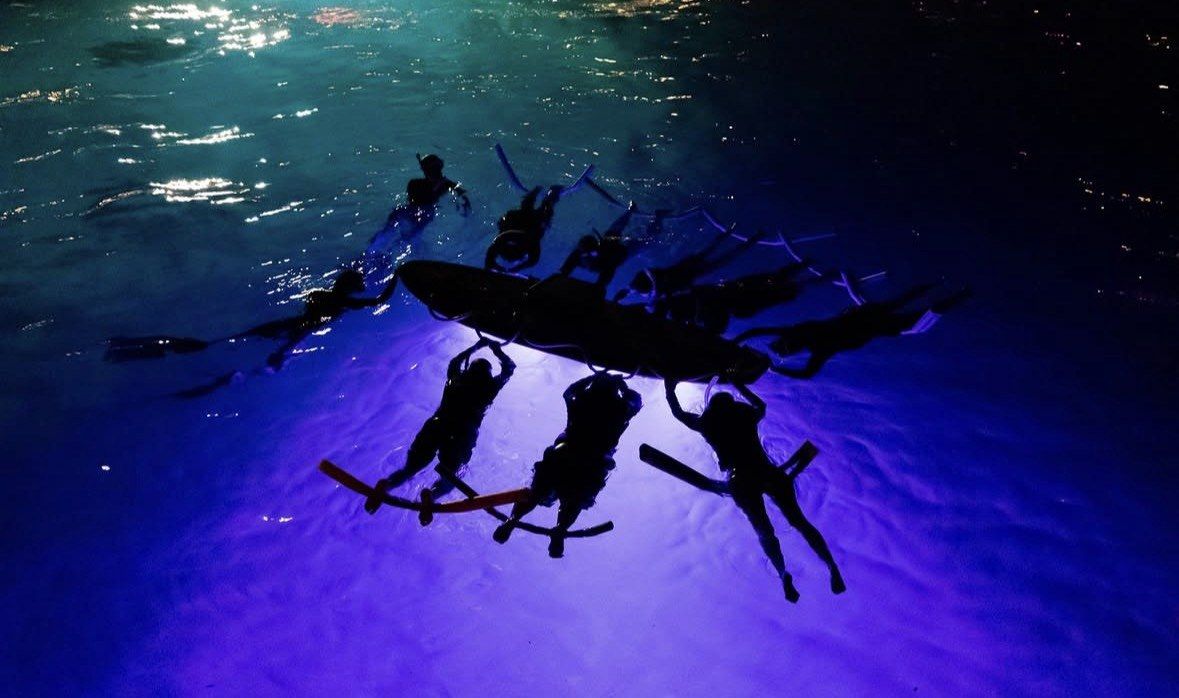
If your dates land in the winter half of the year, or you are travelling with someone who gets queasy in a swell, keep the time on the water short and the support close. The 1.5-hour tour, from $125 and rated 4.7 ★ (2585 reviews), includes a floatation life belt, dive lights with a manta board to hang onto, mask and snorkel, a USCG captain, and a snorkel guide and lifeguard in the water with you. On a night with winter surf running onto a west-facing shore, that shorter spell at the mooring is worth having.
- July to September: driest and warmest. July averages 0.49 in of rain, August runs a mean of 81.5 F with nights at 75.7 F, and the sea peaks near 80 F into early fall.
- October to November: trades hold about 70% of the time but break down for two to three days at a stretch, and hurricane risk has fallen away by early October. Leave a spare evening in the plan.
- December to February: the rainy season, trade-wind weather about half the time, and winter storm surf reaching west-facing shores. Book the first half of your stay and keep the ticket flexible in your own schedule.
- March to May: trades around 60 to 70%, winter swell easing, and rain still under 1.4 inches in any normal month.
Questions people ask
Do the manta rays ever leave the Kona site for part of the year?
No. Hawaiian reef mantas form island-resident populations, and NOAA Fisheries holds photo-identification records of 318 individual reef mantas around Hawaii Island going back to 1979. Movement between island groups is estimated at about one female every 1,300 years and one male about every 64 years. The animals stay, so the trips run every month.
Will I be cold in the water in January?
Hawaii sea surface temperatures move only about 6 degrees across the year and peak near 80 F in late summer or early fall, so the winter water is cooler but not a different proposition. Night air on this coast averages a low of 68.6 F in January. The 2.5-hour tour on this site includes a jacket-style wetsuit top, which is the difference people notice most.
Is hurricane season a reason to skip August?
Not on its own. Central Pacific hurricane season begins in June, risk rises from late July into August and drops off quickly by early October, with 4 to 5 tropical systems a year passing within about 1,500 miles of Hawaii. August is still the warmest month at the Kona airport, with a mean of 81.5 F. Book early in your stay and watch the forecast.
Does a full moon spoil the night snorkel?
No source we could check documents a lunar effect on sighting rates at the Kona viewing areas, and operator claims point in opposite directions. The feeding here is driven by floodlights that concentrate plankton, which works on any moon. If you want darker water, choose a later departure rather than a particular date.
Which month has the fewest boats at the site?
No official monthly figure exists for boat numbers at Keauhou. What the state does publish is an estimate of 60 to 70 viewing vessels working the two Kona sites, with proposed caps still sitting as draft rules. The practical lever is the departure slot: later trips mean fewer vessels around the moorings, in any month.
Read also