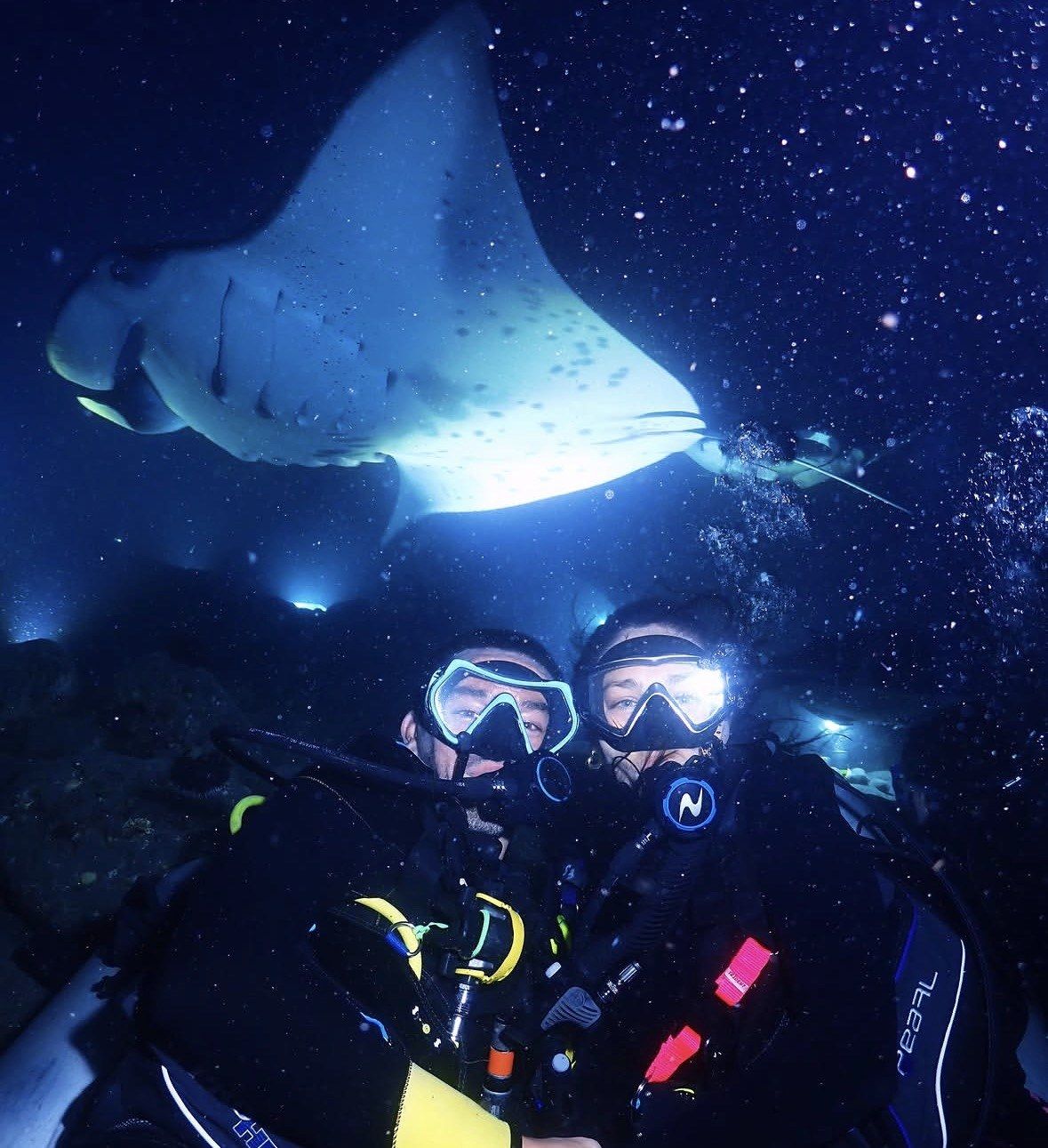
In shortThree tours are listed here: the 2.5-hour Big Island Manta Ray Night Snorkel at 4.8 ★ (6332 reviews) from $138, the 1.5-hour Kona snorkel at 4.7 ★ (2585 reviews) from $125, and the 1-hour small-group departure at 4.8 ★ (1184 reviews) from $145. Those scores come off a site where rays are reported on better than 90% of nights, which also explains the handful of flat reviews: the sighting is never promised.
4.8 ★ (6332 reviews)Most reviewed tour here
More than 90%Nights with mantas reported
About 45 minutesFloating at the surface
60 to 70 vesselsAcross two Kona sites
Manta ray night snorkel reviews: comparing the three tours
The review counts sit far apart. The 2.5-hour Big Island Manta Ray Night Snorkel holds 4.8 ★ (6332 reviews), more than the other two tours on this site put together. The 1-hour small-group departure also scores 4.8 ★, from 1184 reviews. The 1.5-hour tour is rated 4.7 ★ (2585 reviews) and starts lowest of the three, from $125.
A 4.8 built on 6332 reviews has absorbed thousands of different sea states, boat loads and nights when the rays were slow to arrive. A 4.8 built on 1184 reviews has absorbed far fewer of each. The gap between 4.8 and 4.7 is small enough to ignore when you choose; the number of nights sitting behind each score is worth a longer look.
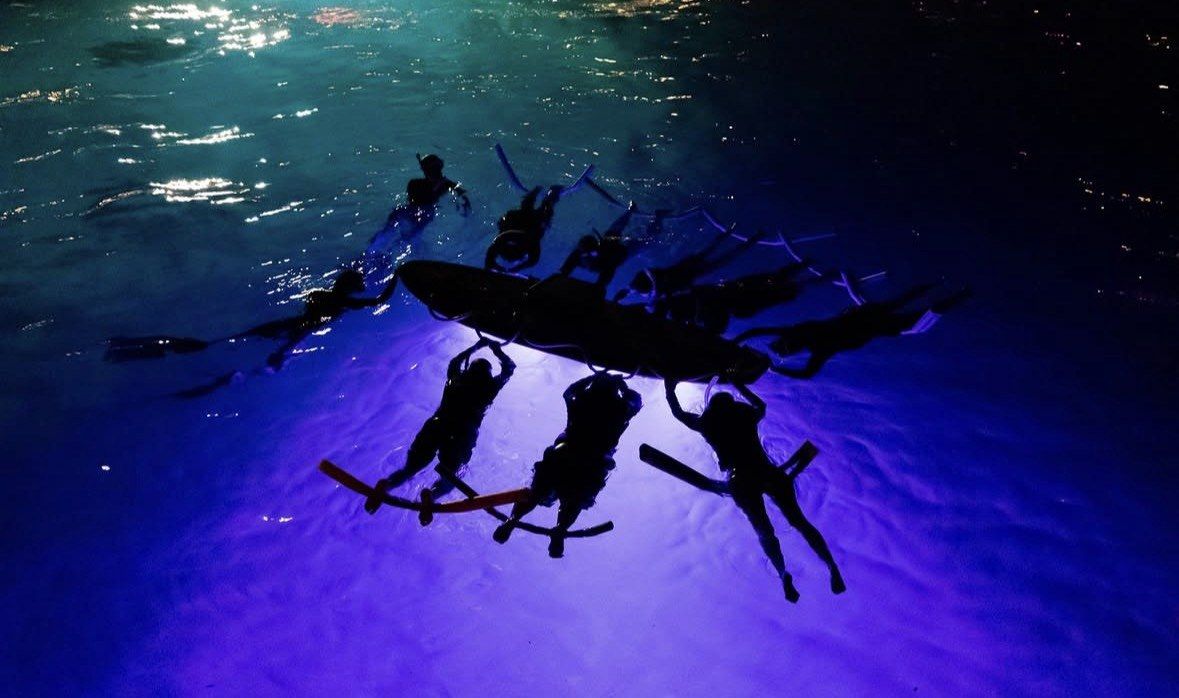
Duration shapes what reviewers are actually rating. Anyone scoring the 2.5-hour trip is scoring a full evening afloat on a larger boat, with the snorkel gear, a jacket-style wetsuit top, a flotation device, bottled water, light snacks and the commentary on board all sitting inside the fare. The 1-hour option is the compact version, with the smallest group. On the 1.5-hour tour the rating leans heavily on in-water handling: a snorkel guide and a lifeguard alongside you, a floatation life belt, and dive lights with a manta board to hang onto.
| Tour on this site | Rating (reviews) | From | Duration |
|---|
| Big Island Manta Ray Night Snorkel | 4.8 ★ (6332) | $138 | 2.5 hours |
|---|
| Kona Manta Ray Snorkel Tour | 4.7 ★ (2585) | $125 | 1.5 hours |
|---|
| Manta Magic small-group night snorkel | 4.8 ★ (1184) | $145 | 1 hour |
|---|
The most reviewed night snorkel here
At 4.8 ★ from 6332 reviews, 2.5 hours and from $138, this is the longest-running option on this site, and the jacket-style wetsuit top, flotation device, bottled water and light snacks are already in the fare.
★ 4.8/5 · 6,332 reviews
What travellers keep mentioning
The same handful of subjects comes back across the reviews, positive and negative, whichever boat left Keauhou Bay. Nothing on the list surprises once you know the mechanism: the resort above the bay started floodlighting the ocean in the early 1970s, the light gathers plankton near the surface, and reef mantas loop up into it to feed in water about 6 metres deep at most.
- The look of the water. The lit cone stands out solid against the black, plankton drifting through it as specks, and people describe that more often than they describe the animals.
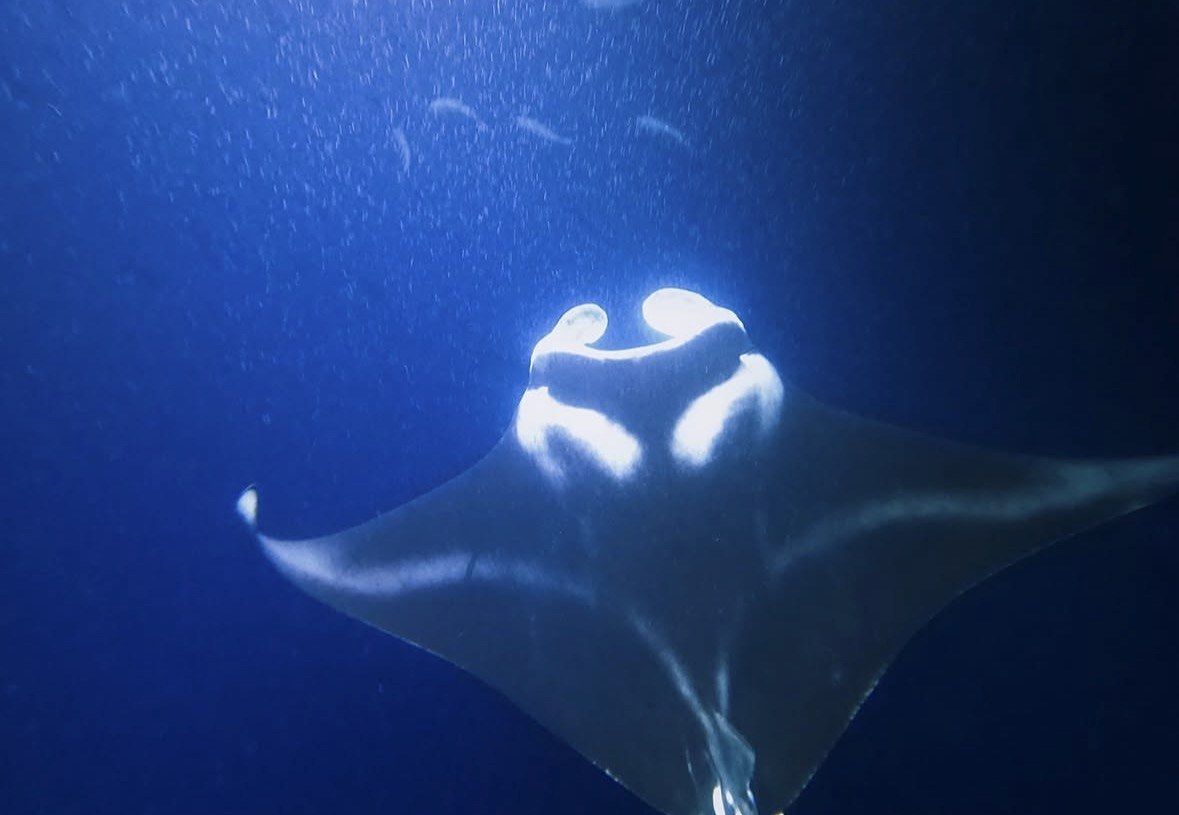
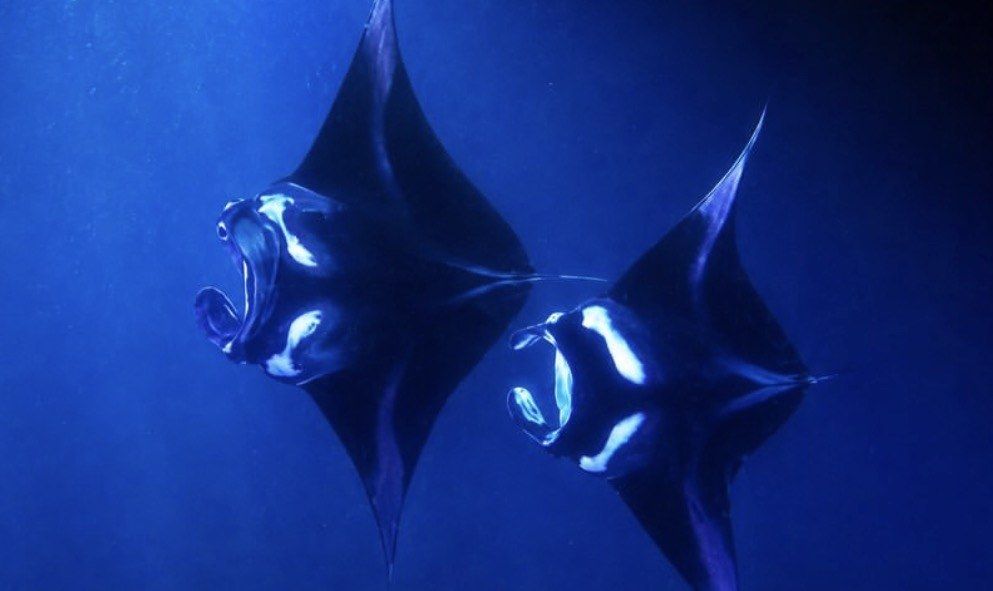
- How close the rays pass. Most reef mantas off Kona measure around 12 feet across, and they feed directly beneath the float line, so one animal fills your field of view.
- The briefing. Crews have a lot to cover: legs horizontal, observe only, never touch a manta, no underwater flash, no neck lanyards for phones, and on some boats no full-face snorkel masks. Travellers notice when that talk is done properly, and notice when it is rushed.
- Getting cold. You hang almost motionless for roughly 45 minutes, generating very little heat of your own, in a sea that varies only about 6 degrees across the year and peaks near 80 F. The chill comes up constantly, and taking the wetsuit whenever one is offered fixes most of it.
- Boats at the site. The state estimates 60 to 70 manta viewing vessels work the two Kona viewing areas, and six commercial operators are recorded as moored in Keauhou Bay small boat harbour. Later departures put you on the site with fewer boats around you.
- Quiet nights. The low scores cluster right here. Manta Village delivers on better than 90% of nights by operator counts, nobody on this coast will promise you the animals, and the small share of evenings that end with little to watch gets written up accordingly.
An honest assessment of the night snorkel
The odds are good and the ratings are consistent, so for a competent snorkeller this is one of the few night activities on the Kona coast that reliably delivers what it advertises. Mantas are reported on better than 90% of nights at Manta Village. Complaints about the ride out are rare for a geographical reason: the floodlit feeding zone sits just offshore around Kaukalaelae Point, beside the OUTRIGGER Kona Resort & Spa and some 7 miles south of Kailua-Kona, which puts a Keauhou boat above the rays in roughly five minutes where a northern harbour costs more than 45 minutes of motoring in each direction.
Trip length is where expectations go wrong. All three tours here put you at the surface for broadly the same stretch, so the difference between 1 hour and 2.5 hours is mostly deck time, kit fitting and the ride out. Want the shortest evening with supervision in the water: take the 1.5-hour trip from $125. Want the unhurried version with the wetsuit top and food included: take the 2.5-hour trip from $138.
The crowding is real and nothing legal currently restrains it. What the state has drafted would change the arithmetic: 24 commercial viewing permits per zone, a $300 monthly fee for operators, viewing confined to the window from 4:00 p.m. to 4:00 a.m. in two-hour shifts, a ceiling of 60 passengers per boat per 24 hours and one guide for every eight customers. None of that has left the draft-rules page of the state boating division, so the number of hulls around your float on your night is held down by nothing more than habit. What exists instead is voluntary: operators wrote safety standards together with the U.S. Coast Guard after an outside safety assessment of the viewing sites pointed at live boating, several boats tied to one mooring and lighting too weak for the people in the water.
Who should book and who should skip it
This trip rewards people who are already relaxed in open water and can keep still. Everyone else tends to struggle, which is where reviews about fogged masks and early exits come from. The booking conditions set the bar before you reach the water: the boats here want swimmers who manage on their own and have snorkelled before, and where an operator states a youngest age for going in, it begins at 6 or 7 years.
- Book it if you snorkel comfortably, want to watch 12-foot animals feed a couple of metres under your chest, and can hold a lit float with your legs flat behind you for about 45 minutes without fidgeting.
- Book it if you want a short, close evening: a Keauhou departure keeps you five minutes from the harbour.
- Skip it if you have never snorkelled. A first attempt in the dark, holding a float in open water, is the wrong place to learn, and full-face masks are not permitted on some boats here, which rules out the mask most beginners plan to use.
- Skip the water if boats bother you. A Keauhou departure keeps time afloat to a minimum, but you are still on a deck in the dark, and deck-only observer tickets exist on this coast for people who prefer to stay dry.
- Skip it if you cannot cope with cold. Cold is the complaint that recurs most often in these reviews, even though NOAA puts average lows on this coast between 68.4 F in February and 75.7 F in August: you come out soaked after floating still for most of an hour, and the air does the rest.
- Skip it if darkness unsettles you, or take the earliest departure of the evening, while there is still colour in the sky on the way out.
How to improve your odds of a good evening
Pick a night early in your stay. No month wins here: the Keauhou rays are resident reef mantas and the boats work every week of the year, so what actually loses you an evening is wind, and trades hold about 90% of the time in summer against roughly 50% in winter. A spare night on the island is the only real insurance when the sea or the animals do not cooperate. Do not book the last evening of your trip.
Keep the group small if the crush bothers you. Check-in for the 1-hour small-group tour, from $145, is at Keauhou Harbor half an hour ahead of the start, by the boat dock, and the fare covers a guide, equipment, beverages and a wetsuit if you want one. Fewer people around one float means fewer fins in your view and a shorter wait for the best position.
Leave from close to the site. Keauhou Bay sits directly inshore of the viewing water, with parking, restrooms and a small boat ramp; pier spaces are limited, so most cars end up on Kaleiopapa Street with a 3 to 5 minute walk down. Reviewers who cut it fine usually missed that nothing here runs to a published hour: the start follows sunset, and the time that arrives with your booking is the one to work to.
Take the wetsuit when a tour includes one, leave the camera flash at home, and compare the tours on this site before you fix the night.
Questions people ask
How long am I actually in the water?
Keauhou boat operators put the surface session at about 45 minutes, spent holding a lit float above the feeding rays rather than swimming. The paddle-canoe operation at the bay gives 30 to 45 minutes at the site. That figure barely moves between the 1-hour and 2.5-hour tours on this site, because the extra time goes on kit fitting, the briefing and the ride.
Can a complete beginner snorkel with the mantas?
Conditions on this coast call for someone who swims unaided and has snorkelled before, and where a boat publishes a youngest age for entering the water it starts at 6 or 7 years. Full-face snorkel masks are refused on some vessels leaving Keauhou Bay. If nobody in the group has snorkelled before, practise somewhere calm in daylight first.
Can someone who will not get in the water still come along?
Deck-only observer places exist on this coast, sometimes from a younger age than the in-water minimum, and one Keauhou operator states that guests who stay aboard still need their own ticket. A deck place is the sensible option for a non-swimmer or a small child. Check what each tour allows before booking for a mixed group.
Does the time of year change what reviewers describe?
Less than people expect. Write-ups from January read much like write-ups from August: the population is resident, which takes any season out of the activity, and Hawaii sea surface temperatures shift only about 6 degrees over the year, topping out near 80 F in late summer or early fall. The rainy season on this coast runs December to February, with January the wettest normal month at 1.35 inches, and trade winds break down more often in winter, so the main seasonal variable is cancelled evenings.
Will the proposed state rules change crowding before my trip?
Not yet. The proposed manta viewing regulations, including a cap of 24 commercial permits per zone, a $300 monthly operator fee, two-hour viewing shifts between 4:00 p.m. and 4:00 a.m., a 60-passenger daily cap per boat and an 8-to-1 guide-to-customer ratio, remain draft rules on the state boating division's rulemaking page. Work from the figure the state itself uses, 60 to 70 viewing vessels across the two Kona sites.
Read also