In shortYou check in at Keauhou Bay 15 to 30 minutes before a departure that moves with sunset, get fitted for mask, snorkel and flotation, then cross to the lit viewing site in about five minutes. In the water you hold a lit float with your legs flat behind you for roughly 45 minutes while reef mantas feed on plankton below.
about 5 minutescrossing from the bay
about 45 minutesactually in the water
15 to 30 minutescheck-in before departure
more than 90%of nights with mantas
What happens on a manta ray night snorkel, in order
The evening starts on land at Keauhou Bay. Crew meet guests at the pier or at a marked spot in the harbour, tick off names, and hand out the paperwork. From there the sequence is the same on every trip out of this bay: briefing, gear, short ride out, time at the surface over the lights, ride back.
The briefing covers two things at once. First the safety side, which is how to get in and out, where the guide will be in the water, and what to do if your mask floods. Then the conservation side: observe only, never touch a manta, no flash underwater, and no neck lanyards for phones. Crews tend to spell out why the no-touch instruction is non-negotiable: Hawaii law prohibits capturing, taking, possessing, abusing or entangling any ray in state marine waters, and the penalties start at $500 and climb to $10,000.
Gear fitting happens next, usually while the boat is still tied up or just as it pulls away. Mask, snorkel and a flotation device are handed out and sized; some trips add a wetsuit top, which is worth taking even on a warm night because you will be motionless at the surface for a long stretch. Full-face snorkel masks are not permitted on some boats here, so leave yours in the car.
Check-in at the bay and the walk from the car
Allow more time than the check-in window suggests. Keauhou Bay has parking, restrooms and a small boat ramp, but the spaces at the pier itself are limited, so most people park along Kaleiopapa Street and walk 3 to 5 minutes down to the water. Doing that in fading light with a towel under your arm takes longer than it sounds.
How early you need to be standing at the water depends on the trip you booked, anywhere from a quarter of an hour to half an hour ahead of the stated departure. One Keauhou catamaran operator asks for thirty minutes on its own site; another has no office at all and simply tells guests to meet crew at the end of the finger pier fifteen minutes ahead. The canoe operator also asks for thirty minutes at the boat ramp. Treat the time written in your confirmation as the real one and check it on the day, because these are operator timings rather than a single harbour rule.
Restrooms are near the parking area, which matters more than it should once you are in a wetsuit top for an hour.
The longest evening of the three, with gear and snacks
A 2.5-hour trip out of Keauhou Bay that includes the wetsuit top, flotation device and commentary described above, so first-timers are not sorting out kit in the dark.
★ 4.8/5 · 6,332 reviews
The ride out and what dark water actually looks like
The crossing is short. Boats leaving Keauhou Bay are at the viewing water off Kaukalaelae Point in about five minutes, and the paddle-powered outrigger canoes need 7 to 10 minutes of paddling. You barely have time to finish the briefing before the engine drops to idle or the paddles come in.
What you see on arrival is a patch of ocean lit from several directions. That brightness has a history behind it: the resort above the bay switched on floodlights pointed at the water in the early 1970s, the beam gathered plankton, and the rays followed the food. Boats add their own downward-facing lights and lit floats, so the viewing area reads as a bright blue-white pool with black water all around it. Outside the light there is nothing to see, which is exactly why guests stay inside it.
Expect company. Six commercial operators keep boats in the Keauhou Bay small boat harbour, and the state puts the total working the two Kona viewing sites at 60 to 70 vessels. How many of those you share the light with comes down to when you go out, since the after-dark slots have fewer hulls on site and blacker water around the lit patch. Mantas are reported on more than 90% of nights at Manta Village, though no operator guarantees a sighting, and the animals are wild.
The manta ray night snorkel float line and how you hold it
In the water you do not swim. You hold a lit float, a surface board or a line rigged with lights pointing down, with your arms on the float and your legs stretched out flat behind you at the surface. Conservation guidelines for these sites are explicit that snorkelers observe only and keep their legs horizontal so they never make contact with a manta. A dangling leg is also what gets kicked when a ray comes up for the plankton directly beneath the light.
Several guests share each float, lined up shoulder to shoulder, with a guide in the water alongside. Group sizes vary by vessel: the outrigger canoes cap each hull at six guests and a whole tour at twelve, while the catamarans carry more and run in-water guides and a lifeguard. Look straight down on a charter that carries divers as well and their lights sit roughly 30 feet beneath your float, which gives you the depth of the water column you are watching.
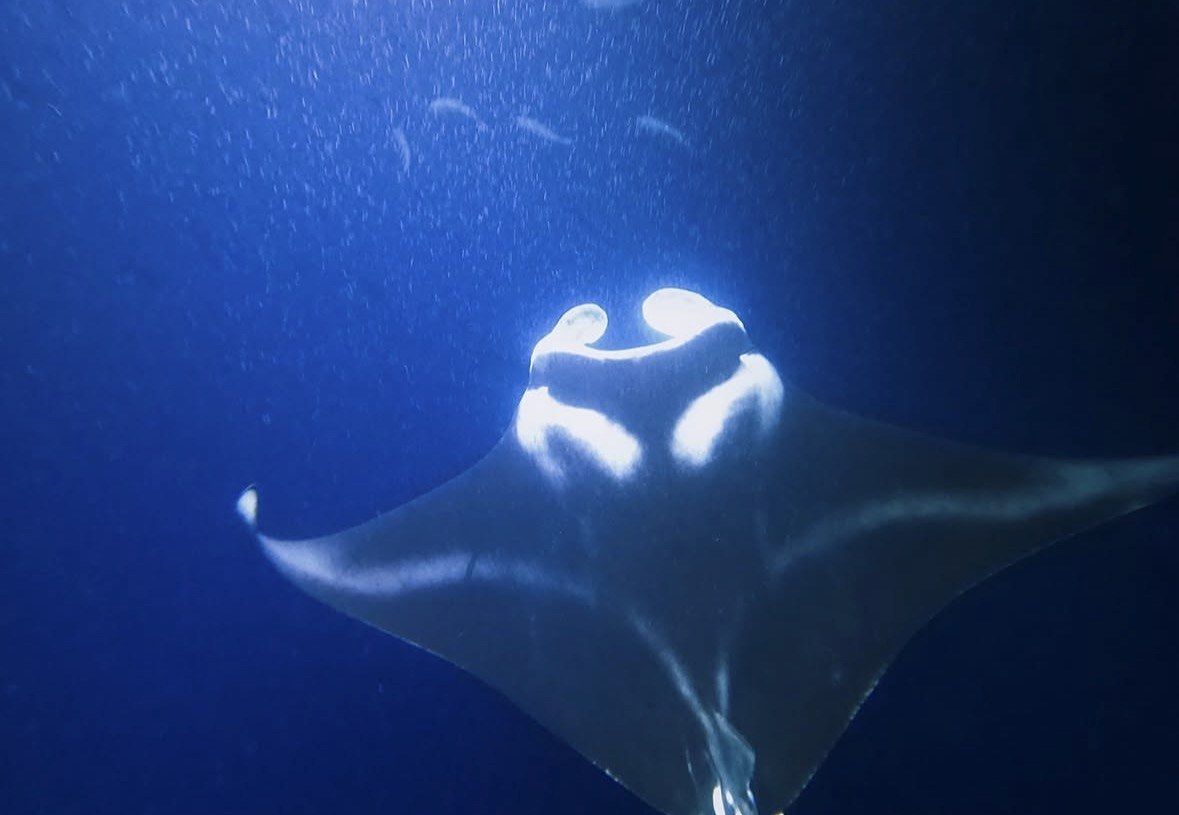
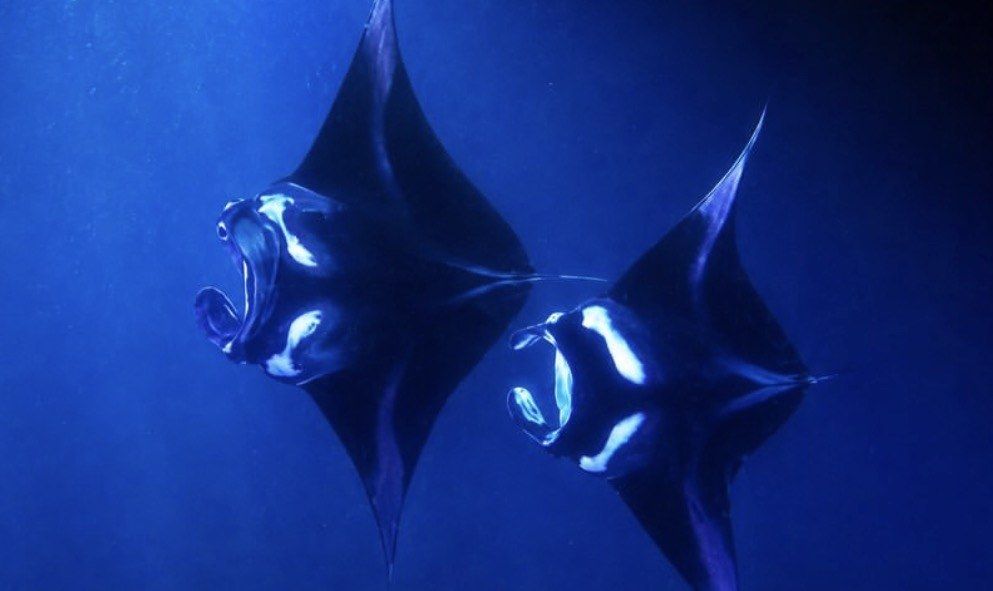
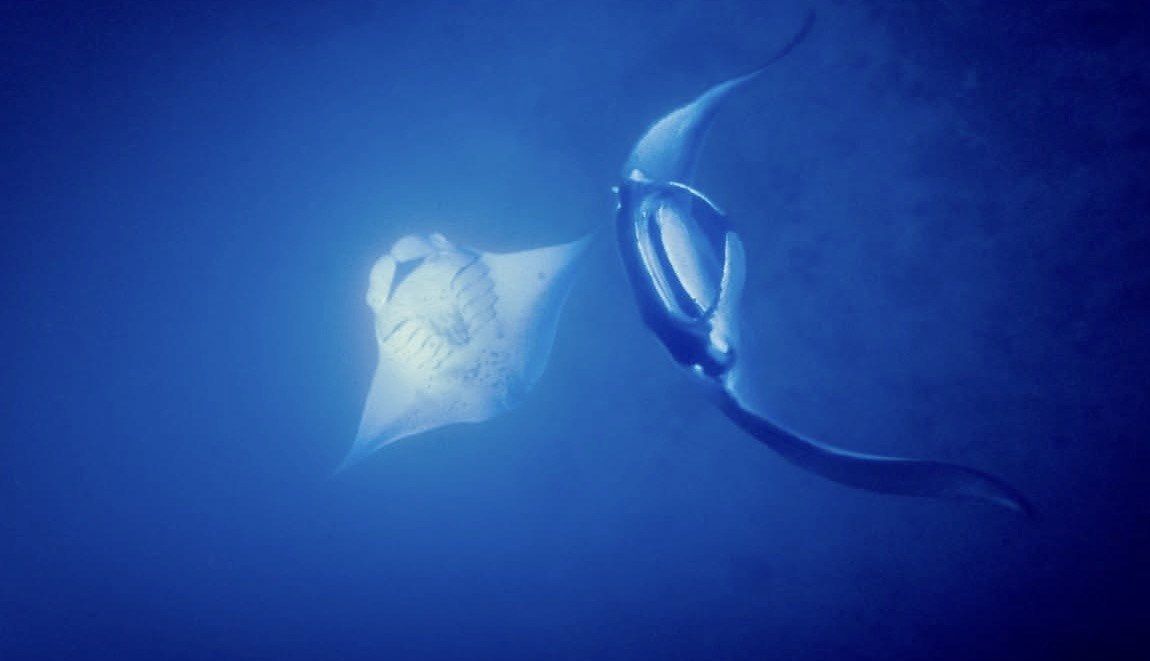
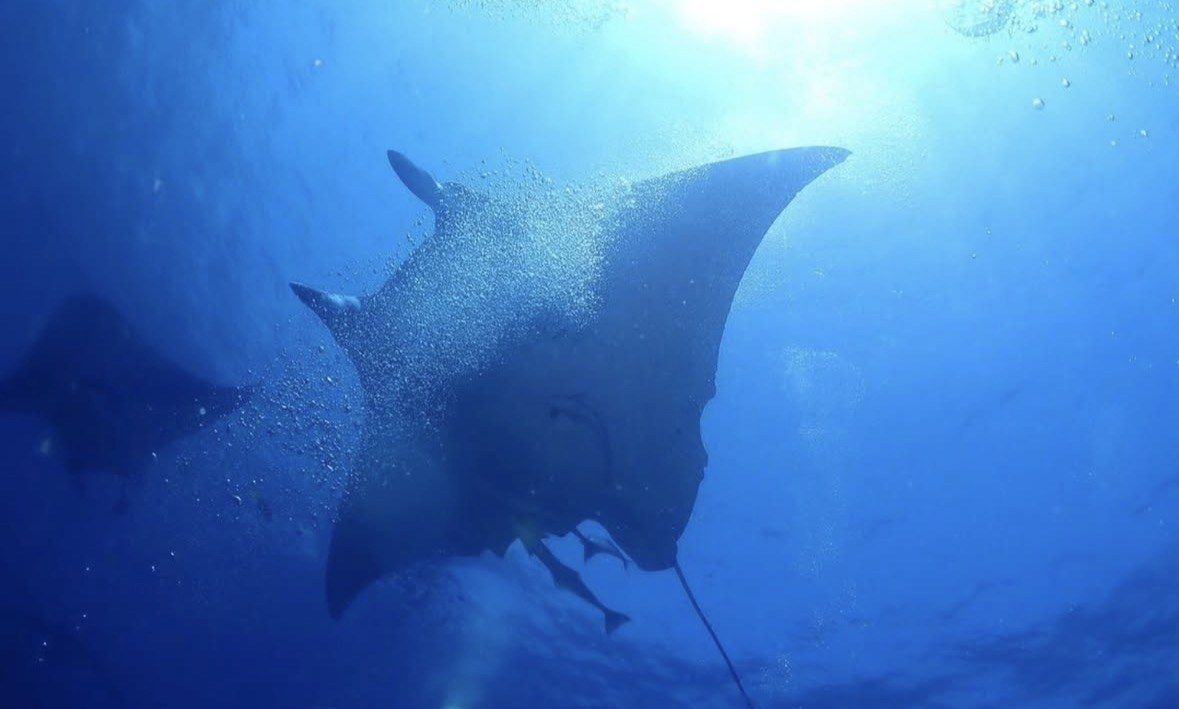
Mantas come up from below into the lit column, turn on their backs, loop, and go back down. Most reef mantas seen off Kona measure around 12 feet across, so a barrel roll under your chest is a large animal passing very close. Chasing one guarantees you see less: the rays work the plankton, and the plankton sits under the lights, so the people who stay still in the light get the closest passes.
- Keep both legs flat at the surface and arms on the float
- Do not touch, chase or reach for a manta
- No flash photography underwater
- No neck lanyards for phones
- Leave the full-face snorkel mask behind, as some boats will turn it away at the gear check
- Stay in your spot on the float line unless a guide moves you
Trip lengths and why the clock time changes
Time in the water is the figure worth comparing, and it is remarkably consistent at this site. Two Keauhou catamaran operators both state about 45 minutes at the surface above the feeding mantas on their own sites, while the canoe trip gives 30 to 45 minutes at the site. The rest of the duration is check-in, briefing, travel and the ride back.
Total evening length depends on the operator rather than the distance. One Keauhou boat says its manta snorkel is normally back about 1.5 hours after leaving. Another runs its first departure at roughly 2 to 2.5 hours and its second, after-dark trip at about 1.5 to 2 hours. The tours listed on this site run from 1 hour to 2.5 hours.
No Keauhou operator works to a fixed clock hour. Departures follow sunset and shift through the year, with the exact time confirmed when you book, so a 6:00 PM start in December is not the same month to month. The ride back is the shortest part of the night: a few minutes of engine noise, warm drinks on the boats that serve them, and you are back at the pier.
| Stage of the evening | How long it takes |
|---|
| Check-in at Keauhou Bay | 15 to 30 minutes before departure, depending on the tour |
|---|
| Crossing by boat to the viewing site | About 5 minutes |
|---|
| Paddle out by outrigger canoe | 7 to 10 minutes |
|---|
| At the surface above the mantas | About 45 minutes on the catamaran trips, 30 to 45 minutes by canoe |
|---|
| Whole evening, one Keauhou boat | Normally back about 1.5 hours after departure |
|---|
| Whole evening, another Keauhou operator | Roughly 2 to 2.5 hours on the first trip, about 1.5 to 2 hours after dark |
|---|
Picking a departure that matches this evening
The format described above is the same on every trip from this bay, so choose on length, group size and comfort. If you want the shortest evening with in-water supervision, the 1.5-hour tour on this site includes a floatation life belt, a USCG captain, a water snorkel guide and lifeguard, dive lights with a manta board to hang onto, plus mask and snorkel, from $125, rated 4.7 ★ (2585 reviews).
For a fuller evening on a larger boat, the 2.5-hour trip includes snorkelling gear, a jacket-style wetsuit top, a flotation device, bottled water, light snacks and live commentary on board, from $138 and rated 4.8 ★ (6332 reviews), the most reviewed on this site. The 1-hour small-group option meets at Keauhou Harbor 30 minutes before departure, near the boat dock, and includes a guide, equipment, an optional wetsuit and beverages, from $145 and rated 4.8 ★ (1184 reviews).
Confident ocean snorkelers who have done this before should take a later slot and the smallest group they can get. Anyone nervous about dark water, or travelling with a first-time snorkeler, should book an earlier departure on a bigger boat with a lifeguard in the water and a dry deck to sit on.
Questions people ask
Do I need to be a strong swimmer?
Tours on this coast expect independent swimmers with previous snorkelling experience, because you enter open water at night and hold position on a float without touching bottom. Minimum ages for going in the water start at 6 or 7 years on the boats that publish them, and the limit changes from one vessel to the next in the same bay. Some boats also take deck-only observers, and those can be younger.
What if no mantas turn up on my night?
A blank evening is uncommon: operators working Manta Village put sightings at better than 90% of nights, while stopping short of promising one. The rays are resident reef mantas rather than seasonal visitors, so there is no better month, but there is no certainty on any single evening either. Book a manta night early in your stay rather than on your last night, so a blank evening or a weather cancellation still leaves you a second chance.
Can I take photos or video from the float?
Cameras are generally fine, flash is not: underwater flash photography is prohibited at these sites, as are neck lanyards for phones. A phone in a case is a risk you carry yourself; Apple's IP68 rating for the iPhone 12 mini through iPhone 18 Pro Max covers a maximum depth of 6 metres for up to 30 minutes, and it is measured in a lab rather than off a float at night. Keeping one hand on the float matters more than the shot.
Will I be cold floating at the surface for 45 minutes?
Hawaii sea surface temperatures vary only about 6 degrees through the year and peak near 80 F in late summer or early fall, and night air on the Kona coast is mild, with NOAA average lows running from 68.4 F in February to 75.7 F in August. Lying motionless face-down still cools you down. Take the wetsuit top if the tour includes one, and bring a towel and a dry layer for the ride back.
Can I see the mantas from the shore at Keauhou Bay instead?
The lit feeding area sits out in open water around Kaukalaelae Point, beside the OUTRIGGER Kona Resort & Spa and roughly 7 miles south of Kailua-Kona, which is why every trip described on this page leaves the bay by boat or canoe. Hawaii's tourism authority also keeps the bay itself off its recommended list for swimmers and snorkelers, pointing to fishing and tour-boat traffic. With 60 to 70 viewing vessels estimated across the two Kona sites, the water off the point is a working area after dark.
Read also