In shortThe nightly lit manta site sits on the Kona coast of the Big Island, immediately off Keauhou Bay around Kaukalaelae Point, roughly 7 miles south of Kailua-Kona. There is no equivalent floodlit site on Oahu. Starting in Honolulu or Waikiki, you fly interisland to Kona (KOA), drive south to the bay, and go out with sunset. Plan at least one Kona overnight.
7 milessouth of Kailua-Kona
About 5 minutescrossing from Keauhou Bay
2state night viewing areas
Over 90% of nightsmantas reported at the site
Why the manta ray night snorkel is not an Oahu tour
Hawaii's boating authority names exactly two manta ray night viewing areas, and both are on the Kona coast of the Big Island: Makako Bay, also called Garden Eel Cove, in the north, and the coast fronting Keauhou Bay in the south. Kaukalaelae Point is the state's name for the southern one. That is the water the boats work after dark, and it sits next to the OUTRIGGER Kona Resort & Spa, roughly 7 miles south of Kailua-Kona.
The research record points the same way. NOAA Fisheries describes Hawaiian reef mantas as isolated island-resident populations, with photo-identification records of 318 individuals around Hawaii Island since 1979 and about 600 in Maui Nui since 2005, and no photo-ID matches between the two. Estimated movement between island groups comes out at about one female every 1,300 years and one male every 64 years, so the animals feeding off Keauhou are not a population that drifts along the chain towards Honolulu. NOAA also notes that a statewide survey is underway to find aggregation areas on other islands.
So a manta ray snorkel from Waikiki is a flight, a drive and an evening at Keauhou Bay. Searching "manta ray night snorkel oahu" and booking something on Oahu instead will not put you at the lit feeding site, which lies off Kaukalaelae Point.
What the floodlights started off Keauhou Bay
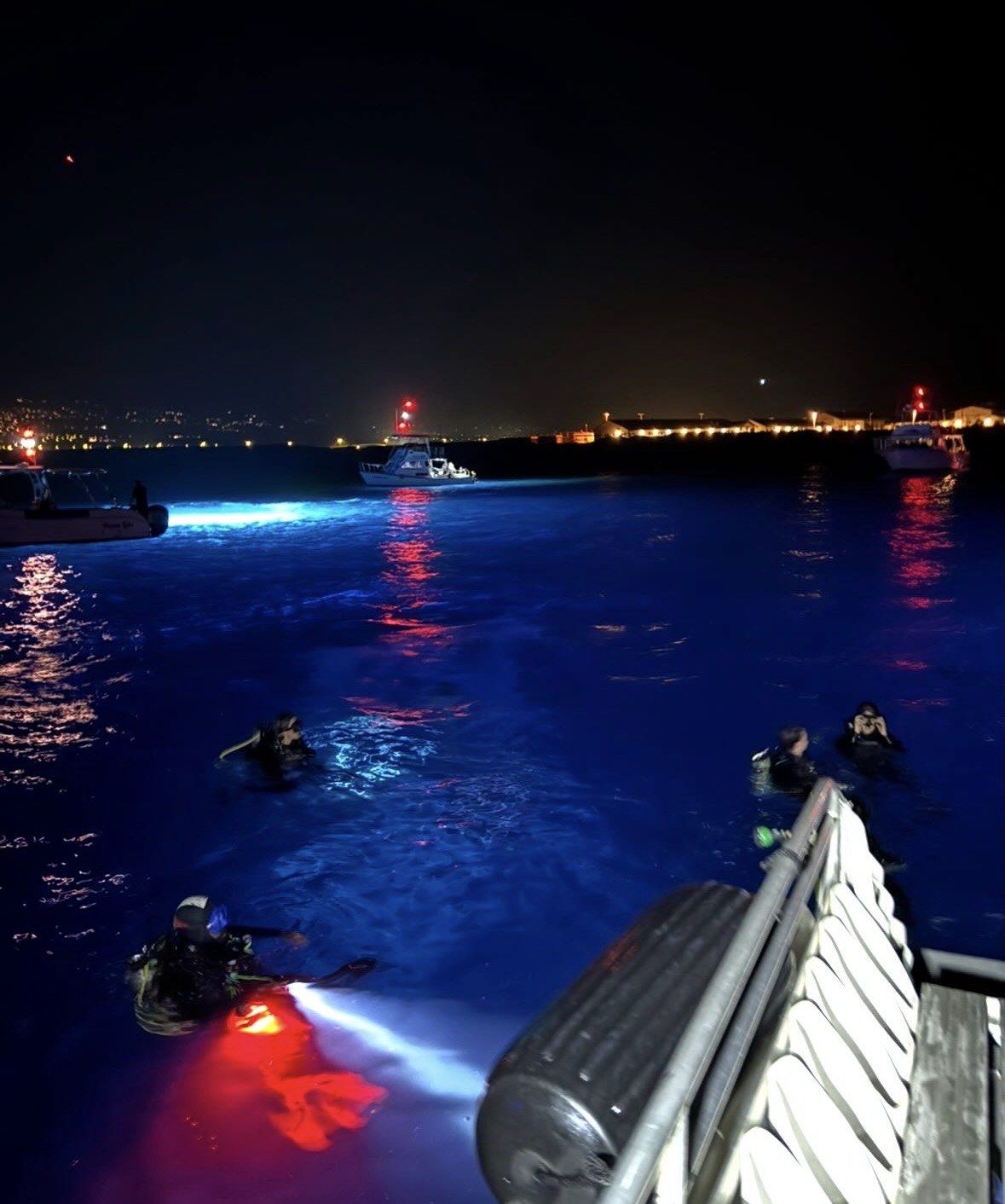
The aggregation here is man-made in origin. Floodlights aimed at the ocean by the resort above the bay from the early 1970s are what built it: microscopic plankton collect in the lit water near the surface, and the rays move in to feed on them. That mechanism is why every trip goes out around sunset or after dark, and why the boats carry dive lights and lit floats.
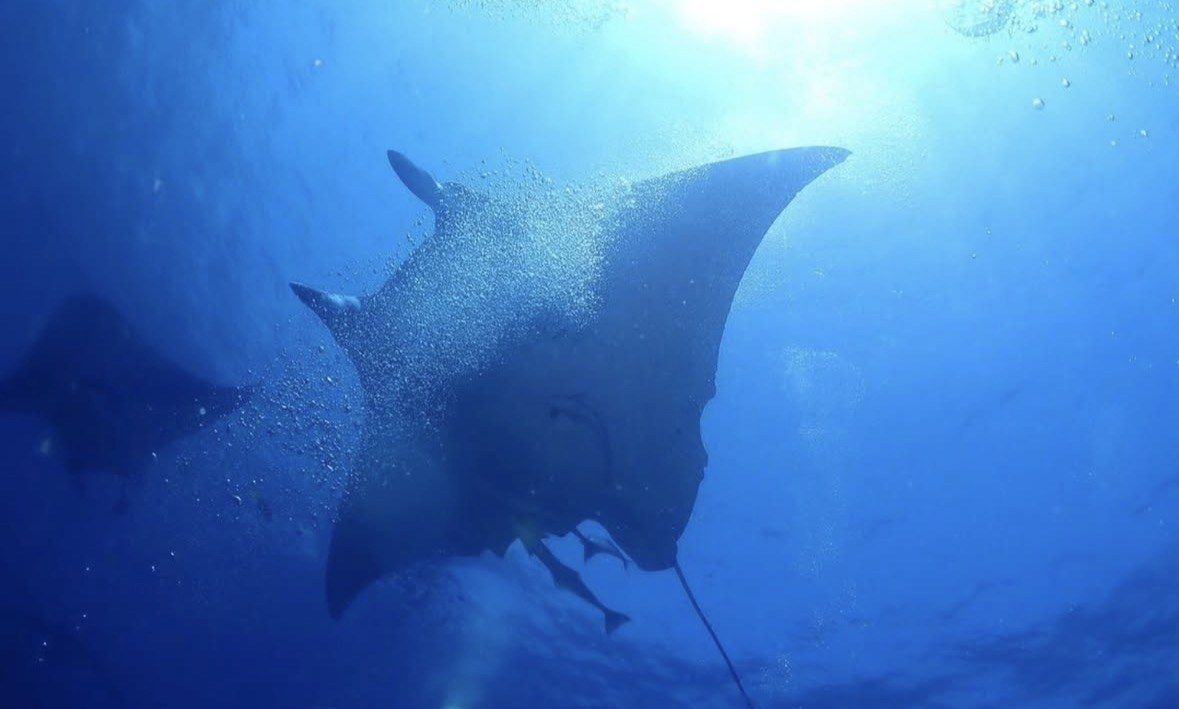
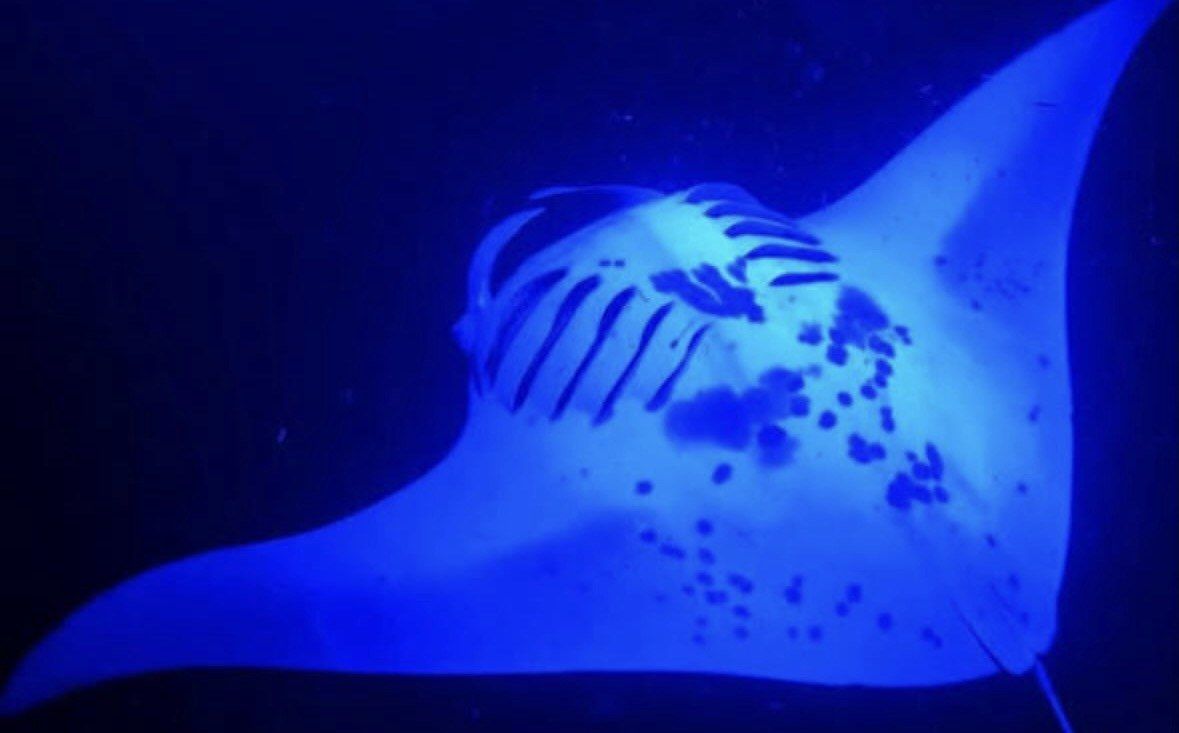
The animals are resident reef mantas, most of them around 12 feet across off Kona. Belly spot patterns identify individuals, and the Kona-based Manta Pacific Research Foundation has used them to name more than 300 animals in local water, Bertha among them: on the books since 1992, she was laser-measured at 11.7 feet wingtip to wingtip. Depth at the snorkel area runs to about 6 metres at most, so lying on a float at the surface puts the feeding directly below you.
The reported hit rate at Manta Village runs above 90% of nights, and no operator on this coast will promise you a sighting. Because the population is resident, there is no season to aim for: trips run all year. Getting to the rays means a boat or a canoe out of Keauhou Bay, as the state tourism authority does not recommend swimming or snorkelling in the bay itself with fishing and tour-boat traffic using the water.
Oahu to Kona day trip for a manta snorkel, step by step
The flight lands at Ellison Onizuka Kona International Airport at Keahole, KOA, at 73-200 Kupipi Street, Kailua-Kona, which handles both transpacific and interisland services. The state transport department's airline list for Kona runs to ten carriers, Air Canada, Alaska, American, Delta, Hawaiian, Japan Airlines, United, WestJet, Mokulele Airlines and Southwest, so a Honolulu to Kona flight for a manta snorkel is a normal interisland hop rather than a special arrangement.
From the airport you head south, past Kailua-Kona, to Keauhou. The bay has parking, restrooms and a small boat ramp, which is where the manta boats and canoes leave from. The few spaces at the pier itself fill fast, so plan on Kaleiopapa Street and the 3 to 5 minute walk down to the water, and count that walk as part of getting there rather than part of leaving.
Which tour you book decides if you are wanted at the pier 15 or 30 minutes ahead, and the departure hour itself tracks sunset through the year, which is why it reaches you in the booking confirmation rather than on a timetable. Plan your flight and your drive south around that confirmed time and nothing else. Hotel pick-up and drop-off is not included on the tours listed here, so plan your own transport to the bay.
| Stage | What the facts give |
|---|
| Fly in | KOA, Ellison Onizuka Kona International Airport at Keahole, 73-200 Kupipi Street, Kailua-Kona; takes interisland as well as transpacific flights |
|---|
| Drive south | About 7 miles of coast south from Kailua-Kona to Keauhou Bay, which has parking, restrooms and a small boat ramp |
|---|
| Park | Limited spaces at the pier; most cars use Kaleiopapa Street, 3 to 5 minutes on foot |
|---|
| Check in | Tour-dependent: anywhere from 15 to 30 minutes ahead of departure |
|---|
| Depart | Times follow sunset and are confirmed at booking |
|---|
| Cross | About five minutes from the bay to the lit site off Kaukalaelae Point |
|---|
The short evening if your flight day is tight
Kona Manta Ray Snorkel Tour Guaranteed or come again free keeps the whole evening to 1.5 hours and starts from $125, with a rating of 4.7 ★ (2585 reviews). You get a floatation life belt, mask and snorkel, and dive lights with a manta board to hang onto; a USCG captain runs the boat and a snorkel guide and lifeguard is in the water alongside you.
★ 4.7/5 · 2,585 reviews
Why a same-day return flight is a bad bet
The whole attraction happens after the light goes. One Keauhou operator states that its manta trip has no fixed clock time at all: it leaves the bay according to sunset and is normally back about 1.5 hours later. Another runs two departures an evening, the second leaving only once full darkness has arrived, and the dive-boat version of the trip returns between 9:00 and 9:30 pm.
Add the drive back north and a rental car return to any of those finishing times and you are at the airport late, wet-haired, on an evening whose start time you could not pin down when you bought the flight. If the sea does not cooperate and the evening is called off, a same-day itinerary leaves you nothing to move it to.
Book one overnight on the Kona side as a minimum. The short crossing helps here too: Keauhou boats are over the site in about five minutes, against more than 45 minutes of sailing each way from the northern harbour, so a Keauhou evening is the one that fits around a travel day.
Which night of your Kona stay to book
Put the manta evening on the first night you are on the island, never the last. The rays are resident and the boats go out every week of the year, so weather is what decides whether your evening runs. The National Weather Service records trade winds about 90% of the time in summer against about 50% in winter, and puts the rainy season on this coast in December to February. Kona airport's wettest normal month is January at 1.35 inches and its driest is July at 0.49 inches, with no month above 1.4 inches.
Two nights on the Kona side is the comfortable version: one for the booking you made, one in hand if the evening gets reshuffled. Leeward Kona is described by the National Weather Service as sunny and dry, with rain coming mainly from a few winter storms, so most trips go, but the ones that do not tend to go as a block when the trades break down.
The water asks more of you than most people expect. Operators here require independent swimmers with previous snorkelling experience, where a minimum age for entering the water is published it starts at 6 or 7 years, and full-face snorkel masks are not permitted on some boats. The position is hands on a lit float, legs flat behind you, eyes down and hands off the animals. That last part is state law: in Hawaii waters it is illegal to capture, take, possess, abuse or entangle a ray, with fines climbing from $500 to $10,000.
- Night air on this coast is mild all year: NOAA average lows run from 68.4 F in February to 75.7 F in August.
- Water temperature barely tracks your travel dates: the seasonal range across Hawaii is only about 6 degrees, with the peak near 80 F in late summer or early fall.
- You float almost motionless for around 45 minutes, so take the wetsuit or wetsuit top when a tour includes one.
- Crowding is the variable you can still influence: the state counts 60 to 70 viewing vessels working the two Kona sites, the cap on them sits in draft rules only, and a later departure leaves fewer boats above the site with you.
Questions people ask
Can you see manta rays on Oahu?
The two manta ray night viewing areas named by Hawaii's boating authority are both on the Kona coast: Makako Bay in the north and the coast fronting Keauhou Bay in the south. NOAA Fisheries holds photo-identification records of 318 reef mantas around Hawaii Island since 1979 and about 600 in Maui Nui since 2005, names South Maui and Olowalu reefs among Maui gathering areas, and notes a statewide survey is underway to find aggregation areas on other islands. The floodlit nightly feeding site people are looking for is the Keauhou one.
Is there a manta ray snorkel from Waikiki?
The tours on this site all work the Kona coast of the Big Island, and hotel pick-up and drop-off is not included on them. Reaching the rays from Waikiki means an interisland flight into Kona and your own transport south to Keauhou Bay. Once you are there, the crossing from the bay to the lit site takes about five minutes.
How long should I stay on the Big Island for this?
One overnight on the Kona side is the minimum and two is better. Departures follow sunset and are confirmed at booking, the later slots run in full darkness, and weather on this coast can take an evening out, most often in the December to February rainy season when the trades hold only about 50% of the time. A spare night gives you somewhere to move the booking.
Can I take my children on the night snorkel?
In-water minimum ages on this coast begin at 6 or 7 years where a boat publishes one, and two boats leaving the same pier can publish different ages, so read the terms of the tour you are booking. Swimming unaided and some previous snorkelling experience are expected as well. Some boats sell a deck-only place for a younger observer who stays aboard.
Which Keauhou departure should I choose, early or late?
If you snorkel comfortably, take a later, after-dark departure: one Keauhou operator markets its second trip on fewer vessels at the site and darker water, and that late slot only opens once the earlier one fills, so it may not exist on your date. If you have children, a first-time snorkeller or a queasy stomach, take the sunset-timed trip and use the daylight on the way out.
Read also