In shortManta Village is the manta ray night viewing site immediately off Keauhou, beside the OUTRIGGER Kona Resort & Spa and roughly 7 miles south of Kailua-Kona; the state's official name for the zone is Kaukalaelae Point. The resort began floodlighting the ocean in the early 1970s, the light concentrates plankton, and resident reef mantas feed on it. Boats from the bay are over the site in about five minutes.
7 milessouth of Kailua-Kona
about 5 minutesfrom Keauhou Bay by boat
about 6 metresmaximum depth of the snorkel area
early 1970sfloodlights first aimed at the water
Manta Village, Kona: where the site actually is
The viewing area known as Manta Village sits just offshore of the OUTRIGGER Kona Resort & Spa at Keauhou, roughly 7 miles south of Kailua-Kona. On paper it carries another name: Hawaii's boating authority calls the zone Kaukalaelae Point, one of only two designated manta ray night viewing areas on the Kona coast. The other lies well to the north at Makako Bay, also called Garden Eel Cove, and the state describes the southern one as the coast fronting Keauhou Bay.
Depth is the detail most people get wrong before they arrive. The snorkel area at Keauhou has a maximum depth of about 6 metres, so the whole feeding scene plays out in a short, well-lit water column rather than somewhere far below you.
Because the site sits immediately off the bay, boats are over it in about five minutes. Leaving from a northern harbour instead means more than 45 minutes of sailing each way to reach the other zone, and that is the biggest difference between two tickets that otherwise look alike. Keauhou Bay itself has parking, restrooms and a small boat ramp, and every boat and canoe working this site leaves from there.
- Position: directly offshore of the resort at Keauhou, around Kaukalaelae Point
- Distance from town: roughly 7 miles south of Kailua-Kona
- Transit from Keauhou Bay: about five minutes by boat, 7 to 10 minutes by paddle canoe
- Depth: about 6 metres at its deepest in the snorkel area
- Swimming out from the bay is ruled out: the state tourism authority advises against entering the water there because of fishing and tour-boat traffic
The longer evening over the lights
A 2.5-hour night snorkel with gear, a jacket-style wetsuit top, a flotation device, snacks and commentary already in the fare, from $138 and rated 4.8 ★ (6332 reviews), for readers who want an unhurried fitting and a slow ride home.
★ 4.8/5 · 6,332 reviews
Why manta rays come to the lights in Kona
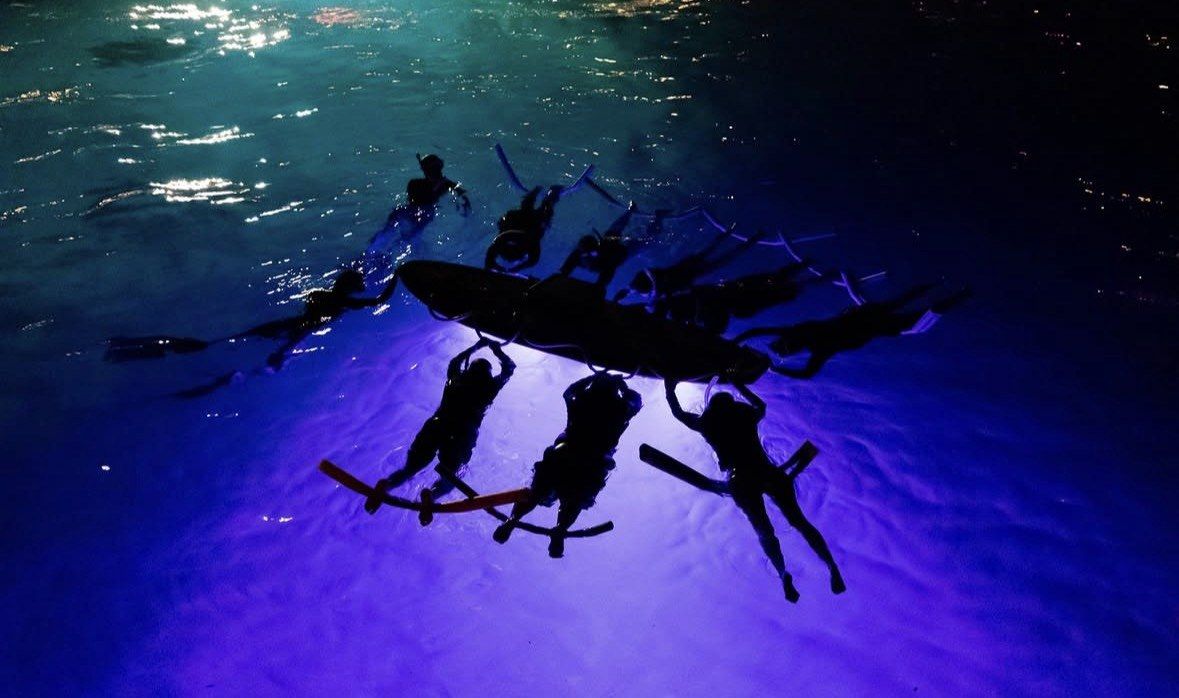
The aggregation is man-made in origin. The resort above the bay began floodlighting the ocean in the early 1970s; the beams concentrated microscopic plankton near the surface, and reef mantas moved in to feed on it. The state tourism authority sets out the mechanism plainly: the rays gather in this area to feed on plankton.
Fifty years on, that accident runs as routine. The rays at the Keauhou night site are resident animals rather than migrants, so there is no manta season here and trips run in every month. How dependable the feeding station has become shows in the figure operators put on this stretch of water: rays turn up on more than 90% of nights, with no operator promising one on the night you happen to book.
Boat lights continue the job the resort started. One Kona operator describes its boats arriving at the site just before sunset, with the lights going out only when the last boats head back to harbour, and that window is what the whole evening is built around.
How the feeding chain works, hour by hour, after sunset
Light goes in the water, plankton drifts into the bright cones, and the mantas loop up through them with their mouths open. From a lit surface float you look down into that column; on a Kona charter that carries divers too, their lights sit roughly 30 feet beneath the raft, which marks the depth of the space you are watching.
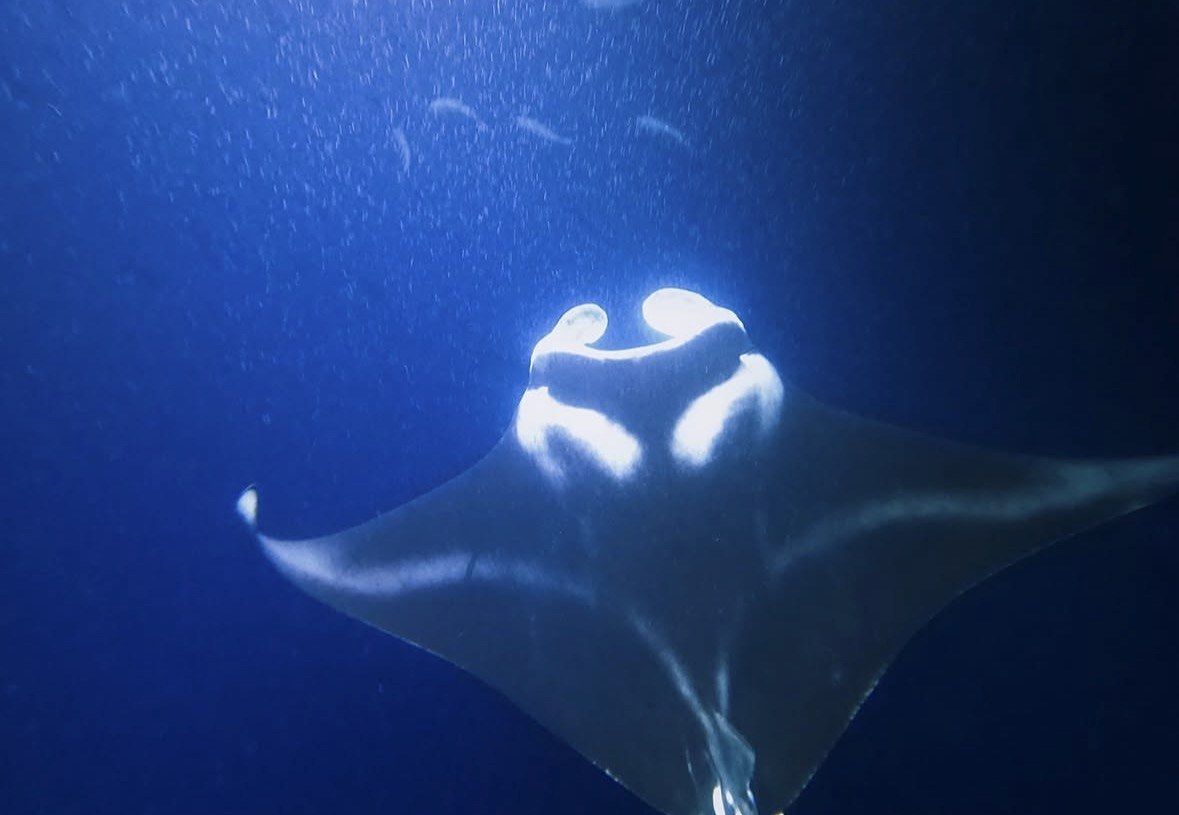
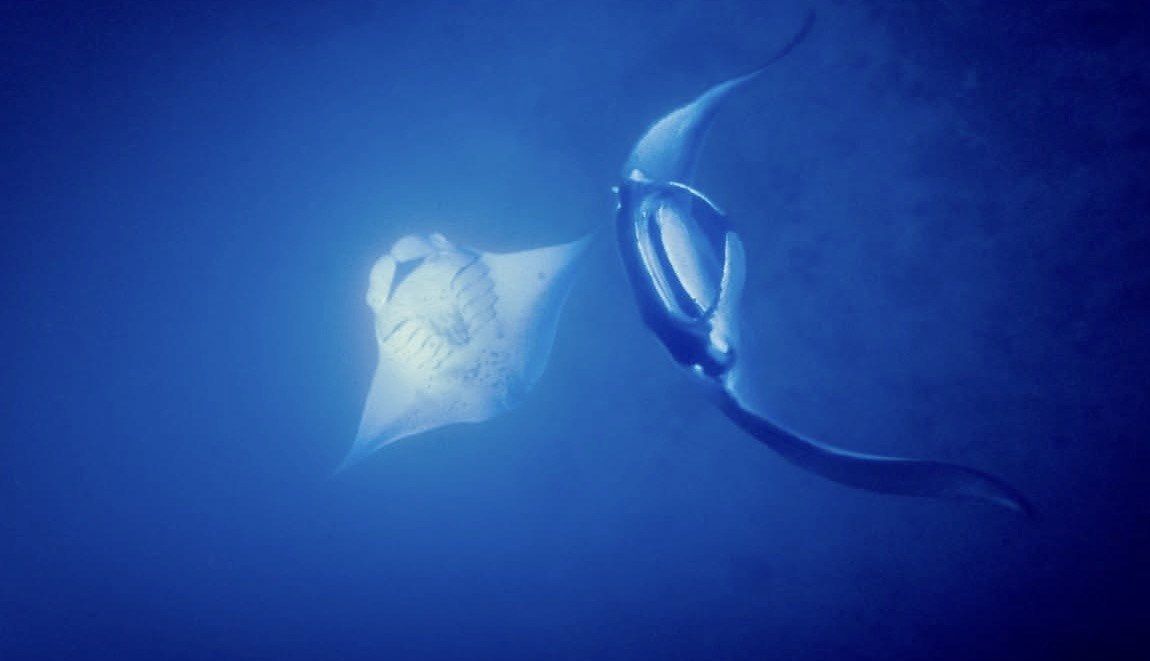
Size is what makes the behaviour read so clearly. Most reef mantas seen off Kona measure around 12 feet across, so one animal rolling under your chest fills the field of view and there is nothing else lit to compete with it. Keauhou boat operators put the surface session at about 45 minutes on their own pages.
Keeping flat at the surface is part of the rules. Conservation guidelines for these trips tell snorkelers to observe only and hold their legs horizontal, so a kicking foot never meets a passing manta. Operators also ban underwater flash, Shark Bands and neck lanyards for phones, and tell guests never to touch the animals. Hawaii law backs the no-touch instruction: capturing, taking, possessing, abusing or entangling any ray in state marine waters is illegal, with fines climbing from $500 to $10,000.
How crowded the site gets, and what the draft rules would change
The state estimates that 60 to 70 manta viewing vessels work across the two Kona viewing sites, and links that number to overcrowding. A boating division notice records six commercial operators moored in Keauhou Bay small boat harbour alone, which gives you a sense of how much traffic can sit in position over a patch of water a few minutes from the ramp.
A set of state proposals would change that. They are listed below, and they carry no legal force yet: they remain draft rules on the boating division's rulemaking page, so no cap on crowds at Keauhou applies today.
The practical takeaway is about timing rather than policy. A later departure means fewer boats around your float and darker water, and that is the one lever a visitor can pull while the caps go unadopted. A third-party safety assessment of the viewing sites also flagged live boating, several boats tying to a single mooring and insufficient lighting, and operators have since adopted voluntary standards drafted with the Coast Guard.
| Proposed measure in the draft rules | What the draft says |
|---|
| Commercial viewing permits | Capped at 24 per viewing zone |
|---|
| Operator fee | A fixed $300 per month |
|---|
| Defined viewing hours | 4:00 p.m. to 4:00 a.m., split into two-hour shifts |
|---|
| Passengers per boat | 60 per 24 hours |
|---|
| Guide-to-customer ratio | 8 to 1 |
|---|
Which departure puts you over Manta Village fastest
Go out from Keauhou Bay unless you specifically want the northern site or a particular dive shop. The arithmetic is simple: about five minutes of transit instead of 45 minutes or more each way, so your money goes on water time rather than on motoring in the dark, and anyone prone to seasickness spends a fraction of the evening afloat.
Among the tours on this site, the 1-hour small-group trip is the one built around that short hop. Guests gather at Keauhou Harbor half an hour before the start, near the boat dock, and the fare covers a professional guide, snorkelling equipment, an optional wetsuit, local taxes and beverages. It starts from $145 and holds a rating of 4.8 ★ (1184 reviews).
If you would rather have a longer evening on a bigger boat, the 2.5-hour night snorkel includes snorkelling gear, a jacket-style wetsuit top, a flotation device, bottled water, light snacks and commentary on board, from $138 with 4.8 ★ (6332 reviews). The 1.5-hour trip starts from $125 and rated 4.7 ★ (2585 reviews), which still carries a USCG captain plus a snorkel guide and lifeguard in the water, dive lights with a manta board to hold, a floatation life belt, mask and snorkel.
One scheduling habit matters more than the choice of boat. Departures here move with sunset rather than a fixed clock, so treat the time in your booking details as the only real one, and leave yourself a spare night earlier in the trip instead of making the mantas your last evening on the island.
- Shortest time on the water, smallest group: 1 hour, from $145, 4.8 ★ (1184 reviews), meeting at Keauhou Harbor 30 minutes before departure
- Longest of the three with food and commentary: 2.5 hours, from $138, 4.8 ★ (6332 reviews)
- Lowest starting price with in-water supervision: 1.5 hours, from $125, 4.7 ★ (2585 reviews)
Questions people ask
Is Manta Village the same place as Kaukalaelae Point?
Yes. Manta Village is the name operators and visitors use; Kaukalaelae Point is the state's official name for the same viewing zone off Keauhou. It is one of two designated manta ray night viewing areas on the Kona coast, the northern one being Makako Bay, also known as Garden Eel Cove.
Which manta rays live at the Keauhou night site?
Reef manta rays, resident to the island rather than migratory. The pool of animals that can swim into these lights is small: NOAA Fisheries photo-identification records cover 318 individual reef mantas around Hawaii Island going back to 1979, and genome scans put the adult breeding population at only about 104. Belly spot patterns work as identification, which is how the Kona-based Manta Pacific Research Foundation has put names to more than 300 individuals; one of them, Bertha, has been on the books since 1992 and measured 11.7 feet wingtip to wingtip under laser photometry.
Do giant manta rays show up at Manta Village?
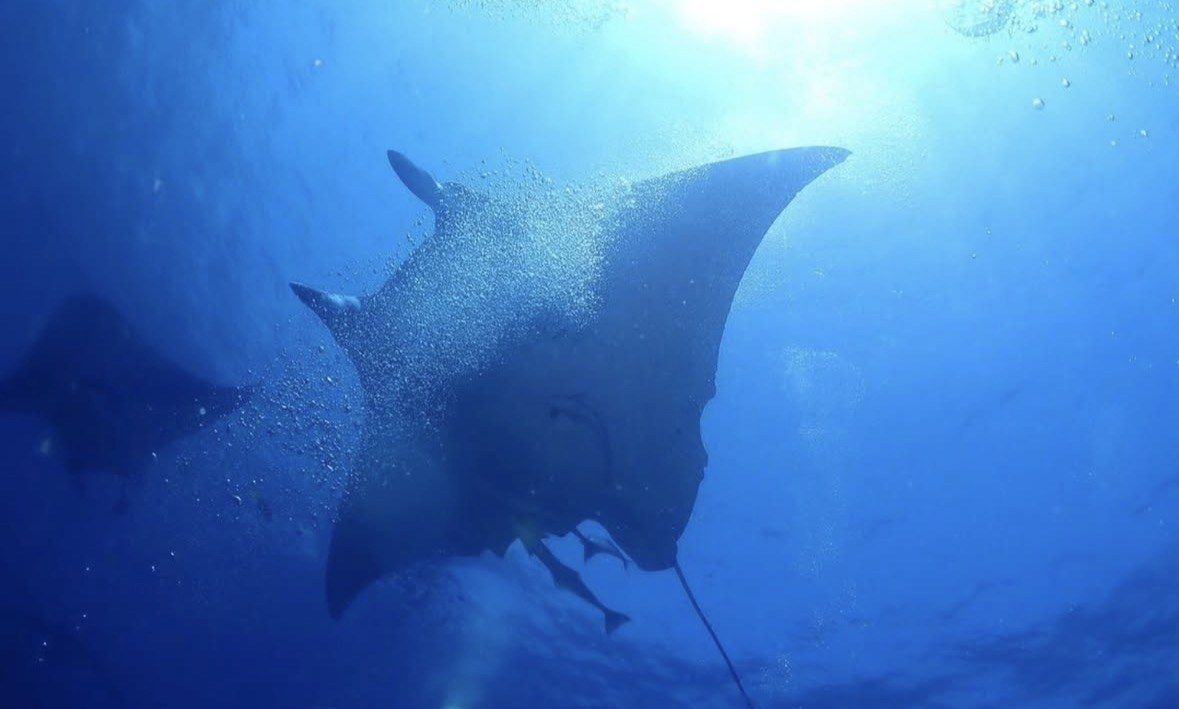
The far larger giant manta ray turns up as an occasional visitor rather than the resident species at this site. It reaches a disc width of up to 26 feet and is listed as threatened under the Endangered Species Act. What you are almost certainly watching feed in the lights is a reef manta of around 12 feet across.
How long are you actually in the water above the rays?
Budget about 45 minutes of floating over the feeding rays on a boat trip out of Keauhou, the figure the operators publish for themselves; the paddle canoe works to 30 to 45 minutes at the site. The rest of an evening is check-in, kit fitting, the short crossing and the ride back. Surface time is similar across formats, so trip length mostly reflects what happens around it.
Is one month better than another for Manta Village?
No single month beats the rest, because the rays are resident and trips run all year. What shifts over the calendar is the weather around the trip: trade-wind conditions hold about 90% of the time in summer and roughly 50% in winter, the Kona airport normals keep every month under 1.4 inches of rain, and the sea itself moves only about 6 degrees across the year, topping out near 80 F in late summer or early fall.
Read also