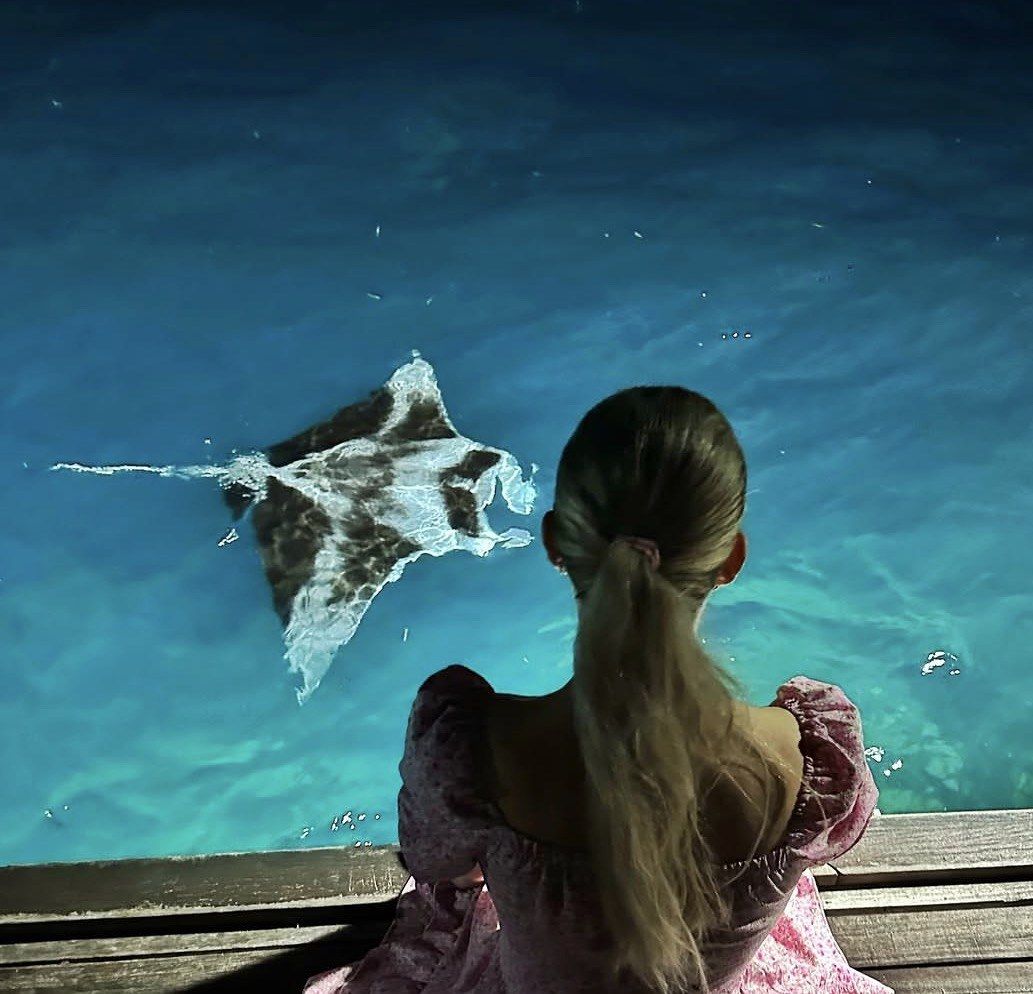
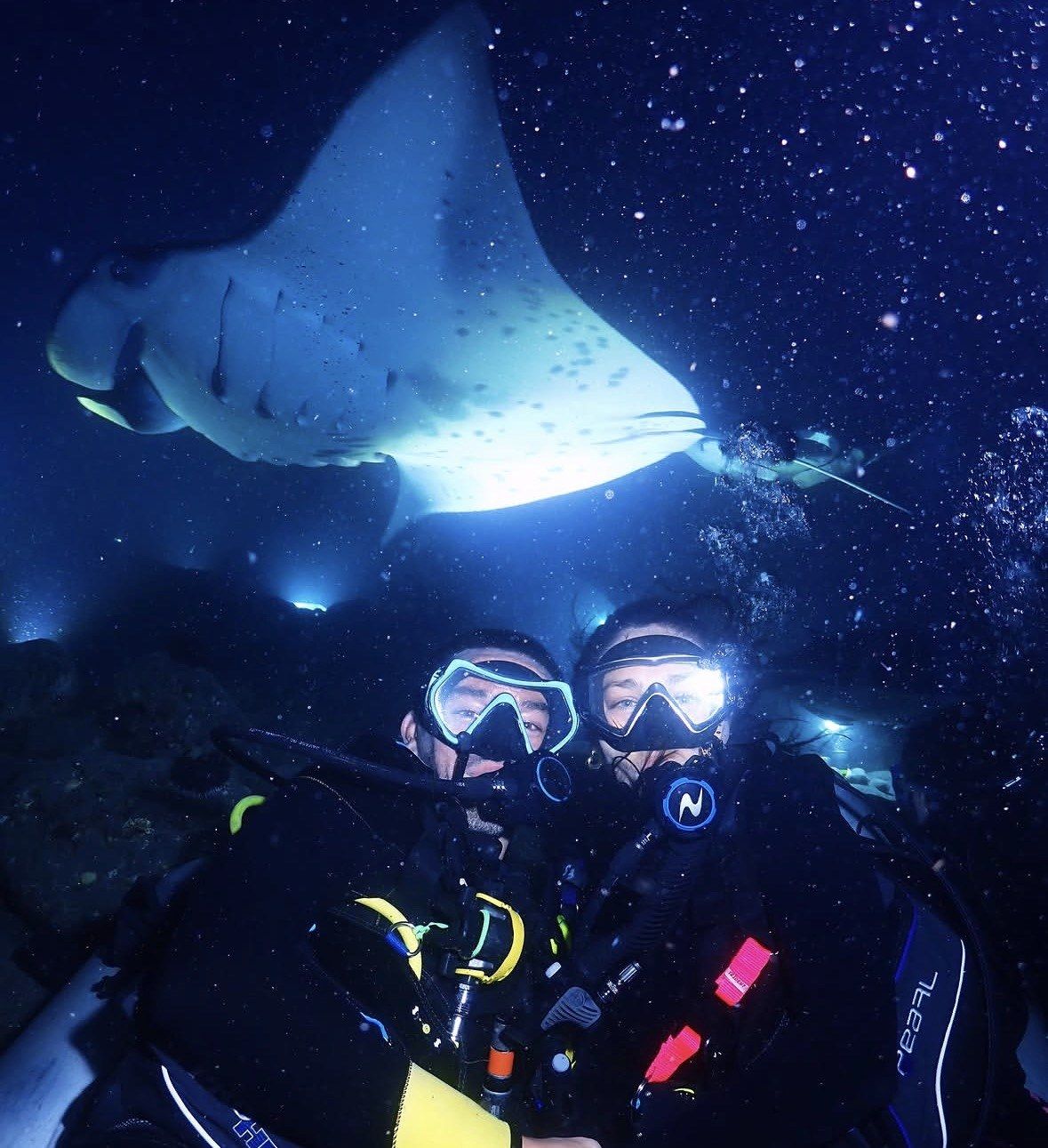
In shortOne coast in the whole chain: the Kona side of Hawaii Island. Hawaii's boating authority designates exactly two manta ray night viewing areas: Makako Bay in the north and Kaukalaelae Point off Keauhou Bay in the south. Resident reef mantas feed there in floodlit water after dark, and operators at Manta Village report sightings on more than 90% of nights. Maui Nui has mantas too, but no lit viewing area working every night.
90%+nights with mantas reported
2designated Kona viewing areas
about 5 minutesKeauhou Bay to the site
318mantas photo-ID'd off the island
Where to see manta rays in Hawaii: the answer, island by island
Hawaii's boating authority names two night viewing areas for manta rays in the whole state, and both sit on the leeward side of Hawaii Island. Makako Bay, also called Garden Eel Cove, is the northern one. The southern one is the water fronting Keauhou Bay, officially Kaukalaelae Point, immediately offshore of the OUTRIGGER Kona Resort & Spa and about 7 miles down the coast from Kailua-Kona. That geography decides your evening: a boat out of Keauhou Bay is above the rays roughly five minutes after casting off, while a departure from the northern harbour spends more than 45 minutes sailing each way.
The night snorkel works for a mechanical reason. What sets this stretch of coast apart from the rest of the chain goes back to the early 1970s, when the resort above the bay started aiming floodlights at the ocean: plankton builds up in the lit water, and reef mantas rise through it to feed. The state tourism authority describes the same chain of events, plankton feeding after dark. The snorkel area bottoms out at roughly 6 metres, shallow enough that a feeding ray passes a few metres beneath the float line.
Those rays live there. The records behind that are specific: NOAA Fisheries lists 318 reef mantas photo-identified around Hawaii Island since 1979, genome scans estimate only about 104 adult breeders among them, and these animals stay with the island group they belong to, with movement between groups put at roughly one female every 1,300 years and one male every 64 years. A resident population feeding under lights every evening is what gives operators at Manta Village a reported sighting rate above 90% of nights. None of them promises the animals will show.
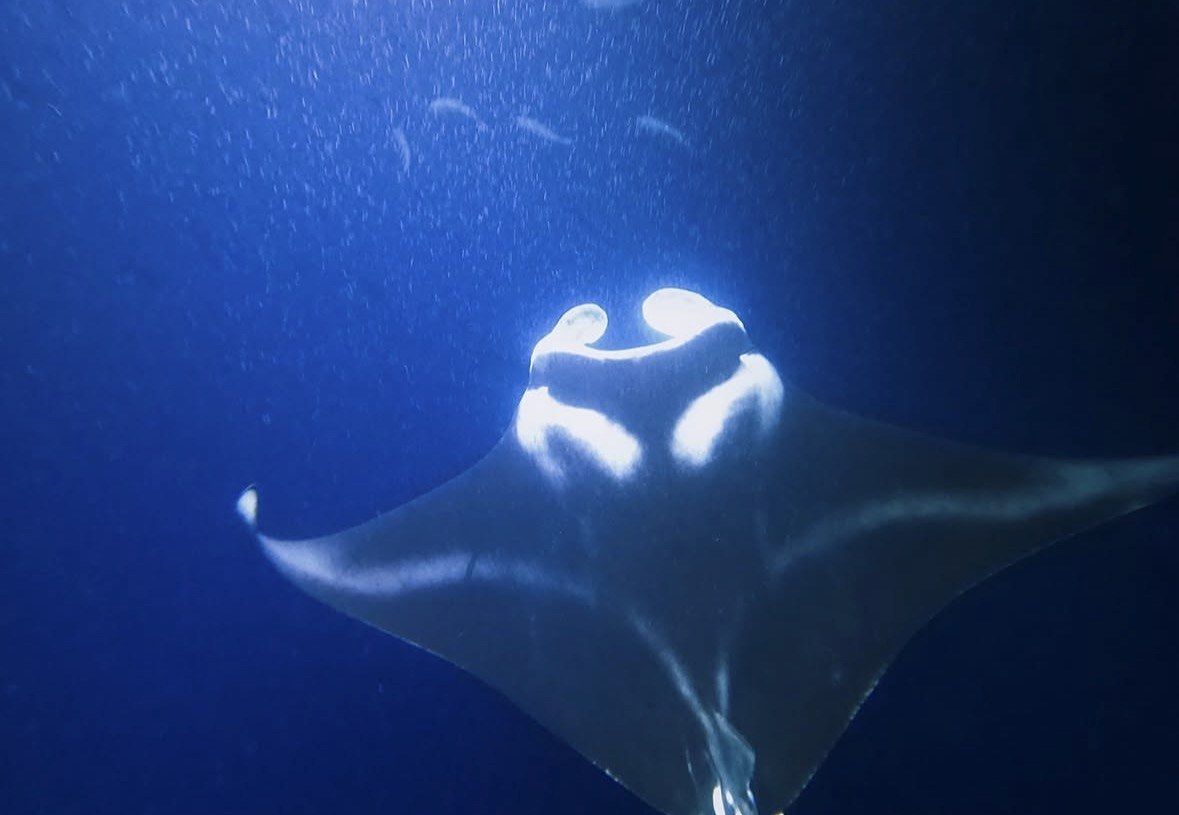
The Big Island is the island to pick, and the Kona coast within it. Expect reef-manta proportions, around 12 feet across for most of the animals seen off Kona; Bertha, the local ray with the longest record, has been known since 1992 and measured 11.7 feet wingtip to wingtip under laser photometry. The giant manta ray is a different animal, up to 26 feet across and listed as threatened under the Endangered Species Act, and it shows up off this coast only now and then.
- Two designated night viewing areas, both on the Kona coast of Hawaii Island
- Rays in residence all year, which is why no month on this coast counts as off-season
- Floodlit plankton feeding after dark, which is why departures follow sunset
- Mantas reported on more than 90% of nights by operators working Manta Village
The most reviewed Kona night snorkel
If this is the thing you came to the Big Island for, the 2.5-hour trip gives you the full evening, with gear, a jacket-style wetsuit top, a flotation device, water and light snacks already in the fare: from $138, rated 4.8 ★ (6332 reviews).
★ 4.8/5 · 6,332 reviews
Can you snorkel with manta rays on Maui or Kauai?
Maui Nui, which NOAA Fisheries defines as Maui, Molokai, Lanai and Kahoolawe, has its own reef manta population, and on paper a bigger one: about 600 individuals photo-identified since 2005, with genome scans estimating 129 adult breeders. The gathering areas named by researchers are the reefs off South Maui and the reef at Olowalu. Those are daytime reef sites, and an encounter there comes down to what a given dive or snorkel runs into that day. No part of Maui Nui is one of the state's two designated night viewing areas, and nothing there floodlights plankton onto the same patch of water every evening.
For Kauai and Oahu, no manta aggregation area appears in the material behind this page. NOAA Fisheries notes that a statewide survey is under way specifically to find aggregation areas on other islands, which tells you where the knowledge currently stands. Plan a Kauai or Oahu trip around other things and count a manta as luck if a daytime boat crosses one.
The two documented populations keep to themselves: there are no photo-identification matches between the Hawaii Island animals and the Maui Nui animals. On most of the chain, meeting a manta is a daylight chance encounter. On one coast it is a lit, scheduled event that runs after dark through the year.
Flying over for the evening from another island
The interisland hop lands at Ellison Onizuka Kona International Airport at Keahole, 73-200 Kupipi Street, Kailua-Kona, which handles transpacific and interisland traffic alike; Hawaiian, Alaska, American, Delta, United, Southwest, Air Canada, WestJet, Japan Airlines and Mokulele Airlines all serve it. From Maui, Oahu or Kauai the choice is between a chance daytime encounter at home and a short hop to the one coast where the viewing is organised nightly.
What the travel buys you is predictability and time in the water. Keauhou operators put the surface session above the feeding rays at around 45 minutes, and the tours listed here fit the whole evening into 1.5 to 2.5 hours, because the site is minutes from the bay instead of an hour of motoring. Prices start low as well: the short tour on this site is from $125 and the longer one from $138, both 'from' prices, which is small money next to the airfare.
| Island or group | What the records show | Designated night viewing area |
|---|
| Hawaii Island, Kona coast | 318 reef mantas photo-identified since 1979, about 104 adult breeders, mantas reported on more than 90% of nights at Manta Village | Yes: Makako Bay in the north and Kaukalaelae Point off Keauhou Bay in the south |
|---|
| Maui Nui: Maui, Molokai, Lanai, Kahoolawe | About 600 reef mantas photo-identified since 2005, about 129 adult breeders, with South Maui reefs and Olowalu reef among the gathering areas | No, not among the state's two designated areas |
|---|
| Kauai, Oahu and the rest of the chain | No aggregation area on record; a statewide survey is under way to locate them | No, not among the state's two designated areas |
|---|
What the Keauhou evening asks of you
Nobody swims out to this. The state tourism authority advises against swimming or snorkelling in Keauhou Bay itself because of fishing and tour-boat traffic, and the lit feeding water sits offshore around Kaukalaelae Point, so the only way to be there is aboard a vessel leaving the bay. Parking, restrooms and a small boat ramp all sit at the bay. The pier itself holds only a handful of cars, so most drivers leave the car on Kaleiopapa Street and walk the 3 to 5 minutes down to the water with a towel.
Departure times follow sunset rather than a timetable, so the time on your confirmation is the one that matters, and check-in lands 15 to 30 minutes before it depending on the tour. Tours working out of this bay take independent swimmers who have snorkelled before, and the youngest in-water ages any operator here publishes begin at 6 or 7 years. Some boats refuse full-face snorkel masks.
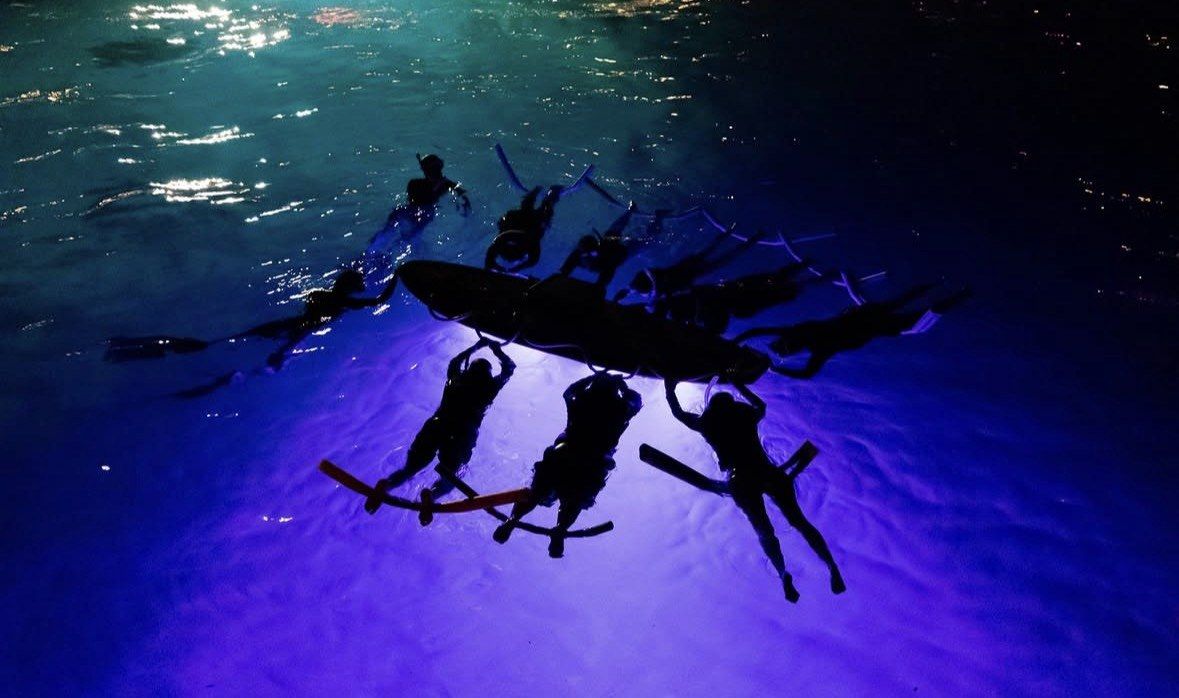
Once you are in, the job is to hold a lit float or a manta board, keep flat at the surface and look down. Flash stays off underwater, phones travel without a neck lanyard, and nobody touches an animal; Hawaii law makes it illegal to capture, take, possess, abuse or entangle a ray in state marine waters, with fines escalating from $500 to $10,000. Crowding is the real nuisance. By the state's own count 60 to 70 viewing vessels work the two Kona areas, and the regulations written to cap them have not left draft, which is the argument for a later slot with fewer hulls parked around your float.
Which tour to pick, and where it fits in your trip
Put the Kona evening early in the trip, never on the last night. The animals are resident, so the calendar favours no single date; the weather does the reshuffling on this coast. Trades hold about 90% of the time in summer against roughly 50% in winter, the rainy season falls between December and February, and January is the wettest normal month at 1.35 inches. A spare evening is what turns a blown-out night into a second attempt, and that holds even for a tour whose name carries a come-again arrangement.
Between the two tours here, pick on how long you want to be aboard. From $125 and rated 4.7 ★ (2585 reviews), the 1.5-hour Kona snorkel keeps the evening tight without thinning out the support around you: mask and snorkel, a floatation life belt, dive lights with a manta board to hang onto, a USCG captain at the helm, plus a snorkel guide and lifeguard in the water. It suits anyone flying in and out, or anyone whose stomach prefers a short night afloat.
Reviews pile up on the 2.5-hour Big Island Manta Ray Night Snorkel: 6332 of them at 4.8 ★, from $138, and it gives you the slower-paced evening of the two. The fare already covers snorkelling gear, a jacket-style wetsuit top, a flotation device, bottled water, light snacks, a professional guide and live commentary on board. You meet the crew inside the harbour at the small brown-roofed restrooms with a pavilion: first road right after you turn in, past Boat Storage and the Sea Store & Deli on your left, then left.
- Short evening with supervision in the water: the 1.5-hour tour from $125
- Longer evening with a wetsuit top, snacks and commentary: the 2.5-hour tour from $138
- Either way, hold the date in advance instead of turning up, and keep a second evening spare
Questions people ask
Do I need to pick a particular month for manta rays in Hawaii?
Not at the Kona night site. The rays there are resident reef mantas, so boats go out in every month of the year. What changes is the weather that cancels evenings: the National Weather Service puts the rainy season in December to February and records trades about 90% of the time in summer against about 50% in winter. Across the year the sea surface shifts by only about 6 degrees, with the peak near 80 F in late summer or early fall.
Which island has the most manta rays?
By photo-identification records, Maui Nui: about 600 individual reef mantas logged since 2005, against 318 around Hawaii Island since 1979. More animals does not mean better viewing. The Hawaii Island rays gather nightly at a lit feeding area that the state has designated for viewing, which is why the reliable snorkel happens there rather than off Maui.
Do I need a boat, or can I reach the mantas from the Keauhou shoreline?
Kaukalaelae Point, where the feeding happens, lies offshore from the resort whose lights built the aggregation in the first place, and the state tourism authority advises against swimming or snorkelling in Keauhou Bay because of fishing lines and tour-boat traffic. Reaching the rays means going out on a vessel from the bay. With an estimated 60 to 70 viewing boats working the two Kona areas, the water off the point is a working site after dark.
Are these the giant manta rays I have seen in documentaries?
No. The residents at the Kona night site are reef manta rays, most of them around 12 feet across; Bertha, identified in 1992, measured 11.7 feet wingtip to wingtip. The giant manta ray reaches up to 26 feet, is listed as threatened under the Endangered Species Act, and turns up off Kona only as an occasional visitor.
How much time do I actually spend with the rays?
Keauhou operators put the surface session at around 45 minutes, floating still above the feeding animals with a lit float in your hands. The rest of the ticket is kit fitting, the safety briefing and the ride out, which is short from Keauhou Bay because the site is about five minutes away. That is why the tours on this site run from 1.5 to 2.5 hours for a similar stretch in the water.
Read also