The royal birthplace at the head of the bay
Keauhou Bay sits on the Kona coast roughly 7 miles south of Kailua-Kona, at the southern end of the resort area the state tourism authority places just below Historic Kailua Village. Kauikeaouli, later King Kamehameha III, was born on this shoreline, and a small enclosure beside the water marks the spot. The Daughters of Hawai'i, founded in 1903, looks after it, as it does Hulihe'e Palace in Kailua-Kona and Queen Emma Summer Palace. The bay itself is small and shallow; its snorkel area reaches a maximum depth of about 6 metres, and the water has always served boats more than swimmers.
Development around the bay turned it into the launching point for traffic on this southern stretch of coast. The Hawaii Tourism Authority lists the amenities as parking, restrooms and a small boat ramp, with kayaking, stand-up paddleboarding and fishing on offer, and a state boating notice records six commercial operators moored in the small boat harbour. All that movement, fishing boats included, is why the same authority advises against swimming or snorkelling inside the bay. Up the hill, Keauhou Shopping Center on Ali'i Drive holds KTA Superstores, CVS/Longs Drugs and Regal Cinemas, with L&L Hawaiian BBQ, Tropics Tap House Kona and Kenichi Pacific for food.
Where the night gathering at Manta Village came from
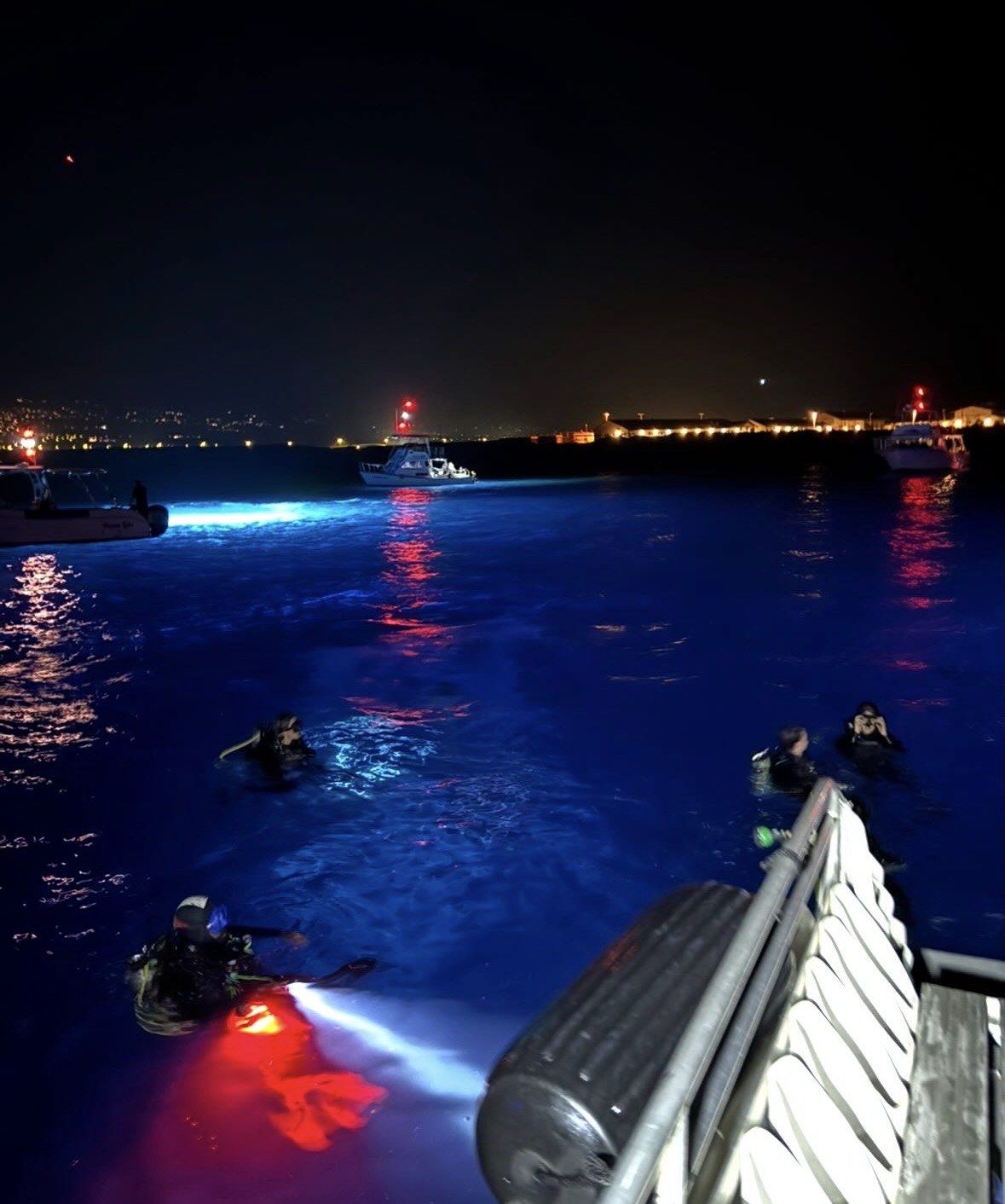
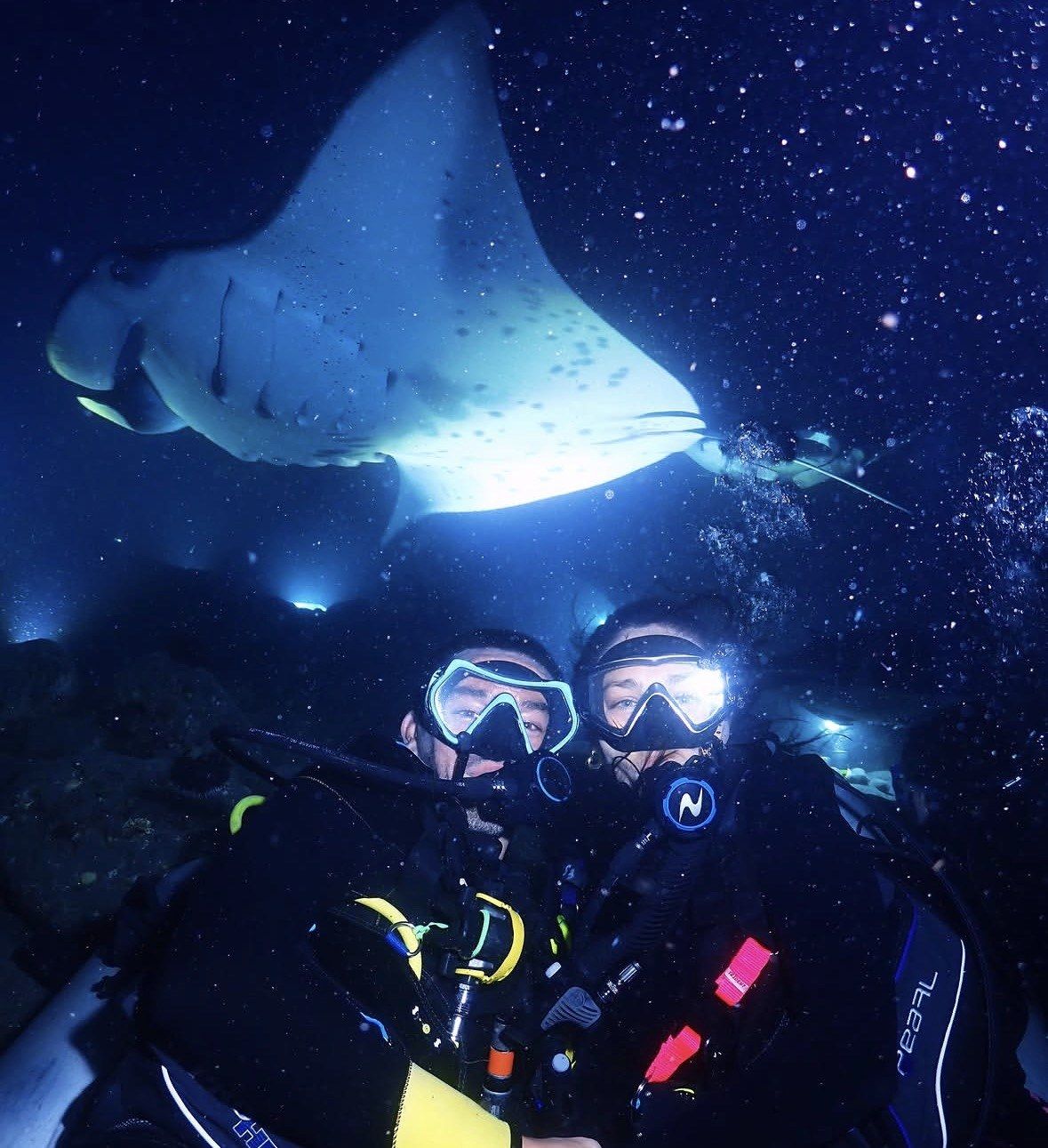
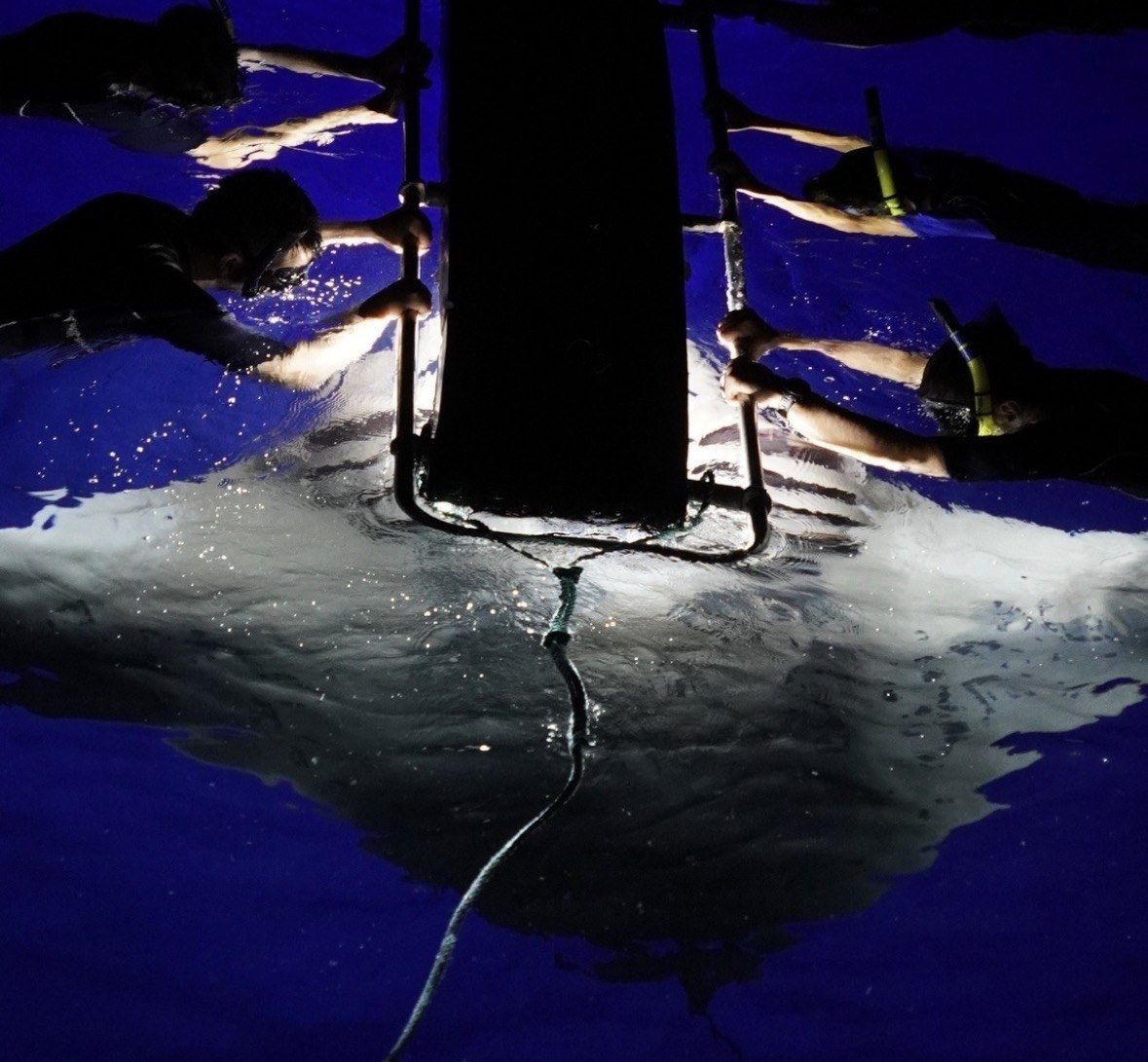
The manta gathering off Keauhou exists because of electric light. The resort above the bay began floodlighting the ocean in the early 1970s, and the chain has worked the same way ever since: the light pulls plankton into the lit water column, and reef manta rays come in to feed on it. The state tourism authority describes the same process, mantas gathering in the area to feed on microscopic plankton. That is why trips go out around sunset or after dark, why the boats carry dive lights, and why snorkelers hold a lit float. The viewing area sits immediately off Kaukalaelae Point, beside OUTRIGGER Kona Resort & Spa, close enough that boats from the bay are there in about five minutes.
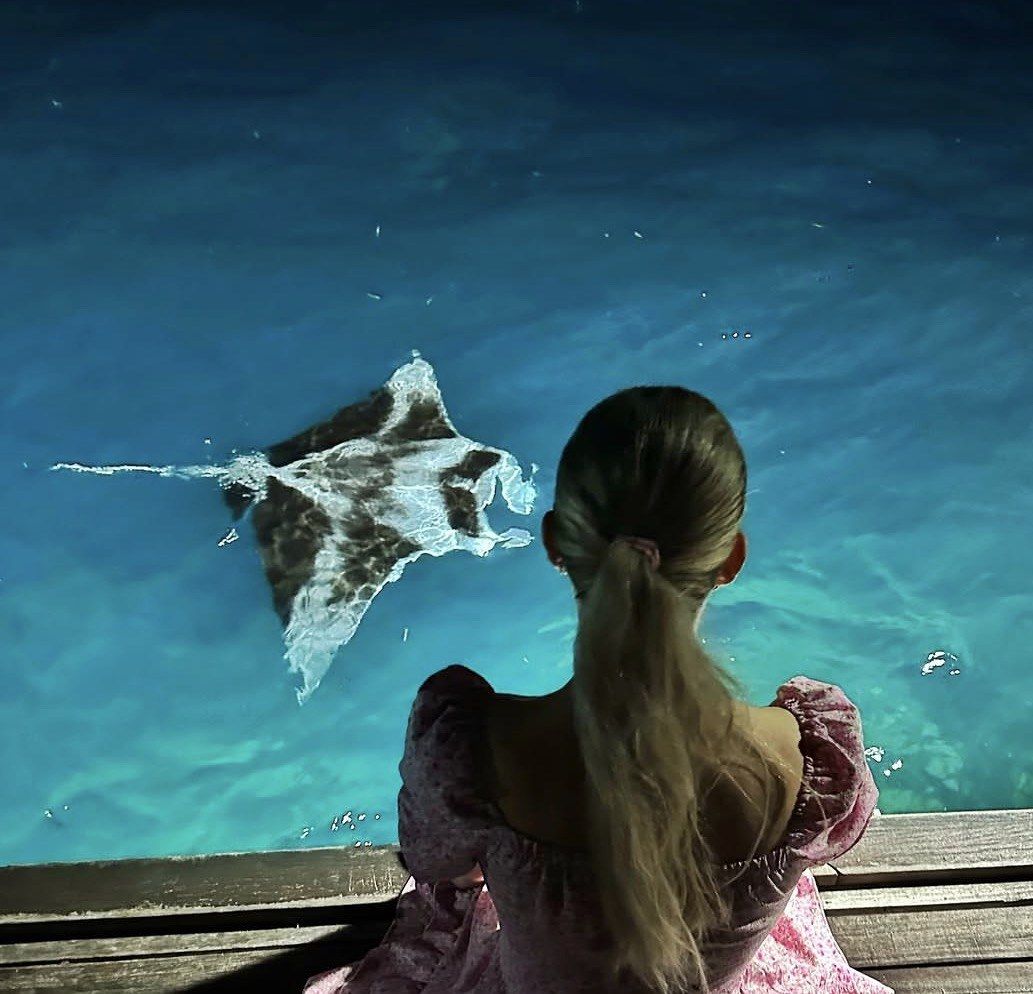
The animals at the night site are reef manta rays, and most of those seen off Kona measure around 12 feet across. Researchers tell individuals apart by the spot patterns on their bellies, which work like fingerprints: the Kona-based Manta Pacific Research Foundation has identified and named more than 300 of them in local waters. Bertha, one of the better-known animals, was first identified in 1992 and later measured by laser photometry at 11.7 feet from wingtip to wingtip. The giant manta ray is another species altogether, reaching a disc width of up to 26 feet and ESA-listed as threatened; off Kona it turns up only as an occasional visitor.
Later research showed how local these rays are. NOAA Fisheries holds photo-identification records of 318 individual reef mantas around Hawaii Island since 1979 and about 600 in Maui Nui since 2005, with no photo-ID matches between the two groups. Genome scans put the Hawaii Island breeding population at roughly 104 adults and Maui Nui at 129, and estimate movement between island groups at about one female every 1,300 years and one male about every 64 years. Residents stay put, so there is no manta season on this coast; trips run all year, and operators report mantas on more than 90% of nights.
Dates and numbers behind the Keauhou site
1903
the Daughters of Hawai'i is founded; it looks after the Kamehameha III birthplace
1970s
floodlighting of the ocean starts at the resort above the bay, early in the decade
1992
first identification of Bertha, one of the best-known Kona mantas
318
reef mantas photo-identified around Hawaii Island since 1979
12 feet
wingtip to wingtip on a typical reef manta off the Kona coast
90%
of nights with mantas reported by operators at the Keauhou site
Two viewing zones and 60 to 70 boats working them
Officially the Keauhou zone is Kaukalaelae Point, one of only two designated manta ray viewing areas on the Kona coast. Hawaii's boating authority names the other as Makako Bay, also called Garden Eel Cove, on the northern stretch of coast, with the southern zone fronting the resort at Keauhou Bay. Distance is what separates them for a visitor. Leave from Keauhou and you are on site in about five minutes; sail from Honokohau Harbor to the northern area and it is more than 45 minutes each way. Kaloko-Honokohau National Historical Park lies just south of Kona airport, on that same northern coastline.
Both zones grew faster than their management. A third-party safety assessment of the viewing sites, reported by DLNR, flagged live boating, multiple boats tying to a single mooring and lighting too weak for divers and snorkelers. Kona operators answered with voluntary safety standards drafted alongside the U.S. Coast Guard, and the state has run operator working groups since early 2014 while weighing limits on operator numbers and additional moorings. The current state estimate is 60 to 70 manta viewing vessels working across the two Kona sites, a number it links directly to overcrowding. Later departures, by the operators' own account, find fewer boats on site and darker water.
Proposed state rules would change Kaukalaelae Point considerably: 24 commercial viewing permits per zone, a fixed $300 monthly fee for operators, viewing hours set at 4:00 p.m. to 4:00 a.m. in two-hour shifts, a limit of 60 passengers per boat per 24 hours and an 8-to-1 guide-to-customer ratio. They sit on the state boating division's rulemaking page as drafts, so no legal cap on crowds at Keauhou is in force yet; check where they stand before you travel. Hawaii law already makes it illegal to capture, take, possess, abuse or entangle any ray in state marine waters, with fines escalating from $500 to $10,000.
Keauhou Bay today
Evenings at Keauhou Bay run to a routine. Boats and canoes leave the small boat ramp as the sun drops, and the clock moves through the year: departure times shift with sunset and are confirmed when you book, so the time on your confirmation is the one that counts. Check-in is typically 15 to 30 minutes before departure, depending on the tour. Pier parking is limited, street parking on Kaleiopapa Street is a 3 to 5 minute walk from the boats, and the public restrooms sit near the parking area. In the water, snorkelers hold a lit float, keep their legs horizontal at the surface and never touch a manta.
The site works year-round, which takes most of the date-planning out of the decision. NOAA's 1991-2020 normals for the Kona airport give a January mean of 75.0 F and an August mean of 81.5 F, average lows run only from 68.4 F in February to 75.7 F in August, and no month normally exceeds 1.4 inches of rain. The National Weather Service calls this leeward coast sunny and dry, puts the annual swing in Hawaii sea surface temperatures at about 6 degrees, and records trade winds about 90% of the time in summer against about 50% in winter. Go early in your stay instead of on your last evening, and compare the tours leaving from the bay before you pick one.