In shortA blank night is the small remainder of a high number: operators working Manta Village log rays on more than 90% of nights, which leaves the rest as evenings with lit water, no animals and no promise from anybody that one will turn up. On a blank night some tickets carry a come-again arrangement: a free re-booking on a regularly scheduled manta trip within seven days, subject to space. No cash goes back. Other operators offer no sighting cover at all.
More than 90%nights with mantas reported
Within 7 dayscome-again window published
About 45 minutesat the lit surface
About 5 minutescrossing from Keauhou Bay
The manta ray sighting rate at Keauhou
More than 90% of nights produce mantas at the southern viewing area, according to the operators who work it. That is the only figure published for the site, and it is a count kept by the people running the boats rather than a research measurement. Stated the other way round, a handful of evenings each month end with lit water and no rays.
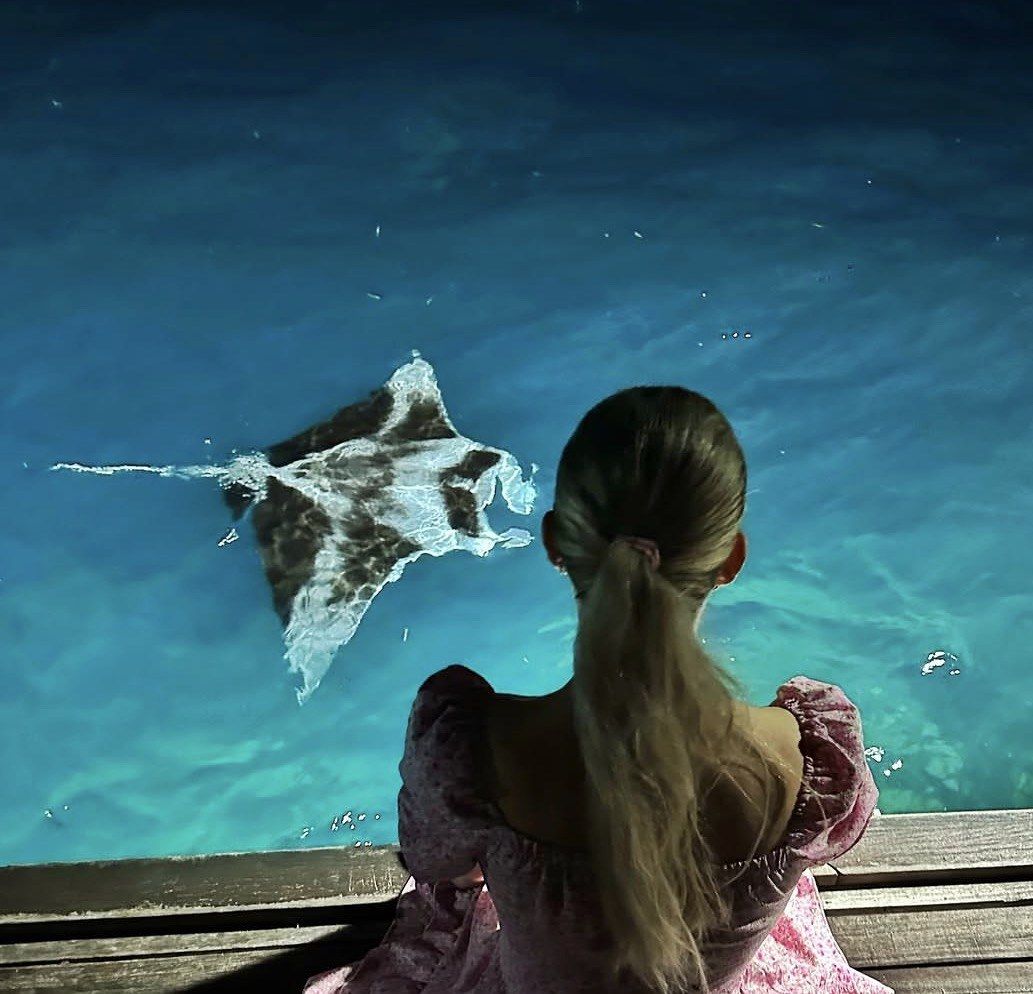
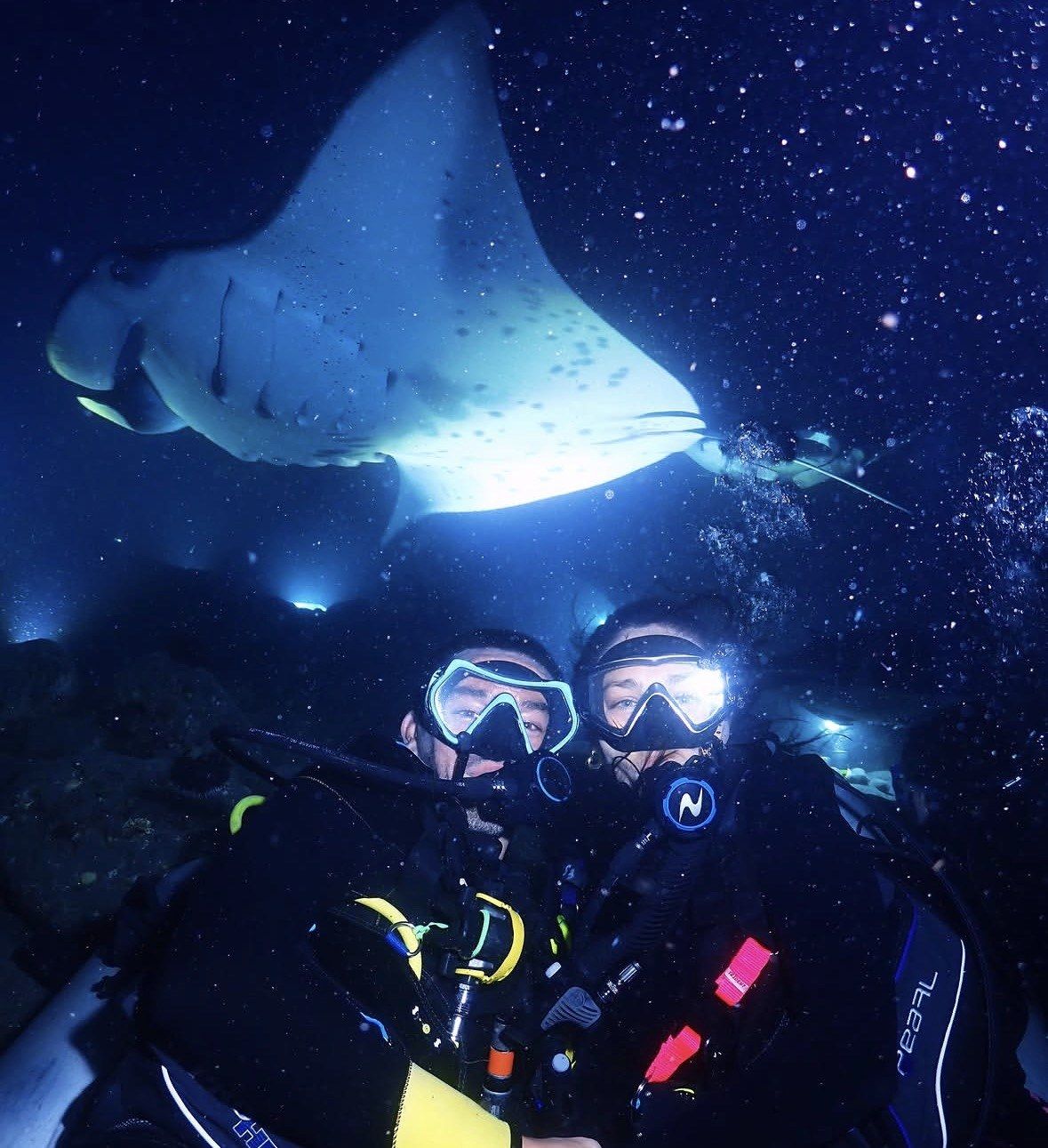
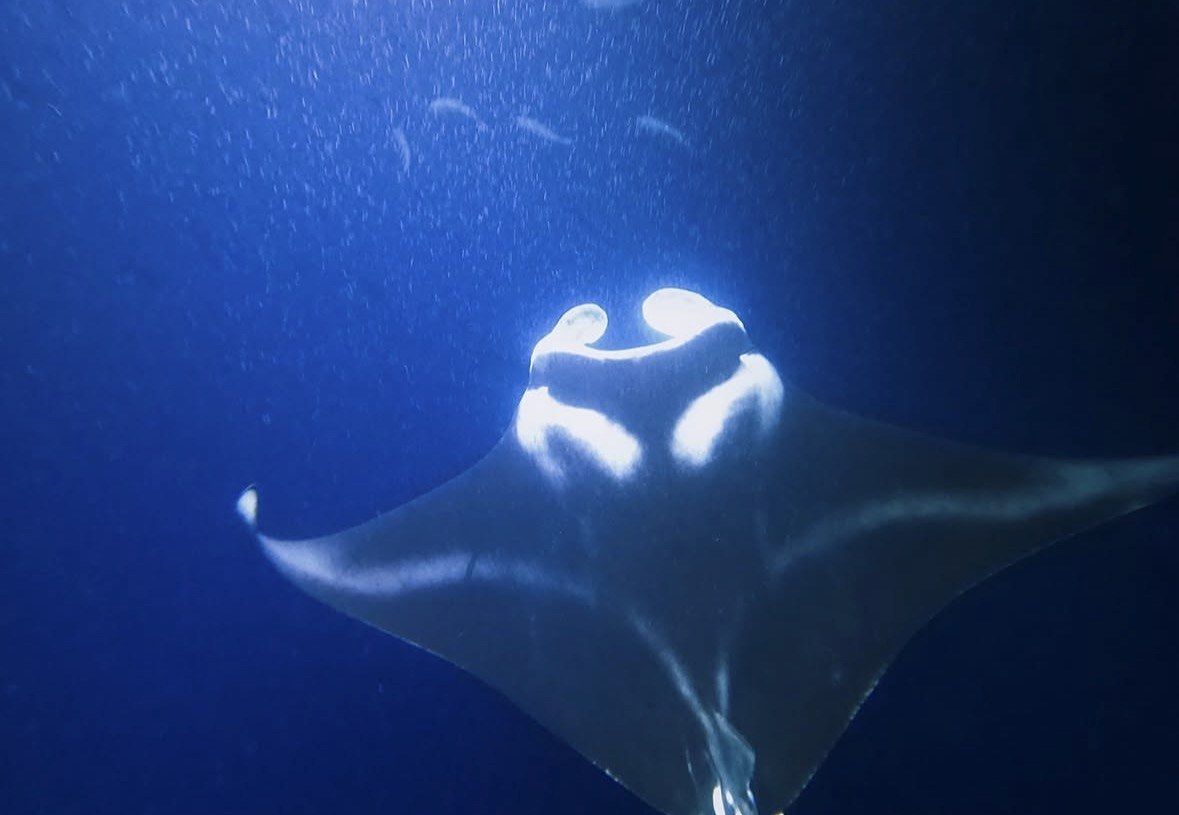
The reason the rate is high at all is the food. Floodlights were switched on above the bay in the early 1970s, the beams concentrate plankton near the surface, and resident reef mantas loop up into the light to feed on it. The snorkel area is shallow, about 6 metres at its deepest, so when an animal comes in you see all of it.
Resident is the important word here. The rays at the night site off Kaukalaelae Point live on this stretch of coast, which is why trips run in every month and why no date on the calendar improves the odds. It also means nobody on this coast turns the percentage into a promise: free-swimming wild animals keep their own schedule, and every operator says so in plain terms.
What happens if you don't see a manta ray on your snorkel tour
Three different answers exist among the boats and canoes leaving Keauhou Bay, and they are worth checking before you pay rather than afterwards.
The most common arrangement is a come-again place. One Keauhou catamaran operator publishes it as a return at no extra cost on a regularly scheduled manta tour within seven days if no manta is seen, subject to space on that trip, and states clearly that no money is refunded. Another Keauhou boat describes a one-time free return on the same principle. The 1.5-hour tour listed on this site carries the idea in its own name, Kona Manta Ray Snorkel Tour Guaranteed or come again free.
At the other end, the paddle-powered outrigger canoe operation at Keauhou offers no sighting guarantee whatsoever and says outright that mantas are wild animals. If a blank evening would genuinely upset you, that is the booking to think twice about, because the canoe is also the most expensive seat on the bay.
In every case you still paid for the evening and you still went out. What changes is whether a second attempt exists and whether you have a night spare to use it.
The come-again option, 1.5 hours
This is the short Keauhou-area evening whose own name carries a come-again arrangement, with a life belt, dive lights, a manta board and a snorkel guide and lifeguard in the water alongside you.
★ 4.7/5 · 2,585 reviews
What the come-again ticket buys you in practice
A re-ride gives you one more night at the site and nothing else. The operator that publishes a window gives you seven days and asks that space be available on a regularly scheduled departure, so a sold-out week in the middle of your holiday can quietly swallow it. On that same operator's schedule the second, after-dark trip only runs once the earlier one fills, which means the slot you were on may not exist on the night you want to come back.
Departure times are another moving part. No Keauhou operator works to a fixed clock: trips leave according to sunset and the exact time is confirmed when you book. Re-booking therefore means fitting another sunset-dependent evening into a trip that probably already has dinner plans, a drive and an early flight in it somewhere.
The practical value is high if you are on the island for a week and low if you are not. Travellers with two nights left can usually absorb a return; someone flying home the next morning is holding a place they cannot use.
- A come-again place is a second departure at no extra cost.
- It depends on space on a regularly scheduled departure within the published window.
- The after-dark slot on one Keauhou boat only opens when the sunset trip sells out.
- Departure times shift with sunset and are confirmed at booking, so plan a return evening around that.
- One Keauhou operation states no sighting guarantee at all.
What the evening still delivers on a blank night
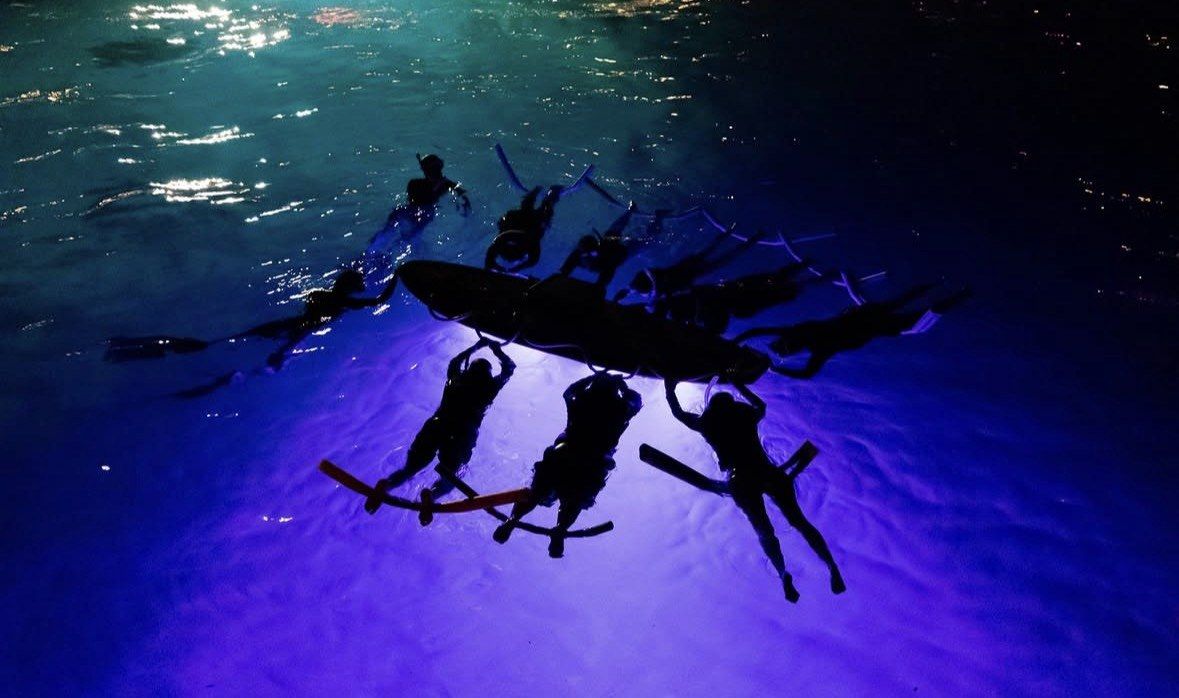
The lights are the attraction before the rays are. Boats and canoes reach the viewing water in a few minutes from Keauhou Bay, the crew puts dive lights and a lit float in, and the column underneath you turns into a bright cone against black water. Plankton drifts through it as thousands of individual specks, which is the bloom the whole aggregation was built on, and it is genuinely odd to look at from 30 centimetres away.
Reef life follows the food. The lit column pulls in small fish and the things that eat them, and on a charter that carries divers as well their lamps sit roughly 30 feet below the snorkelers' raft, so you are looking down through a fully lit water column barely 6 metres deep. Even without a manta, the surface session runs about 45 minutes and almost nothing happens out of your sight.
Then there is the night ocean itself, which most visitors never get out onto. Nothing in the conditions makes an unlucky night an uncomfortable one: in the NOAA normals the overnight lows on this coast bottom out at 68.4 F in February and reach 75.7 F in August, while the sea shifts only about 6 degrees across the year and tops out near 80 F in late summer or early fall. The ride back runs under the lit Keauhou shoreline, and a blank evening still gives you a short, warm night snorkel over a floodlit reef.
Which night of your trip to book
Book your manta evening in the first half of your stay. Sighting cover on this coast comes as a return trip, so it is worth exactly as many spare nights as you have left. Put the trip on your last night and both a blank evening and a weather cancellation end the same way.
Weather is the second reason to leave room, and the odds there are in your favour. The trades blow about 90% of the time in summer and about 50% of the time in winter, the rainy season is December to February, and even in those months the Kona airport normals stay under 1.4 inches of rain, so scrubbed evenings are the exception. The ones that do not go get reshuffled, and a reshuffle needs a free night to land on.
Reserve ahead rather than turning up at the pier. Space is what makes a return trip usable, and there is not much slack in it: a state boating notice counts six commercial operators moored in the Keauhou Bay small boat harbour, the state's own estimate is 60 to 70 viewing vessels working the two Kona sites, and the caps that would trim those numbers are still sitting on the draft rules page, so the evenings people want go first. Because the rays are here year-round, the only real decision is how many chances you give yourself.
Choosing a departure that matches your plans
If a second attempt matters to you, start with the 1.5-hour trip on this site, from $125 and rated 4.7 ★ (2585 reviews), whose own name sets out a come-again arrangement. At 1.5 hours it is also the quickest evening to repeat, and the in-water support comes with it: a floatation life belt, mask and snorkel, dive lights with a manta board to hang onto, a USCG captain, plus a snorkel guide and lifeguard alongside you in the water.
If you would rather have one unhurried evening and accept the odds as they are, the 2.5-hour night snorkel from $138, rated 4.8 ★ (6332 reviews), includes snorkelling gear, a jacket-style wetsuit top, a flotation device, bottled water, light snacks and commentary on board, and it is by far the most reviewed tour here. When a blank night costs you least because the night itself is short, the 1-hour small-group departure from $145, rated 4.8 ★ (1184 reviews), is the compact choice, with check-in at Keauhou Harbor 30 minutes ahead, near the boat dock.
Whichever you pick, read the inclusion list on the tour page before you book, and keep a spare evening behind it.
| Tour on this site | Duration | From | Rating (reviews) | Check-in |
|---|
| Kona Manta Ray Snorkel Tour Guaranteed or come again free | 1.5 hours | $125 | 4.7 ★ (2585) | Details on your ticket |
|---|
| Big Island Manta Ray Night Snorkel | 2.5 hours | $138 | 4.8 ★ (6332) | Harbour pavilion by the restrooms |
|---|
| Manta Magic: Small-Group Manta Ray Night Snorkel | 1 hour | $145 | 4.8 ★ (1184) | Keauhou Harbor, 30 minutes before |
|---|
Questions people ask
Is there a season when sightings are more likely at Keauhou?
No. The mantas at the Keauhou night site are resident reef manta rays rather than migrating visitors, so boats go out in every month and the reported sighting rate covers the site year-round. Hawaiian reef mantas stay close to their home island, with movement between island groups estimated at about one female every 1,300 years. Pick your night around your own schedule and the weather.
Does the moon phase change my chances?
No official or peer-reviewed source documents a lunar effect on sighting rates at the Kona viewing sites, and operator opinions contradict each other, so treat any full-moon or new-moon claim as unverified. The published mechanism is the floodlighting that concentrates plankton near the surface, which runs the same on any date. Plan around having a spare evening rather than around the lunar calendar.
Are mantas reported less often on the after-dark departure?
The more than 90% figure is published for the viewing site as a whole and is not split between the sunset and the later slot, so there is no official basis for saying one is better for sightings. What the operator does claim for its later trip is fewer vessels on site and darker water, with a shorter overall evening of about 1.5 to 2 hours. Counting on that later slot for a second try is risky in itself, because the operator puts it on the water only once the sunset trip has sold out, and on many dates it is simply not offered.
If the boat sees nothing, can I swim out from shore another night instead?
No. There is no shore version of this to fall back on: the rays gather in open water off Kaukalaelae Point, beside the OUTRIGGER Kona Resort & Spa some 7 miles south of Kailua-Kona, and Keauhou Bay itself is not recommended for swimming or snorkelling by the state tourism authority, because fishing and tour boats use it. Add the state's estimate of 60 to 70 viewing vessels across the two Kona sites, with no legal cap adopted so far, and the water beyond the point stays busy with traffic for hours after sunset. A second boat or canoe departure is the only sensible second attempt.
Read also