In shortYes. The reef mantas at the Keauhou night site have no stinger and no barb, and they come in to feed on plankton gathered in floodlit water, so people hold no interest for them. What matters is the dark water, the boat traffic off Kaukalaelae Point and crowding, with the state estimating 60 to 70 viewing vessels across the two Kona sites.
About 12 feettypical reef manta width
About 6 metresmaximum depth at the site
60 to 70 vesselsestimated at the two sites
$500 to $10,000fines under state law
Is it safe to snorkel with manta rays off Keauhou?
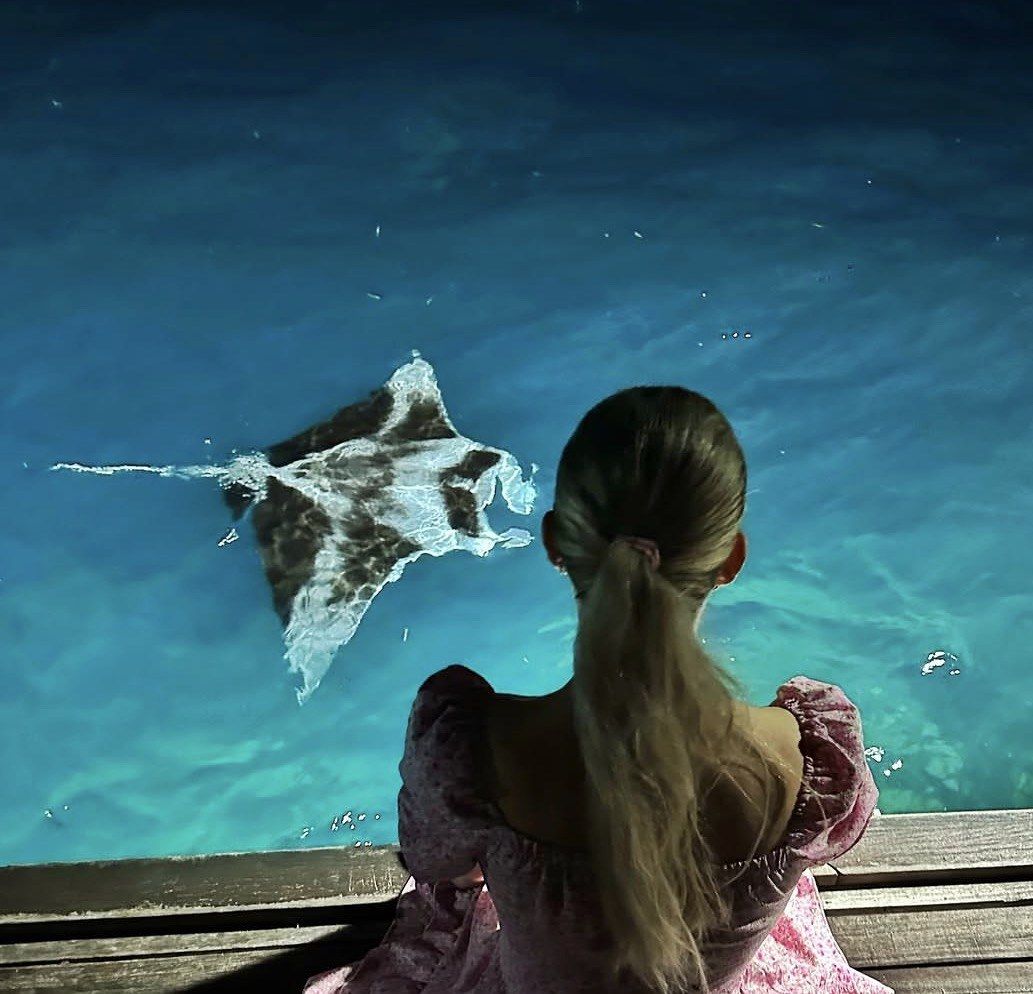
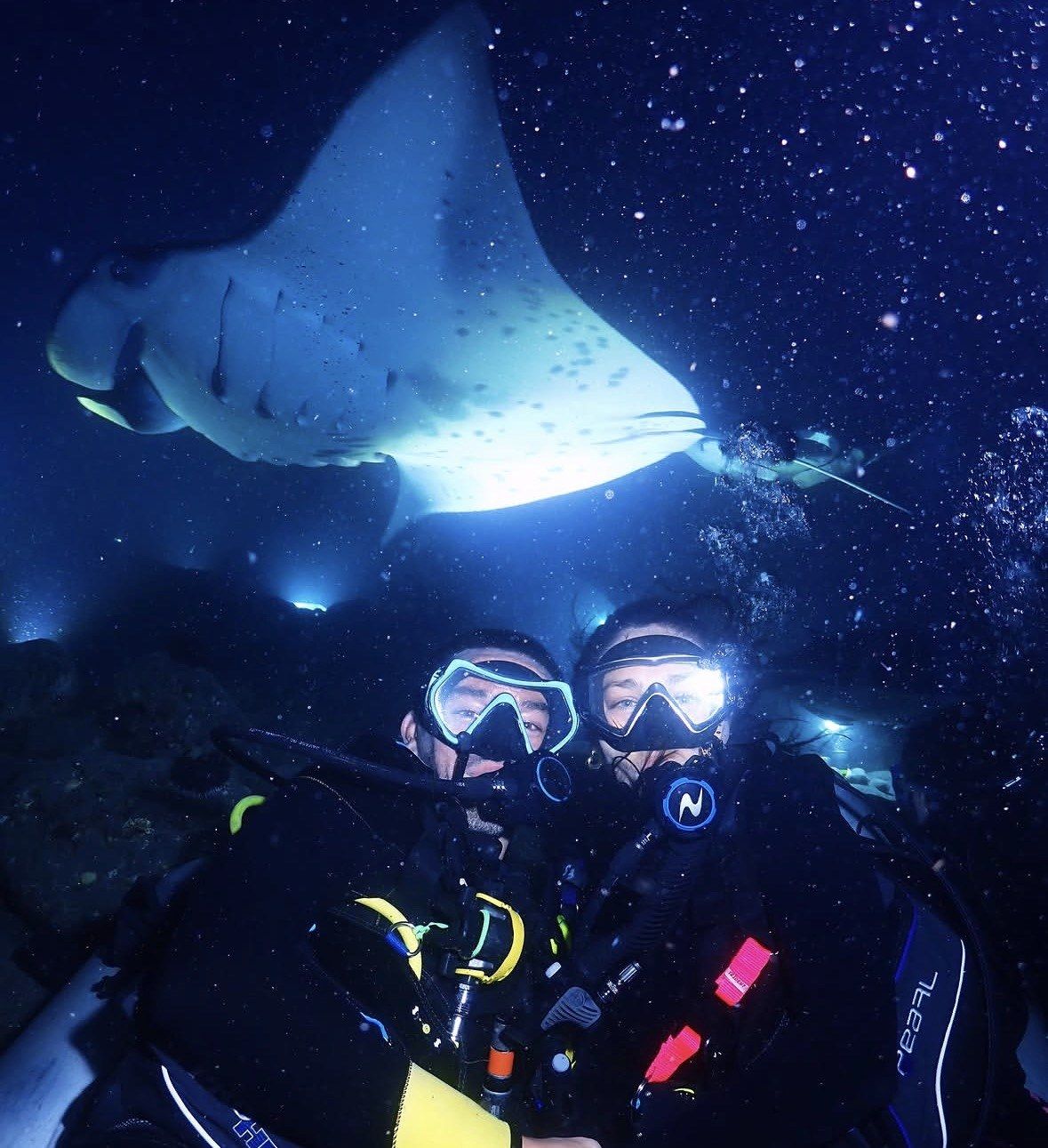
The animals are the least of it. Reef manta rays gather at the Keauhou night site, most of them around 12 feet across, and the state tourism authority is plain about why they turn up after dark: they come to feed on microscopic plankton. No stinger, no tail barb, and nothing about a snorkeler floating at the surface reads to them as food or as a threat. Bertha, the Kona individual first identified in 1992, was laser-measured at 11.7 feet wingtip to wingtip, which is the scale you are looking down on from the float.
Above the waterline there is more to manage. A third-party safety assessment reported by the state land and natural resources department flagged live boating, several boats tying to one mooring and lighting too weak for divers and snorkelers, with no incidents recorded at the time. Kona operators answered with voluntary standards drafted with the US Coast Guard, and the state has run operator working groups since early 2014.
Crowding is the other factor and nothing regulates it yet. How many hulls share the water with you is a safety question before it is a comfort one, and the state's own estimate for the two Kona viewing areas is 60 to 70 manta viewing vessels, with a boating division notice recording six commercial operators moored in the Keauhou Bay small boat harbour. The crew briefing counts for more here than on a daytime reef: you stay inside a marked group on a lit float while other hulls manoeuvre nearby.
Check your own swimming ability before you book. The Keauhou boats that publish requirements ask for independent swimmers with previous snorkelling experience, and one operator also requires minors aged 7 to 17 to have an adult in the water with them. Sorting out a leaking mask in open water after dark is hard work. If someone in your party has never snorkelled, put them on the deck instead; more than one boat out of this bay keeps places for observers.
Do manta rays sting, and can you touch manta rays?
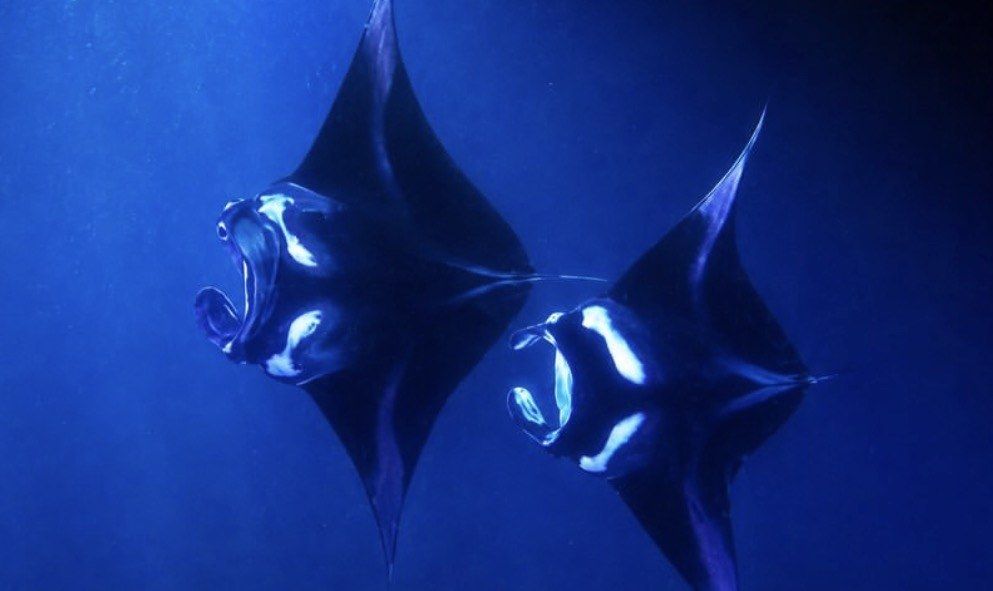
Mantas do not sting. The barb people picture belongs to stingrays, and the reef mantas at Manta Village carry nothing like it. They swim with their mouths open, filtering plankton out of the lit water, and the barrel rolls under the float line are how they feed. The giant manta ray is a much larger animal, listed as threatened under the Endangered Species Act and reaching a disc width of up to 26 feet; it turns up on this coast only occasionally and is not the resident species you will see.
Touching is forbidden in both directions. A manta's skin carries a mucus layer that protects it from infection, and a hand, a fin or a dangling camera will strip that coating away. The operators tell you to observe only. In practice that means lying flat at the surface with your legs horizontal behind you and your hands on the float or manta board, so your fins never drop into the space the rays use when they roll up towards the lights.
Keep your hands to yourself, hold your line and leave an animal alone when it passes below you. The rays come close on their own, because the plankton sits at the surface and the snorkel area is shallow, about 6 metres at its deepest, so a ray can pass within arm's length of a motionless snorkeler. Kicking after one sends it elsewhere.
- Legs flat behind you at the surface, hands on the float.
- Hands off the rays; stay at the surface if one passes below.
- Hold your position on the line rather than drifting across the group.
- Let the crew move the float if the rays shift away from it.
Most eyes on the water
The inclusions on this 1.5-hour departure split between flotation and supervision: a life belt to wear, dive lights on a manta board to hang onto, a USCG captain running the boat, and a snorkel guide and a lifeguard in the water with the group. That is the set-up to pick if the dark is the part that worries you.
★ 4.7/5 · 2,585 reviews
Equipment and conduct rules on the boats
The kit rules at Keauhou are short, and they are enforced before you get in. One Keauhou operator publishes a list that bans underwater flash photography, Shark Bands and neck lanyards for phones, and tells guests never to touch the mantas. Another allows underwater cameras but requires the flash to be switched off before you enter the water. Full-face snorkel masks, which plenty of inexperienced snorkelers plan to bring, are refused on one Keauhou manta snorkel and are not permitted aboard a 50-foot catamaran leaving the same bay.
Flotation comes as part of the equipment. On the 1.5-hour trip on this site the inclusions cover both halves of staying put in the dark: a floatation life belt plus mask and snorkel to wear, dive lights on a manta board to hang onto, a USCG captain at the helm, and a snorkel guide and a lifeguard in the water with you. The 2.5-hour trip hands out gear, a jacket-style wetsuit top and a flotation device. The paddle-canoe operator at Keauhou works differently: no life jackets on adults in the water, jackets on request for use in the canoe, and jackets worn by children aged 12 and under while paddling.
| Rule | Where it comes from |
|---|
| Never touch a manta | Operator rules at Keauhou, backed by state law |
|---|
| Legs horizontal, observe only | Operator conservation guidelines |
|---|
| No underwater flash photography | Keauhou operator rules; flash off before entry |
|---|
| No neck lanyards for phones | Keauhou operator rules |
|---|
| No Shark Bands | Keauhou operator rules |
|---|
| No full-face snorkel masks | Two Keauhou boats refuse them |
|---|
What state law says about contact with a ray
Reaching for a ray is an offence, not simply bad manners: under Hawaii law, capturing, taking, possessing, abusing or entangling any ray in state marine waters is illegal, and the penalty climbs from $500 at the bottom to $10,000 at the top. Crews repeat the no-touch instruction in the briefing and again at the stern before you slide in. An accidental kick looks bad at a site where several boats are watching the same animals; a deliberate grab becomes a legal matter.
The crowd side of the site has no legal limit yet. Proposed state rules would cap commercial viewing permits at 24 per zone, charge operators a fixed $300 monthly fee, define viewing hours as 4:00 p.m. to 4:00 a.m. in two-hour shifts, cap boats at 60 passengers per 24 hours and set an 8-to-1 guide-to-customer ratio. All of that still sits on the state boating division's rulemaking page as draft, so nothing limits how many people are in the water at Keauhou on the night you go.
Staying safe in the dark water
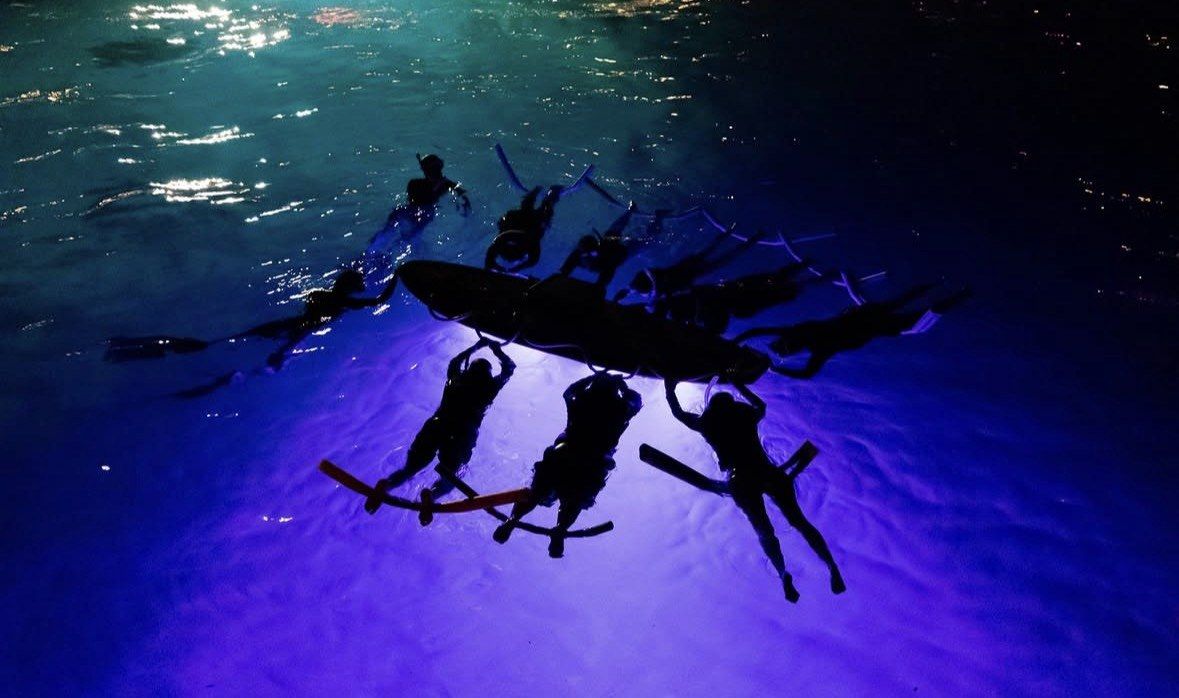
Everything in the water session is built around the float line. You hold a lit board or float, the group stays together along it, and the lights point down into the water column where the plankton gathers. On a Kona charter carrying divers as well, their lights sit roughly 30 feet below the snorkelers' raft, which tells you how much of this shallow column is lit from both ends. Boats reach the site just before sunset, and the lights go out when the last of them head back to harbour.
Count heads before you get in. Pick one spot on the float and stay on it, then surface next to the same person you entered with. In the dark, a drift of a few metres off the line puts you outside the lit area and outside the crew's sightline, which is the one genuine hazard of the evening.
Stay well clear of the stern and the propellers whenever a boat is under power, and get in and out only when the crew says so. Live boating was one of the issues flagged in the safety assessment of these sites, and with 60 to 70 vessels estimated across the two viewing areas there is usually more than one hull moving near you. Ducking the boats by starting from the beach is no fix: the state tourism authority's own advice for Keauhou Bay is against swimming or snorkelling there at all, and it names fishing and tour boat traffic as the reason.
The later departure trades a shorter trip for calmer water around the float. One Keauhou operator markets its second, after-dark trip on fewer boats at the site and darker water, and says it suits guests already comfortable snorkelling at night. Anyone uneasy about the dark should take the sunset-timed trip and use the twilight crossing to get a mask sorted.
When a smaller group is worth the extra money
Guide attention is the variable that changes how the night feels. The 1-hour small-group departure on this site, from $145 and rated 4.8 ★ (1184 reviews), includes a professional guide, equipment, an optional wetsuit and beverages, and meets at Keauhou Harbor 30 minutes before departure near the boat dock, where the crew waits in a white van with lights on top. Fewer people on one float means fewer fins near your face and a guide who can keep an eye on where you are.
A competent swimmer who is still jumpy about the dark gets the heaviest cover from the 1.5-hour trip on this site, whose inclusions stack up supervision as well as kit: a life belt to wear, dive lights on a manta board to hold, a USCG captain running the boat, and two people watching the water in the shape of a snorkel guide and a lifeguard. Prices start from $125 and the rating stands at 4.7 ★ (2585 reviews). The 2.5-hour trip, from $138 and rated 4.8 ★ (6332 reviews), buys a longer and less hurried evening on a larger boat, with a wetsuit top, a flotation device, water, light snacks and commentary on board.
Sightings are reported on more than 90% of nights by the operators working Manta Village, which leaves a handful of nights when nothing comes in, and none of them will promise you one. The population here stays put instead of migrating, so the schedule never shuts for a season and one month is as good as the next. Book a night early in your stay, go in with the briefing in your head, and keep your hands on the board while you float still.
Questions people ask
Is the manta ray night snorkel dangerous for a first-time snorkeler?
The animals are harmless, though a night entry is a poor place to learn to snorkel. The Keauhou boats that publish requirements expect independent swimmers with some previous snorkelling experience, and one operator requires minors aged 7 to 17 to have an adult in the water with them. If you have never used a mask and snorkel, do a daytime reef swim first, or take a deck place and watch from the boat.
Why are Shark Bands and phone neck lanyards banned?
A Keauhou operator lists both as prohibited, alongside underwater flash photography, in the same set of rules that tells guests never to touch the mantas. Anything hanging from your neck can swing down into the space a ray uses when it rolls up towards the light. Leave the band and the lanyard in your bag on the boat.
Can I take photos with a flash?
No. One Keauhou operator bans underwater flash photography outright; another accepts underwater cameras only with the flash switched off before you enter the water. The site is floodlit from above and the crew carry dive lights, so the water column is already lit. Keep both hands on the float whenever you are not steadying a camera.
What happens if I touch a manta by accident?
Pull back, tell the crew and get your legs flat again. Contact strips the mucus layer that protects the animal's skin, which is why the rule exists. Hawaii law prohibits capturing, taking, possessing, abusing or entangling any ray in state marine waters, with fines running from $500 to $10,000, so crews will end your water session over repeated reaching or chasing.
Does the after-dark departure feel less safe than the sunset one?
It feels darker and it is quieter. The operator running a second Keauhou trip markets it on fewer vessels at the site and darker water, and says it suits guests already comfortable snorkelling at night. Its own figures put that trip at about 1.5 to 2 hours against roughly 2 to 2.5 hours for the first departure, and it only runs once the earlier trip fills.
Read also