In shortYes, a non-swimmer can join the evening, but only on deck. One Keauhou Bay operator sells a deck-only Ride-Along place from age four, supervised by an adult, and holders stay out of the water. The paddle canoe lets a non-swimmer stay seated in the hull while the others snorkel. In-water places require independent swimming and previous snorkelling experience.
Age 4Deck-only minimum age
Age 6 or 7In-water minimum age
About 45 minSurface time over the rays
90%+ of nightsMantas reported at the site
Can you do the manta ray snorkel if you can't swim?
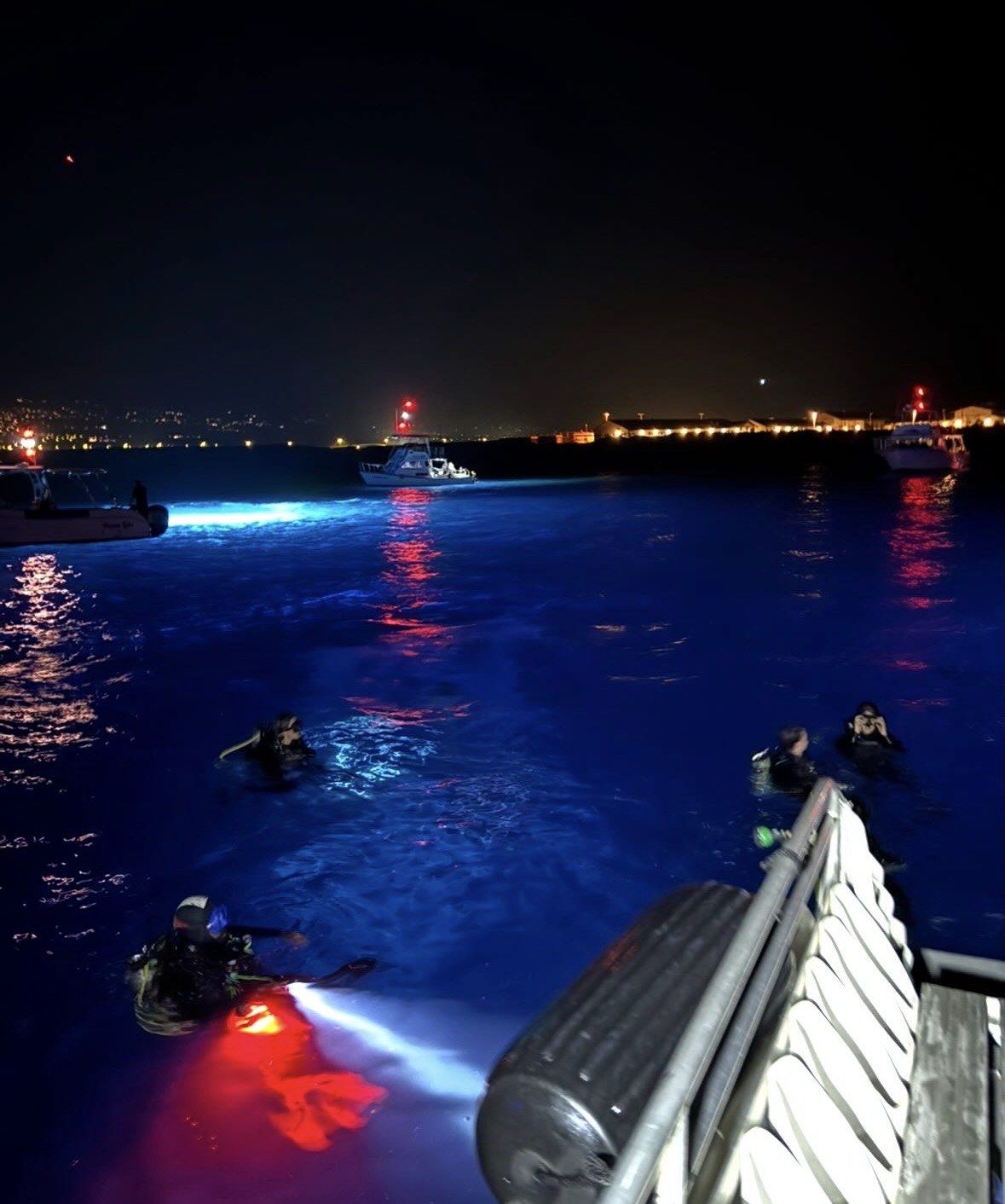
You can come along, and you stay on the boat. The lit feeding area lies offshore around Kaukalaelae Point, next to the OUTRIGGER Kona Resort & Spa and roughly 7 miles south of Kailua-Kona, so the only way to be there is on a vessel leaving Keauhou Bay. Boats cross in about five minutes and the paddle canoes need 7 to 10 minutes.
There is no shoreline substitute at the bay itself. A cautious wade in from the beach is not on the table: fishing lines and tour-boat traffic are exactly why the state tourism authority tells visitors not to swim or snorkel in Keauhou Bay, and with 60 to 70 viewing vessels estimated to work the two Kona sites, the water off the point is a working area once it gets dark.
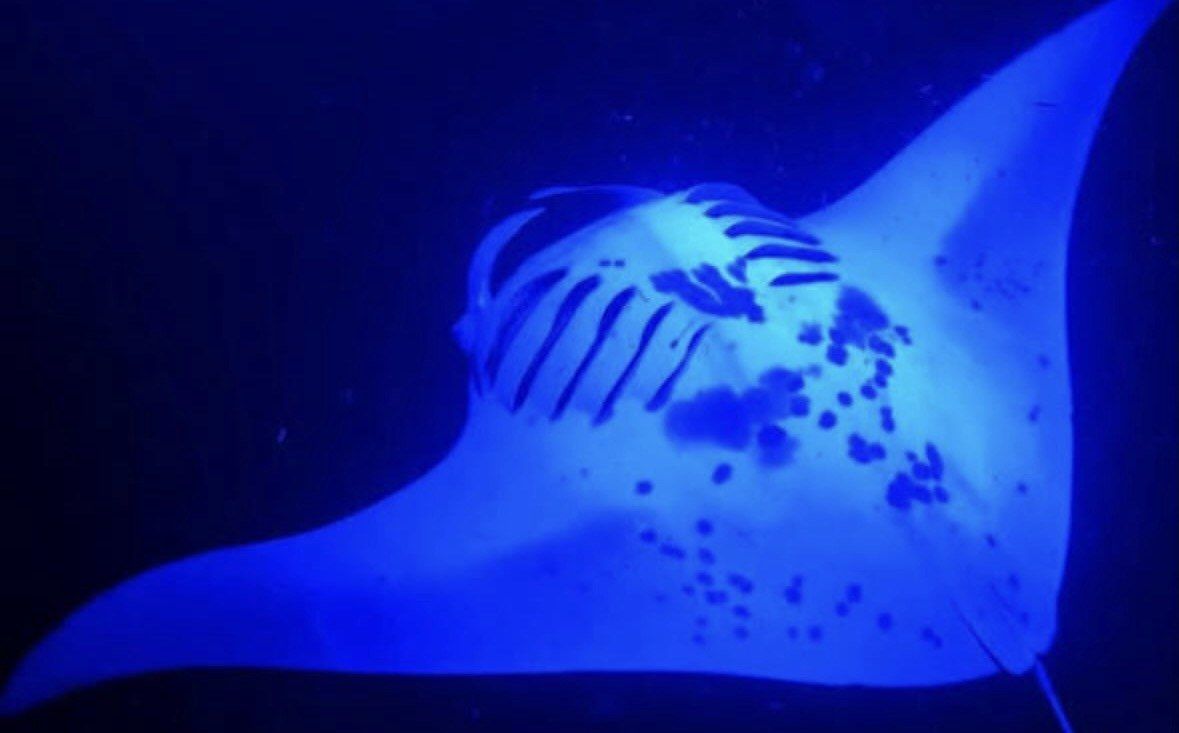
A deck place still puts you over the whole show. Floodlighting began above the bay in the early 1970s, the light concentrates plankton near the surface, the rays loop up into it to feed, and the snorkel area is shallow, about 6 metres at its deepest. Most reef mantas off Kona measure around 12 feet across, so from the rail you are watching 12-foot animals turning in lit water a few metres deep.
Manta ray night snorkel for non-swimmers: the deck place explained
One Keauhou Bay catamaran operator sells a deck-only Ride-Along place for non-swimmers and small children from age four, supervised by an adult, and the ticket does not permit entry into the water. It is published at $65 plus tax and fees against $130 for adults aged 13 and over and $115 for children aged 6 to 12 on the same trip. Check the figure on the date you want, since rates on this coast move with the season.
The supervision requirement is the part groups forget. The crew will not take charge of a Ride-Along passenger for you; an adult has to be with that person on board, which means one of your swimmers stays dry or you book two adults so one of them can go in. Another Keauhou operator states plainly that guests who stay aboard rather than enter the water still need a ticket of their own, so nobody rides along unbooked.
The paddle canoe works differently. A non-swimmer may stay in the hull while the rest of the group gets in, the canoes take children from age two if they can sit unaided, and life jackets are available on request for the canoe, with children aged 12 and under wearing one while paddling. That option is priced at $180 per person at every age, there is a 250 lb per-person weight limit, and each hull carries six guests with twelve the cap when two canoes run together.
- Deck-only Ride-Along: from age four, an adult must supervise, and the holder stays out of the water all evening
- Canoe hull place: a non-swimmer stays seated while others snorkel, children from age two if they can sit unaided
- No adult may use a life jacket in the water on the canoe trip, which leaves the hull as the only place for a weak swimmer on that tour
- Deck observers still need their own ticket on at least one Keauhou operator
What the in-water places actually require
Every Keauhou boat that publishes a requirement asks for two things: independent swimming and previous snorkelling experience. The canoe operator goes further and requires comfort swimming in the ocean, since there is no deck to climb onto out there. Minimum ages for getting in start at seven years on one boat and six on another, and the six-year minimum applies only if the child already swims and snorkels competently.
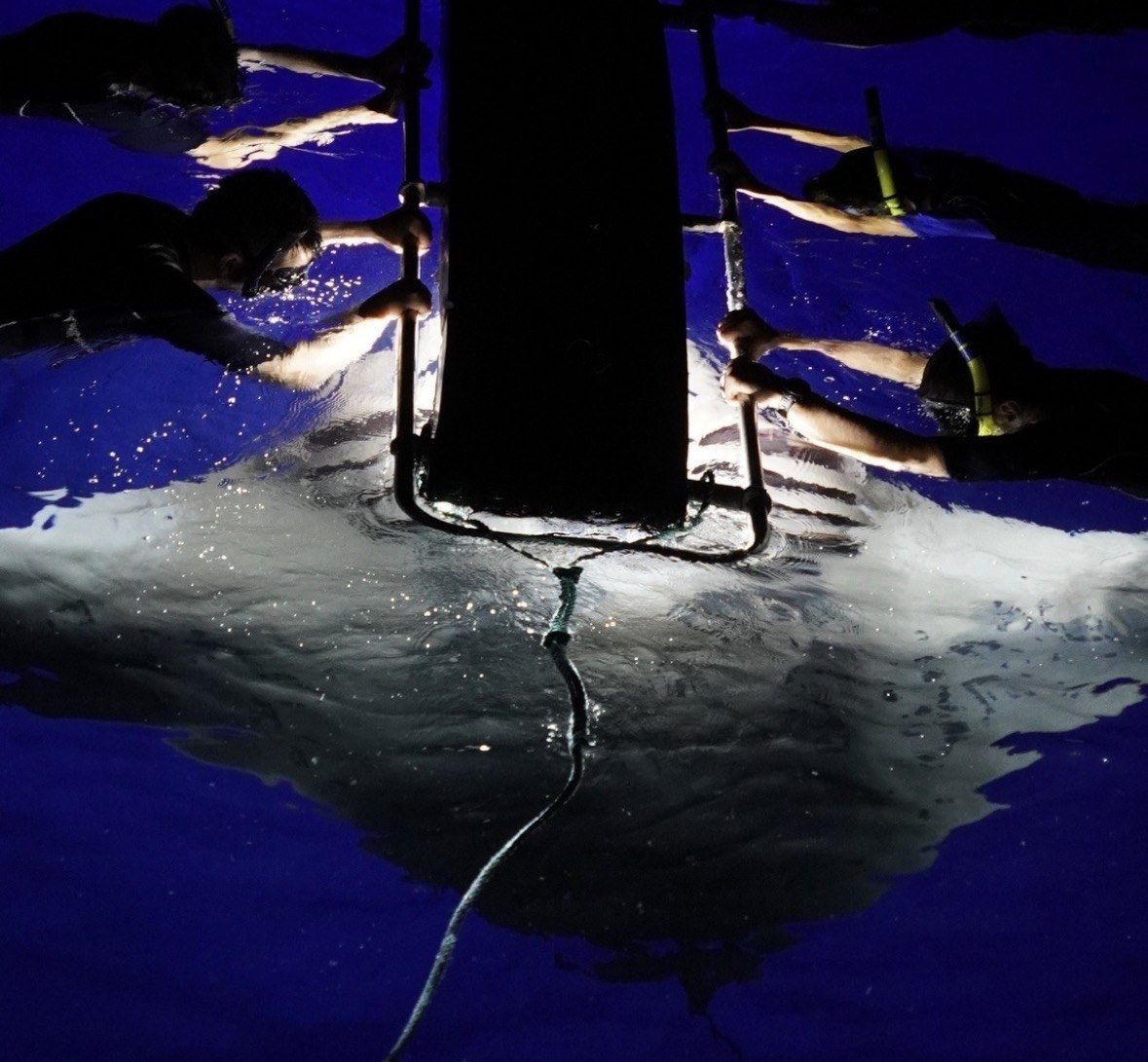
Full-face snorkel masks are refused on one Keauhou manta snorkel and are not permitted aboard a 50-foot catamaran from the same bay, which rules out the mask inexperienced snorkellers most often plan to use. You will be in a standard mask and snorkel, holding a lit float or a manta board with your legs flat behind you so you never make contact with an animal. Nobody swims laps at the site; you hang still at the surface for roughly 45 minutes while the rays feed under you.
The adult life-jacket rule on the canoe is worth reading twice if you were counting on a jacket to get you through. A jacket holds you upright and vertical, and the conservation guidelines ask for a horizontal body position, so the canoe operator keeps adults out of jackets in the water and keeps non-swimmers in the boat.
The float line with a lifeguard beside you
For a weak or nervous swimmer who can still snorkel, this 1.5-hour trip puts a floatation life belt, a manta board to hold and a snorkel guide and lifeguard in the water with you, from $125 and rated 4.7 ★ (2585 reviews).
★ 4.7/5 · 2,585 reviews
Flotation changes the picture for a nervous but capable swimmer
If you can swim and have snorkelled before but dislike deep water, the float line is easier than it sounds, because flotation comes with the kit instead of being something you request. Read the inclusion list of the 1.5-hour tour here and the support is already inside it: a floatation life belt, mask and snorkel, dive lights with a manta board to hang onto, a USCG captain on the helm, and a snorkel guide and lifeguard in the water alongside you. The 2.5-hour trip includes a flotation device and a jacket-style wetsuit top, and Keauhou operators variously provide a custom manta flotation device, a shorty wetsuit, a lit float or ankle floats on the canoe.
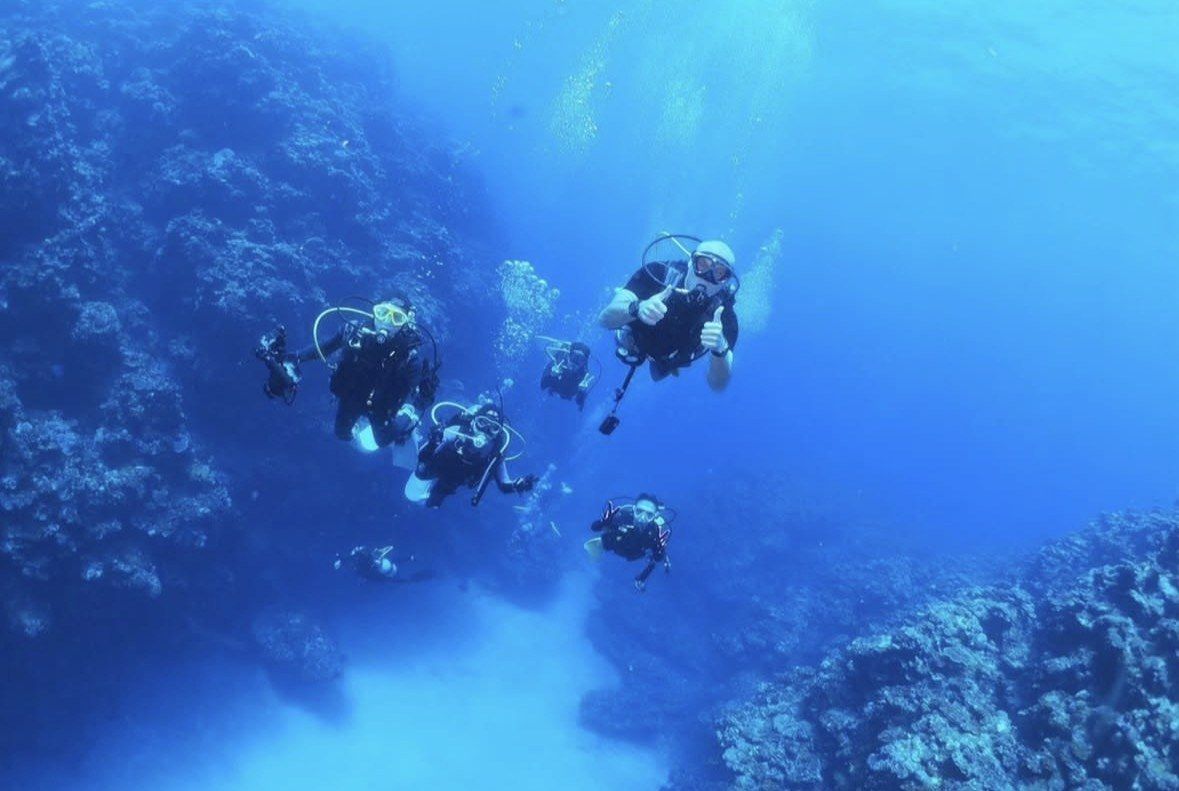
Holding a board or noodle removes the two things that frighten people most here, which are treading water and looking down into the dark. Your arms are on the float, your legs stay behind you, and the wetsuit or wetsuit top adds buoyancy of its own. Depth under you is only about 6 metres, and on a charter carrying divers as well their lights sit roughly 30 feet below the snorkelers' raft, so the whole column you are watching is lit.
Choose the departure time around your own comfort in the dark. The sunset departure gives you a twilight crossing and colour still in the sky, while the after-dark trip is marketed on fewer vessels at the site and darker water, which suits people already comfortable snorkelling at night.
An honest self-assessment if you have never snorkelled in open water
The Keauhou night site is a poor place to learn. There is no beach entry, no shallow lagoon and no standing up, you are in open water with boats on moorings around you, and the trip you booked is the only chance that evening. Operators here report mantas on more than 90% of nights without promising a sighting, and the rays are wild animals, so the evening carries enough uncertainty already without a first-ever snorkel attached to it.
Work through the list below truthfully. A yes to all of it means take a water place; a no to any of it means take the deck place and enjoy the evening dry, or spend a morning snorkelling somewhere calm first and keep the manta night for later in your trip.
- You can float face down and breathe through a snorkel without lifting your head, for minutes at a time
- You have done it in the ocean with swell moving you about
- You can clear a flooded mask or snorkel without panic, with the crew a few metres away
- You are comfortable in water well over your head with nothing to touch
- You can stay still, legs horizontal, for about 45 minutes without getting cold or restless
- You are not relying on a full-face mask, which two Keauhou boats do not allow
Picking a water place or a deck place on the tours listed here
Decide the booking around the weakest swimmer in your group, then look at the fares. If one person will not get in, put them in a deck place on a boat that sells one and book the rest of you into the water; if the whole party is hesitant but capable, take the trip with a lifeguard and a manta board in the fare. The three tours on this site all leave the Kona coast and all put you over the same lit water, with about the same time at the surface.
Departures follow sunset rather than a clock, and the exact time arrives with your booking, so work to that time and nothing else. How early you have to be there varies by tour, from 15 minutes ahead of departure up to a full half hour, and anyone bringing a nervous swimmer or a deck passenger wants the longer end of that. Few spaces exist at the Keauhou Bay pier itself, so count on Kaleiopapa Street and a 3 to 5 minute walk down to the water with your towels.
| Tour | Duration | Price from | In-water support and gear | Rating |
|---|
| Kona Manta Ray Snorkel Tour Guaranteed or come again free | 1.5 hours | from $125 | Floatation life belt, dive lights with a manta board to hang onto, water snorkel guide and lifeguard, USCG captain, mask and snorkel | 4.7 ★ (2585 reviews) |
|---|
| Big Island Manta Ray Night Snorkel | 2.5 hours | from $138 | Snorkelling gear, jacket-style wetsuit top, flotation device, professional guide, bottled water and light snacks | 4.8 ★ (6332 reviews) |
|---|
| Manta Magic: Small-Group Manta Ray Night Snorkel in Kailua Kona | 1 hour | from $145 | Snorkelling equipment, optional wetsuit, professional guide, beverages | 4.8 ★ (1184 reviews) |
|---|
Questions people ask
Does someone who stays on the boat still need a ticket?
Yes. One Keauhou operator states that guests who stay aboard rather than enter the water still require a ticket, and the deck-only Ride-Along place on another Keauhou boat is sold as its own ticket from age four at $65 plus tax and fees. Book the deck place at the same time as the snorkel places, because the boat has a headcount either way.
Will a person on deck actually see the mantas?
The rays feed on plankton drawn to floodlit water, and the snorkel area is shallow, about 6 metres at its deepest, so the animals pass close to the surface inside the lit cone. Most reef mantas off Kona are around 12 feet across. Mantas show up on more than 90% of nights according to the operators working Manta Village, though nobody promises a sighting, and that applies to a deck ticket just as it does to a water place.
Can a child who cannot swim come along?
A deck-only Ride-Along place takes non-swimmers and small children from age four with an adult supervising, and the holder stays out of the water. The paddle canoe accepts children from age two if they can sit unaided, with a life jacket worn by anyone aged 12 and under while paddling. Getting in the water starts at six or seven years on the boats that publish an age, and the six-year minimum assumes the child already swims and snorkels.
Is the sunset trip or the after-dark trip better for a weak swimmer?
Take the sunset-timed departure. You get the crossing in daylight, you can see the float line and the other guests while you sort yourself out, and the first trip on one Keauhou boat runs roughly 2 to 2.5 hours, so nothing is rushed. The later departure is marketed on fewer boats and darker water and suits guests already comfortable snorkelling at night.
Can a non-swimmer go out in the outrigger canoe instead?
A non-swimmer may stay in the canoe while the others snorkel, and life jackets are provided on request for the boat. Every seat costs the same, $180 per person whatever the age, with a 250 lb limit per person and six guests to a hull; the canoes go out Monday to Friday, with a 6:30 PM or an 8:30 PM slot. Adults are not permitted to wear life jackets in the water on that tour, so a non-swimmer stays seated in the hull.
Read also