In shortSeasickness on this trip comes from floating face-down and almost motionless for about 45 minutes in the dark with no horizon. Book from Keauhou Bay, where boats reach the site in about five minutes instead of more than 45 minutes each way from a northern harbour, take any remedy before you leave your accommodation, choose an outside seat with air, and get in the water with the first group.
about 5 minutesKeauhou Bay to the site
more than 45 minuteseach way from the north
about 45 minutesstill at the surface
about 90%summer trade-wind days
Why manta ray night snorkel seasickness catches people who are usually fine
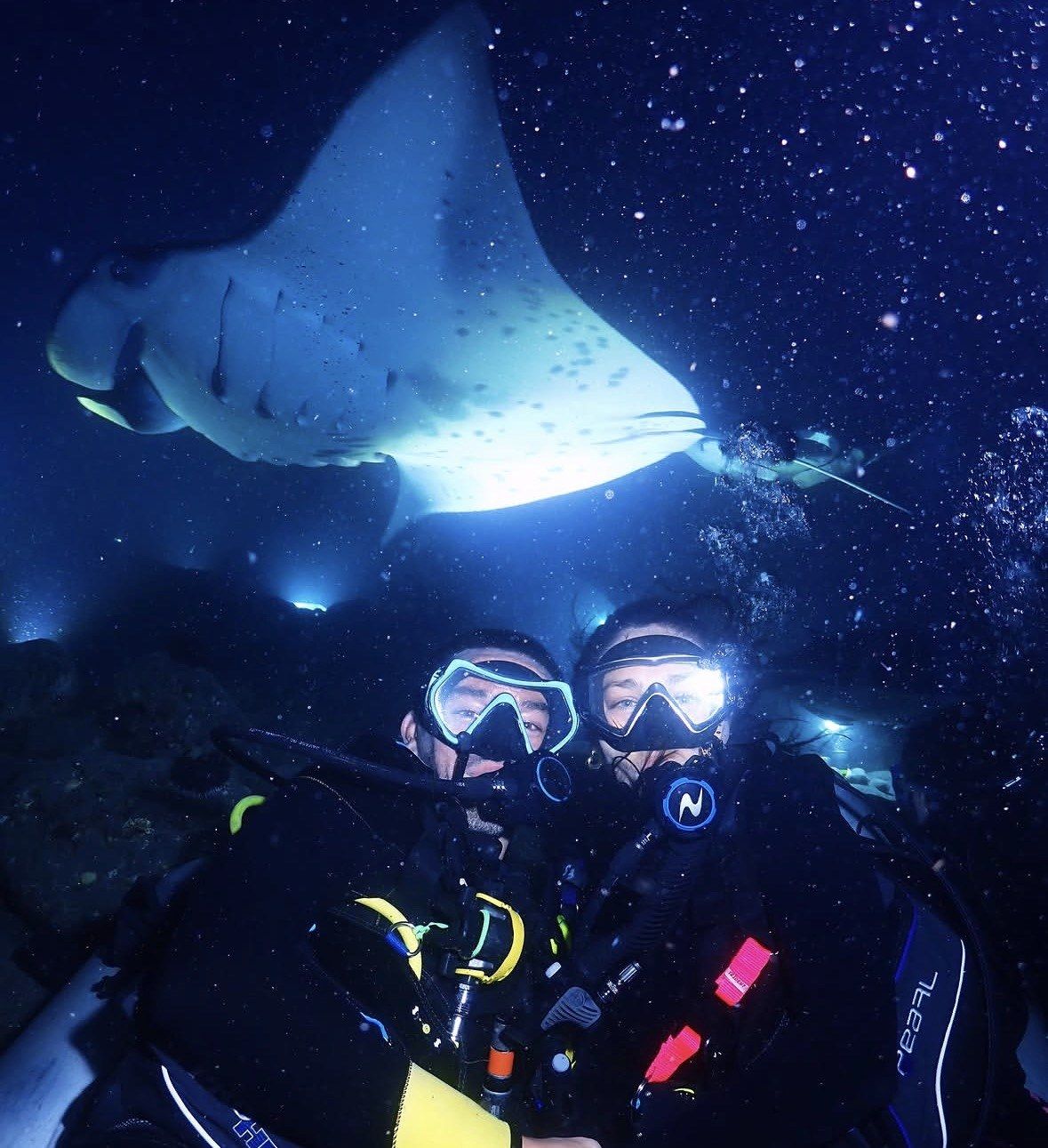
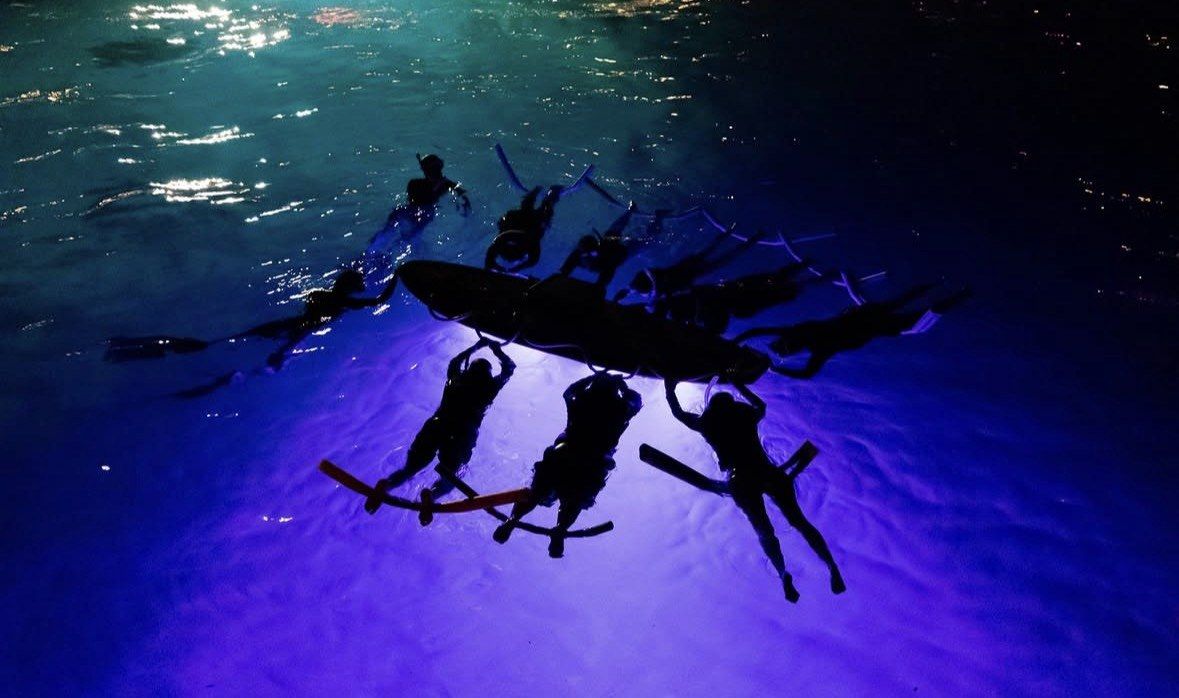
The shape of the evening works against your inner ear. For about 45 minutes you lie face-down and almost motionless at the surface, holding a lit float with your legs flat behind you, while the swell lifts and drops you. Your eyes stay locked on a floodlit cone of drifting plankton and the dark water under it, so the horizon your brain normally uses to make sense of all that movement is simply absent.
Two other things stack on top of that. You board after dark, often at the end of a day that began with an early flight into Kona or a drive down the coast, and tiredness lowers everyone's threshold. And nobody swims at the site: you hang still, legs horizontal, making no heat and giving yourself no distraction, which means the sensation has your full attention for the whole session.
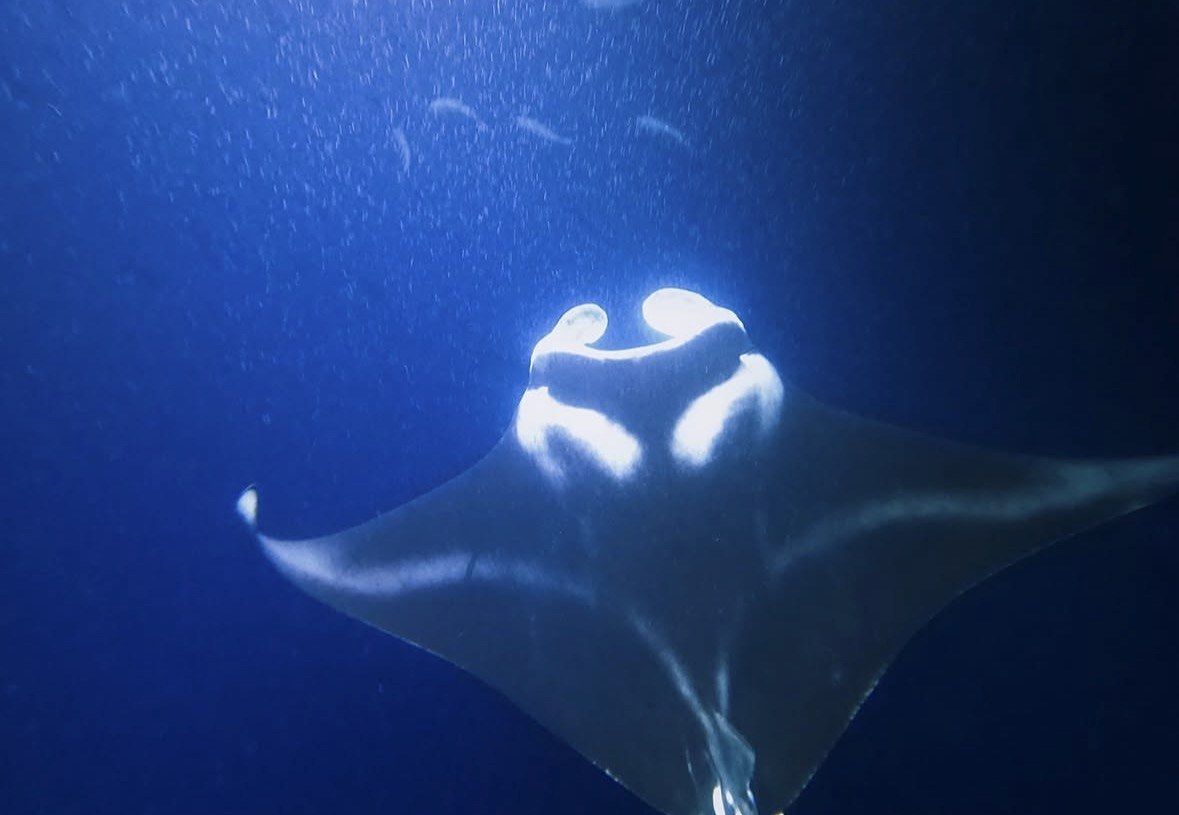
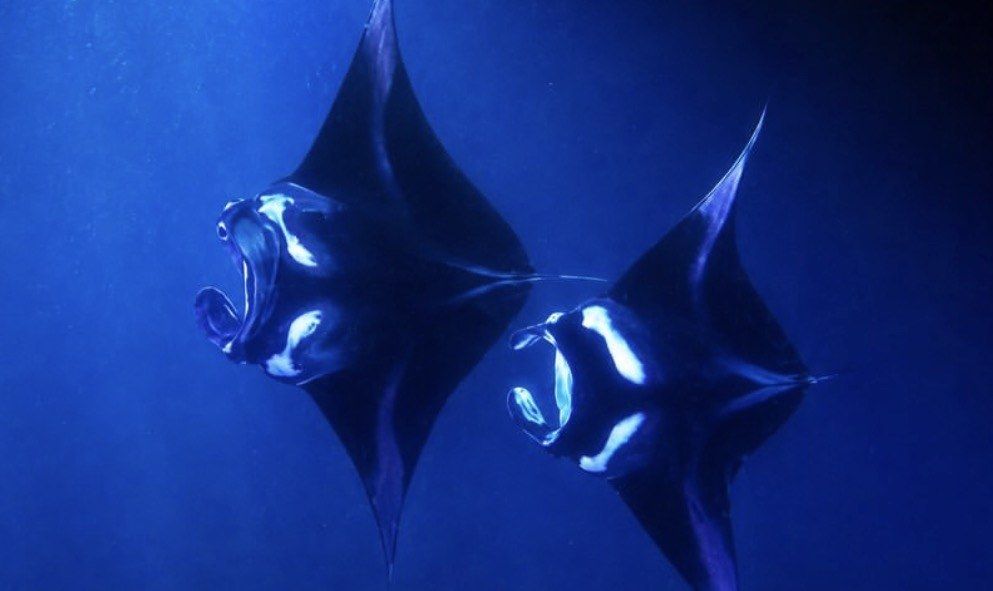
The water itself is shallow, about 6 metres at its deepest, and the light has been pulling plankton to the surface there since the resort above the bay began floodlighting the ocean in the early 1970s. Reef mantas off Kona run around 12 feet across, so a single animal fills your field of view as it rolls up into the beams. Everything in that picture is in motion, including you.
The shortest evening out of Keauhou
One hour in total from a Keauhou Harbor meeting point, with a small group, a guide, equipment, an optional wetsuit and beverages, which keeps your time on a moving deck to a few minutes each way.
★ 4.8/5 · 1,184 reviews
The five-minute crossing from Keauhou Bay
Book a departure from Keauhou Bay if you are prone to motion sickness. Your total time on a moving deck is set by where the lights burn, and they burn just around Kaukalaelae Point, alongside the OUTRIGGER Kona Resort & Spa some 7 miles south of Kailua-Kona: about five minutes of running from the ramp. Trips to the northern viewing area at Makako Bay sail more than 45 minutes each way.
That is the biggest single lever on this page. A Keauhou evening puts you on a moving deck for something like ten minutes in total, against an hour and a half or more on a northern run, all of it in the dark on the way home. It also means that if the night is rougher than you expected, the ramp is a few minutes away rather than most of an hour. The paddle canoes working out of the same bay need 7 to 10 minutes.
Nothing is lost by choosing the short crossing. Six commercial operators keep boats in Keauhou Bay small boat harbour, the rays there are resident year-round, and operators working Manta Village report mantas on more than 90% of nights, while none of them promises a sighting.
What to do and when, from the afternoon to the float line
Timing matters more than which remedy you choose. Anything taken at the pier, with the engine already running, is working against you; take it while you are still on dry land and give it the lead time the packet asks for. Eat something plain beforehand rather than going out on an empty stomach or straight after a heavy dinner, drink water through the afternoon, and leave the alcohol alone until you are back ashore.
On board, the useful spots are outside, mid-deck, with moving air and a clear view out over the water. Stay off the inside bench, stay off your phone, and look at the lit water and the shore lights rather than down at the deck or at your gear. When the crew opens the entry, go in with the first group: the water is steadier than the deck, and the waiting is half the problem.
Full-face snorkel masks are not permitted on some boats leaving this bay, including one manta snorkel and a 50-foot catamaran, so plan on a standard mask and snorkel anyway. If you do start to feel it in the water, a standard mask is quicker to clear and quicker to lift.
| When | What to do |
|---|
| Planning your trip | Put the manta night on one of your first evenings on the island, never the last one. |
|---|
| Afternoon of the trip | A plain meal and water. Skip alcohol and anything heavy or greasy. |
|---|
| Before leaving your accommodation | Take the remedy you use while you are still ashore, and check it for drowsiness warnings. |
|---|
| Driving down | Allow time to find a space on Kaleiopapa Street: the walk from there to the pier runs 3 to 5 minutes, and arriving out of breath starts the evening badly. |
|---|
| Check-in, 15 to 30 minutes before departure | Use the restrooms by the parking area, get your mask and snorkel fitted, and tell the crew you are prone to motion sickness. |
|---|
| On board | Outside seat, moving air, a view out over the water. Stay out of the cabin and off the inside bench. |
|---|
| The crossing | Keep your eyes on the water and the shore lights ahead. Put the phone away. |
|---|
| At the site | Enter with the first group rather than waiting your turn on deck. |
|---|
| In the water | Hold the lit float, legs flat behind you, eyes on the lit cone and the rays. |
|---|
| If it starts anyway | Lift your head, look at the shoreline lights above the bay, breathe slowly, and signal the crew. |
|---|
When manta ray tours get cancelled for weather
Operators do call evenings off when wind or swell makes a safe entry and a safe pick-up impossible, and the call tends to come late in the day, because departures move with sunset rather than a fixed clock and the exact time arrives with your booking confirmation. No operator on this coast publishes the wind or swell figures at which it stops going out, so treat any decision as the crew's to make on the night.
The pattern across the year is predictable enough to plan around. Trade winds are what put chop on the surface you will be lying on, and the National Weather Service puts them at about 90% of the time in summer against about 50% in winter, roughly 60 to 70% in spring and about 70% in autumn, with October and November the months when the pattern collapses for two to three days at a stretch. Heaviest rain comes from winter storms between October and April, December to February being the rainy season, while the leeward Kona coast is otherwise sunny and dry, with no month normally topping 1.4 inches of rain.
Swell is the variable that reshuffles a winter evening. North and west facing shores take frequent large surf from winter storms, over 25 feet many times in a single winter, where the biggest summer south swells reach only around 10 to 15 feet. Keauhou sits on the west-facing side of the island, so the quiet, glassy evenings people picture are more typical of the summer months than of January.
Central Pacific hurricane season opens in June, with risk rising from late July into August and dropping off quickly by early October, and 4 to 5 tropical systems a year occur within about 1,500 miles of Hawaii. Across all of that, the mantas themselves are resident animals and the boats run in every month, so no date on the calendar is the right one. Give the manta night two possible evenings in your itinerary instead of one. Book early in your stay and you can take a second shot at a weather-affected night; one Keauhou operator's later departure only runs once the earlier trip sells out, so it is not a backup you can count on.
Which departure and which slot to book
Take a Keauhou Bay departure on the sunset-timed slot and the shortest overall evening you can get. The earlier slot gives you a twilight ride out with colour still in the sky and a visible horizon, you can see the float line and the other guests while you sort yourself out, and you are back ashore while you still have energy for the drive. The later, after-dark departure has fewer boats around it and darker water, which is a better trade for a confident snorkeller than for a queasy one.
An hour from dock to dock is as short as this trip gets: the small-group option on this site runs straight out of Keauhou, from $145, rated 4.8 ★ (1184 reviews), meets at Keauhou Harbor 30 minutes before departure near the boat dock, and covers a guide, equipment, an optional wetsuit and beverages. Of the five tours here it puts you on deck for the least time and in the smallest group, with very little waiting before you get in.
Supervision in the water counts for more than deck comfort when your stomach is the worry: the 1.5-hour trip, from $125 and rated 4.7 ★ (2585 reviews), has a snorkel guide and lifeguard in the water alongside you and a USCG captain at the helm, and lists a floatation life belt, dive lights with a manta board to hang onto, plus mask and snorkel. The 2.5-hour trip from $138, rated 4.8 ★ (6332 reviews), adds a jacket-style wetsuit top, a flotation device, bottled water, light snacks and commentary on a larger boat, which suits you only if the longer evening is worth the extra deck time.
- Skip the northern-harbour departures unless you specifically want the Makako Bay site: more than 45 minutes of sailing each way is the worst possible setting for a weak stomach.
- Skip the dive-boat charter too. Check-in is 3:30 pm between 1 April and 30 September and 3:00 pm from 1 October to 31 March, with a 9:00 to 9:30 pm return on four days of the week, so the boat has you aboard from mid-afternoon until well after dark.
- The paddle-canoe option has no engine and no fumes, with six guests per hull, twelve when two canoes run together, a 7 to 10 minute paddle and 30 to 45 minutes at the site, Monday to Friday at 6:30 PM or 8:30 PM. It also requires comfort swimming in open ocean, does not allow adults to wear life jackets in the water, and gives you no dry deck to retreat to.
- Whatever you book, keep a spare evening behind it.
Questions people ask
Will seasickness tablets stop me snorkelling properly?
Some remedies cause drowsiness, which matters here because the boats on this coast expect independent swimmers with previous snorkelling experience and you will be holding a lit float in the dark. Read the packet before the day and test the product at home or earlier in your trip rather than on the night. If anything makes you sleepy, say so to the crew before you get in.
Can I stay on the boat if I start feeling sick?
Talk to the crew: the ride back to Keauhou Bay is only about five minutes, so sitting the session out is not a long wait. One Keauhou operator states that guests who stay aboard instead of entering the water still need a ticket, and another sells a deck-only ride-along place from age four, supervised by an adult. If you suspect in advance that you will not get in, buy the ticket that allows for that.
Is the water calmer at the second, after-dark departure?
No operator claims that, and darkness does not flatten the sea. What the later slot is actually marketed on is fewer vessels at the site and darker water, which helps the view rather than your stomach. It also runs only once the earlier trip sells out, and it is shorter, about 1.5 to 2 hours against 2 to 2.5 for the first departure at that operator.
Does the outrigger canoe cause less motion sickness than a boat?
There is no engine and no exhaust, the paddle out takes 7 to 10 minutes and each hull carries six guests, with twelve the cap when two canoes go together. Against that, the canoe runs Monday to Friday at 6:30 PM or 8:30 PM, applies a 250 lb per-person weight limit, requires comfort swimming in open ocean and does not let adults wear life jackets in the water. If you want a dry deck and a restroom to fall back on, take a catamaran from the same bay instead.
Does the time of year change how rough the ride is?
Summer is the steadier bet. Trades blow about 90% of the time then, against roughly 50% in winter, and the winter storms that push surf above 25 feet onto north and west facing shores many times each winter have no summer equivalent: south swells peak around 10 to 15 feet. October and November see the trade pattern break down for two to three days at a time. The rays are resident year-round, so the calendar is about comfort rather than sightings.
Read also